1,5-Bis(2-hydroxyphenoxy)-3-oxapentane is a chemical compound widely used as a building block in the synthesis of complex molecules. This versatile compound serves as a key intermediate in organic chemistry, particularly in the development of heterocyclic compounds and bioactive substances. Its unique molecular structure, consisting of two phenol groups connected by an oxapentane chain, allows for multiple functional group modifications, making it a valuable tool in synthetic chemistry. This compound is commonly found in research settings where the creation of new chemical entities is required.
The compound's chemical stability under specific conditions and its reactivity with various reagents make it a preferred choice for synthetic chemists. Its ability to form bonds with different functional groups enhances its utility in a wide range of chemical reactions, including coupling and substitution reactions. The flexibility of its molecular framework enables researchers to tailor its properties for specific applications, contributing to its popularity in both academic and industrial laboratories.
In Indonesian laboratories, this compound is utilized by chemists, pharmacologists, and chemical industry professionals. It plays a crucial role in the development of new pharmaceuticals and materials. Its non-heterocyclic nature also makes it safer for use in various applications, particularly where stability and reactivity are key factors. Its presence in research labs underscores its importance in advancing chemical synthesis and innovation.
Related TCI products
- TCI B1485 5085-95-0 1,4-Bis(3-hydroxyphenoxy)benzene
- TCI B1484 126716-90-3 1,3-Bis(4-hydroxyphenoxy)benzene
- TCI H0641 56183-35-8 4-(3-Hydroxyphenoxy)benzoic Acid
- TCI B1479 104104-12-3 Bis[2-(4-methoxyphenoxy)ethyl] Ether
- TCI B1454 13118-91-7 1,3-Bis(4-methoxyphenoxy)benzene
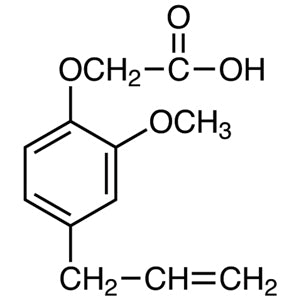
- TCI A3037 6331-61-9 (4-Allyl-2-methoxyphenoxy)acetic Acid
- Organic synthesis research where complex molecule development is required due to its versatile functional group compatibility and reactivity.
- Pharmaceutical development for creating bioactive compounds because of its ability to form stable intermediates in synthetic pathways.
- Material science applications for designing new polymers and functional materials due to its structural adaptability.
- Academic teaching and research in chemistry departments for demonstrating synthetic strategies and molecular structure modification.
- Industrial chemical production for manufacturing specialty chemicals that require precise molecular building blocks.
| Brand | TCI |
|---|---|
| CAS number | 23116-94-1 |
| Molecular formula | — |
| Purity | — |
| Category | Chemistry > Building Blocks > Non-Heterocyclic Building Blocks |
| Pack sizes | Available in various quantities as per supplier specifications |
| Physical form | Solid, crystalline or powder depending on batch |
| Storage | Store in a cool, dry place away from light and moisture |
This compound should be stored in a cool, dry environment, away from direct light and moisture to maintain its chemical stability. It is recommended to use airtight containers made of glass or high-density polyethylene to prevent contamination and degradation. Due to its reactivity, it should be handled in a well-ventilated area, and appropriate personal protective equipment such as gloves and safety goggles should be worn. Avoid exposure to incompatible substances, and ensure that storage conditions are consistent with standard laboratory safety protocols. Proper labeling and secure storage are essential to prevent accidental use or contamination.
—
Produk Terkait
-
1,4-Bis(3-hydroxyphenoxy)benzene TCI B1485
Regular price Rp 3.630.900,00Regular priceRp 2.554.650,00Sale price Rp 3.630.900,00 -
1,3-Bis(4-hydroxyphenoxy)benzene TCI B1484
Regular price From Rp 2.227.050,00Regular priceRp 1.572.900,00Sale price From Rp 2.227.050,00 -
4-(3-Hydroxyphenoxy)benzoicAcid TCI H0641
Regular price From Rp 2.942.100,00Regular priceRp 2.072.700,00Sale price From Rp 2.942.100,00 -
Bis[2-(4-methoxyphenoxy)ethyl]Ether TCI B1479
Regular price Rp 1.298.850,00Regular priceRp 908.250,00Sale price Rp 1.298.850,00 -
1,3-Bis(4-methoxyphenoxy)benzene TCI B1454
Regular price Rp 3.446.100,00Regular priceRp 2.409.750,00Sale price Rp 3.446.100,00 -
(4-Allyl-2-methoxyphenoxy)aceticAcid TCI A3037
Regular price From Rp 2.093.700,00Regular priceRp 1.479.450,00Sale price From Rp 2.093.700,00 -
2-(4-Methoxyphenoxy)propanoicAcid TCI M3883
Regular price From Rp 1.087.800,00Regular priceRp 775.950,00Sale price From Rp 1.087.800,00 -
2-[(4-Methoxyphenoxy)methyl]oxirane TCI M3638
Regular price From Rp 1.776.600,00Regular priceRp 1.242.150,00Sale price From Rp 1.776.600,00