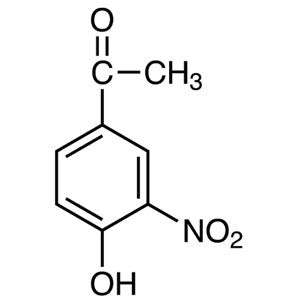
4'-Hydroxy-3'-nitroacetophenone is a trifunctional aromatic compound that carries an acetyl group, a phenolic hydroxyl, and a nitro group simultaneously on a single benzene ring. The arrangement of these three groups is highly distinctive: the hydroxyl occupies the para position relative to the acetyl group, while the nitro group sits directly adjacent to the hydroxyl. In the laboratory, this compound serves as a widely sought non-heterocyclic building block because it provides three different transformation pathways within one starting molecule, allowing chemists to construct increasingly elaborate molecular frameworks without having to install functional groups one at a time.
The characteristic that makes this material a preferred choice is the electronic synergy between its substituents. The strongly electron-withdrawing nitro group positioned next to the phenol renders that hydroxyl far more acidic than an ordinary phenol, while simultaneously activating the ring toward certain substitution reactions. The nitro group itself can be reduced to an aromatic amine, which immediately yields an adjacent aminophenol pattern — the classic precursor framework for forming benzoxazoles and other fused heterocycles. The acetyl group at the para position supplies a methyl ketone carbonyl that opens up further condensation and chain-extension chemistry.
In Indonesian laboratories, this building block is typically used in synthetic organic chemistry research groups at universities and research institutes, as well as in pharmaceutical and fine-chemical development work where multi-step routes are assembled from commercially available intermediates. It is ordered by researchers preparing heterocyclic scaffolds, chelating ligands, and functionalized aromatic derivatives, and it is generally handled at bench scale within a standard synthesis laboratory equipped with a fume hood and routine glassware.
Related TCI products
- TCI B4556 70978-54-0 5'-Bromo-2'-hydroxy-3'-nitroacetophenone
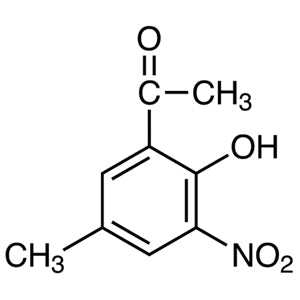
- TCI H1479 66108-30-3 2'-Hydroxy-5'-methyl-3'-nitroacetophenone
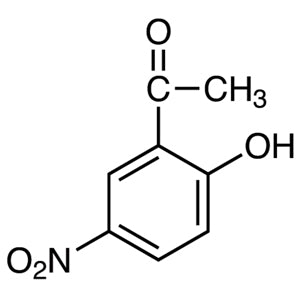
- TCI H1378 1450-76-6 2'-Hydroxy-5'-nitroacetophenone
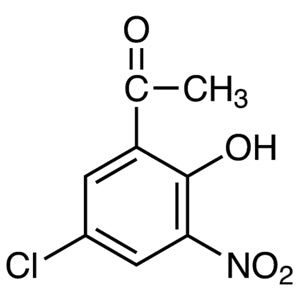
- TCI C2973 84942-40-5 5'-Chloro-2'-hydroxy-3'-nitroacetophenone
- TCI B3528 6851-99-6 2-Bromo-2'-nitroacetophenone
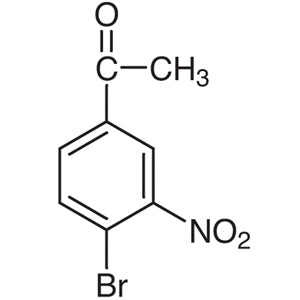
- TCI B3383 18640-58-9 4'-Bromo-3'-nitroacetophenone
- Benzoxazole and fused heterocycle synthesis: reduction of the nitro group generates the adjacent aminophenol motif required to close the oxazole ring, making this a direct single-reagent entry point.
- Multi-step organic synthesis route development: the three distinct functional handles on one ring allow chemists to sequence transformations selectively without separate functionalization steps at the outset.
- Methyl ketone condensation chemistry: the para acetyl group provides a reactive carbonyl for aldol, chalcone-type, and chain-extension reactions that build larger carbon frameworks from this core.
- Aromatic amine precursor preparation: controlled reduction converts the nitro substituent into an aromatic amine, giving access to aminophenol derivatives useful as intermediates in further coupling work.
- Phenolic reactivity and substitution studies: the enhanced acidity conferred by the neighbouring nitro group makes this compound suitable for teaching and investigating substituent electronic effects on aromatic rings.
| Brand | TCI |
|---|---|
| CAS number | 6322-56-1 |
| Molecular formula | — |
| Purity | — |
| Category | Chemistry > Building Blocks > Non-Heterocyclic Building Blocks |
| Pack sizes | available in standard TCI research-scale packaging; please confirm the specific size when ordering |
| Physical form | — |
| Storage | keep in a cool, dry place in a tightly closed container, protected from light |
- Catalogue code: H0968
Store the container tightly closed in a cool, dry, well-ventilated area away from direct sunlight, heat sources, and strong oxidising agents. Keep the material in its original amber or opaque container where possible, as nitroaromatic phenols can be sensitive to prolonged light exposure. Handle inside a fume hood and wear safety goggles, nitrile gloves, and a laboratory coat, since nitroaromatic compounds may cause skin and eye irritation. Avoid generating or inhaling dust when weighing out portions, use clean and dry spatulas to prevent contamination of the stock, and close the container promptly after use. Dispose of residues and contaminated materials through the laboratory's designated chemical waste stream, and consult the manufacturer's safety data sheet before first use.
—
Produk Terkait
-
5'-Bromo-2'-hydroxy-3'-nitroacetophenone TCI B4556
Regular price From Rp 743.400,00Regular price -
2'-Hydroxy-5'-methyl-3'-nitroacetophenone TCI H1479
Regular price From Rp 1.087.800,00Regular price -
2'-Hydroxy-5'-nitroacetophenone TCI H1378
Regular price From Rp 1.298.850,00Regular price -
5'-Chloro-2'-hydroxy-3'-nitroacetophenone TCI C2973
Regular price From Rp 717.150,00Regular price -
2-Bromo-2'-nitroacetophenone TCI B3528
Regular price From Rp 2.545.200,00Regular price -
4'-Bromo-3'-nitroacetophenone TCI B3383
Regular price From Rp 664.650,00Regular price -
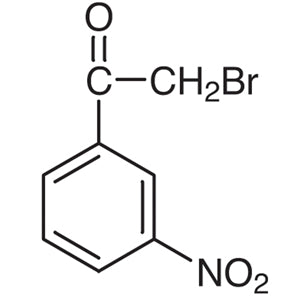
2-Bromo-3'-nitroacetophenone TCI B2855
Regular price From Rp 610.050,00Regular price -
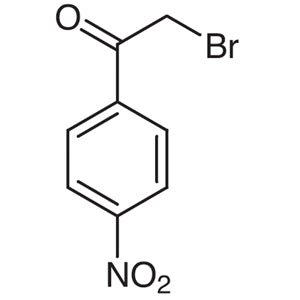
2-Bromo-4'-nitroacetophenone TCI N0473
Regular price From Rp 584.850,00Regular price