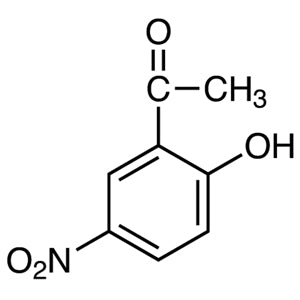
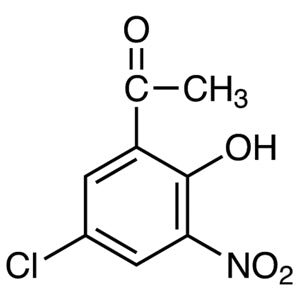
5'-Bromo-2'-hydroxy-3'-nitroacetophenone is a chemical compound widely used in organic synthesis reactions within laboratory settings. This compound belongs to the category of non-heterocyclic building blocks and is valued for its structural versatility. Its aromatic framework, combined with bromo, hydroxyl, and nitro functional groups, makes it a key reagent for creating complex molecular structures. Due to its unique reactivity, it is commonly employed in synthetic pathways that require controlled chemical transformations.
The compound's reactivity stems from its functional groups, which enable participation in various reaction mechanisms such as electrophilic substitution and nucleophilic attack. The presence of multiple reactive sites allows for selective modification, making it a preferred choice for researchers aiming to tailor molecular properties. Its ability to engage in multiple reaction types enhances its utility in both academic and industrial research environments. The combination of bromo, hydroxyl, and nitro groups also contributes to its stability and reactivity under different reaction conditions.
In Indonesian laboratories, 5'-Bromo-2'-hydroxy-3'-nitroacetophenone is frequently used in organic chemistry research, particularly in the development of bioactive compounds. It plays a crucial role in the synthesis of pharmaceuticals and industrial chemicals, supporting innovation in drug discovery and material science. Its availability through reliable suppliers like AMI Scientific ensures that researchers have access to this essential building block for their experimental needs.
Related TCI products
- TCI B3528 6851-99-6 2-Bromo-2'-nitroacetophenone
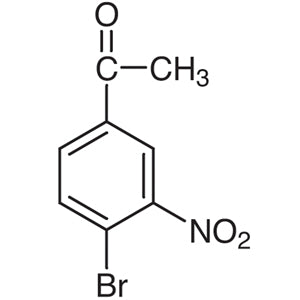
- TCI B3383 18640-58-9 4'-Bromo-3'-nitroacetophenone
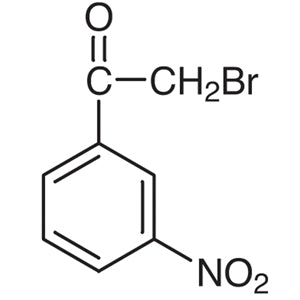
- TCI B2855 2227-64-7 2-Bromo-3'-nitroacetophenone
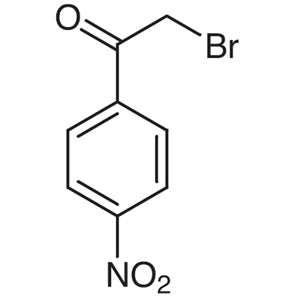
- TCI N0473 99-81-0 2-Bromo-4'-nitroacetophenone
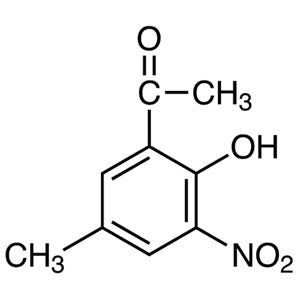
- TCI H1479 66108-30-3 2'-Hydroxy-5'-methyl-3'-nitroacetophenone
- TCI H1378 1450-76-6 2'-Hydroxy-5'-nitroacetophenone
- Organic synthesis is a primary application where this compound serves as a versatile building block for creating complex molecules.
- Pharmaceutical research benefits from its reactivity, allowing the synthesis of bioactive compounds with potential therapeutic applications.
- Industrial chemical development utilizes its functional groups to design compounds with specific chemical and physical properties.
- Academic research employs it in the exploration of new synthetic methodologies and reaction mechanisms.
- Drug discovery projects rely on its structural versatility to generate compounds with desired biological activities.
| Brand | TCI |
|---|---|
| CAS number | 70978-54-0 |
| Molecular formula | — |
| Purity | — |
| Category | Chemistry > Building Blocks > Non-Heterocyclic Building Blocks |
| Pack sizes | — |
| Physical form | — |
| Storage | Store in a cool, dry place away from direct light |
This compound should be stored in a cool, dry environment, away from direct sunlight and sources of heat. It is recommended to use airtight containers to prevent moisture absorption and contamination. Due to its reactive nature, it should be handled with care, using appropriate personal protective equipment such as gloves and safety goggles. Avoid exposure to incompatible substances, and ensure proper ventilation in the workspace. Regular monitoring of storage conditions is advised to maintain the integrity and stability of the compound. Always follow standard laboratory safety protocols when working with this material.
—
Produk Terkait
-
2-Bromo-2'-nitroacetophenone TCI B3528
Regular price From Rp 2.597.700,00Regular priceRp 1.832.250,00Sale price From Rp 2.597.700,00 -
4'-Bromo-3'-nitroacetophenone TCI B3383
Regular price From Rp 717.150,00Regular priceRp 516.600,00Sale price From Rp 717.150,00 -
2-Bromo-3'-nitroacetophenone TCI B2855
Regular price From Rp 662.550,00Regular priceRp 478.800,00Sale price From Rp 662.550,00 -
2-Bromo-4'-nitroacetophenone TCI N0473
Regular price From Rp 637.350,00Regular priceRp 460.950,00Sale price From Rp 637.350,00 -
2'-Hydroxy-5'-methyl-3'-nitroacetophenone TCI H1479
Regular price From Rp 1.140.300,00Regular priceRp 812.700,00Sale price From Rp 1.140.300,00 -
2'-Hydroxy-5'-nitroacetophenone TCI H1378
Regular price From Rp 1.351.350,00Regular priceRp 960.750,00Sale price From Rp 1.351.350,00 -
4'-Hydroxy-3'-nitroacetophenone TCI H0968
Regular price Rp 980.700,00Regular priceRp 701.400,00Sale price Rp 980.700,00 -
5'-Chloro-2'-hydroxy-3'-nitroacetophenone TCI C2973
Regular price From Rp 769.650,00Regular priceRp 553.350,00Sale price From Rp 769.650,00