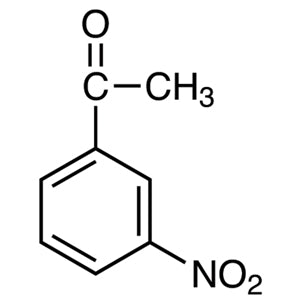
2-Bromo-2'-nitroacetophenone is a chemical compound widely used as a foundational building block in the synthesis of complex molecules. It plays a crucial role in organic chemistry, serving as a precursor for the formation of aromatic and heterocyclic compounds. Its unique molecular structure enables it to participate in various chemical reactions, including substitution and electrophilic reactions, making it a versatile reagent in laboratory settings. This compound is particularly valuable in research that requires precise control over reaction outcomes and product formation.
The chemical properties of 2-Bromo-2'-nitroacetophenone make it a preferred choice for synthetic chemists. It exhibits stability under controlled conditions but is sensitive to temperature and humidity, requiring careful handling. Its ability to undergo specific reactions allows for the synthesis of a wide range of compounds with tailored properties. The compound’s reactivity and structural complexity make it an essential tool for researchers aiming to develop new materials, pharmaceuticals, and chemical products.
In Indonesian laboratories, 2-Bromo-2'-nitroacetophenone is commonly used in organic chemistry research, especially in academic institutions and research centers. Its availability and reliability make it a go-to reagent for various experimental applications. The compound’s role in the synthesis of aromatic compounds is particularly significant in the development of new chemical products and advanced materials. Its use is widespread in both teaching and research environments, supporting scientific innovation and discovery.
Related TCI products
- Organic synthesis of aromatic and heterocyclic compounds due to its reactivity and structural versatility
- Development of pharmaceutical compounds through controlled substitution and electrophilic reactions
- Creation of advanced materials requiring precise molecular manipulation and functional group introduction
- Research in chemical engineering for the design of new synthetic pathways and reaction mechanisms
- Educational use in teaching organic chemistry principles and synthetic methodology to students
| Brand | TCI |
|---|---|
| CAS number | 6851-99-6 |
| Molecular formula | — |
| Purity | — |
| Category | Chemistry > Building Blocks > Non-Heterocyclic Building Blocks |
| Pack sizes | Available in standard laboratory quantities |
| Physical form | Solid or liquid, depending on the specific product variant |
| Storage | Store in a cool, dry place away from light and moisture |
This compound should be stored in a cool, dry environment, away from direct light and moisture to maintain its stability. It is recommended to use airtight containers made of materials that are chemically inert, such as glass or high-density polyethylene. Due to its sensitivity to temperature and humidity, it should be kept in a controlled laboratory setting. Proper ventilation is essential when handling the compound to minimize exposure. Always wear appropriate personal protective equipment, including gloves and safety goggles, to ensure safe handling. Regular monitoring of storage conditions is advised to prevent degradation and ensure the compound remains suitable for use in experiments.
—
Produk Terkait
-
5'-Bromo-2'-hydroxy-3'-nitroacetophenone TCI B4556
Regular price From Rp 795.900,00Regular priceRp 572.250,00Sale price From Rp 795.900,00 -
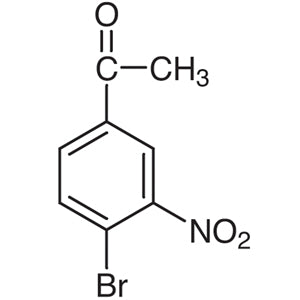
4'-Bromo-3'-nitroacetophenone TCI B3383
Regular price From Rp 717.150,00Regular priceRp 516.600,00Sale price From Rp 717.150,00 -
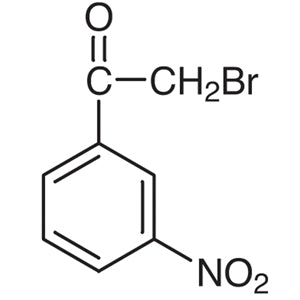
2-Bromo-3'-nitroacetophenone TCI B2855
Regular price From Rp 662.550,00Regular priceRp 478.800,00Sale price From Rp 662.550,00 -
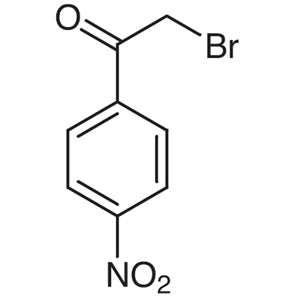
2-Bromo-4'-nitroacetophenone TCI N0473
Regular price From Rp 637.350,00Regular priceRp 460.950,00Sale price From Rp 637.350,00 -
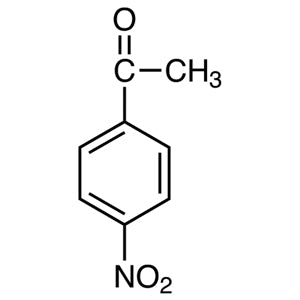
4'-Nitroacetophenone TCI N0111
Regular price From Rp 557.550,00Regular priceRp 405.300,00Sale price From Rp 557.550,00 -
2'-Nitroacetophenone TCI N0110
Regular price From Rp 1.060.500,00Regular priceRp 757.050,00Sale price From Rp 1.060.500,00 -
3'-Nitroacetophenone TCI N0109
Regular price From Rp 557.550,00Regular priceRp 405.300,00Sale price From Rp 557.550,00 -
4'-Methoxy-3'-nitroacetophenone TCI M2811
Regular price Rp 1.326.150,00Regular priceRp 942.900,00Sale price Rp 1.326.150,00