TCI N0111 4'-Nitroacetophenone is an aromatic ketone carrying a nitro group at the para position relative to the acetyl group. This symmetrical para arrangement makes it one of the most widely used nitroacetophenones in organic synthesis laboratories. As a non-heterocyclic building block, the compound provides a benzene framework bearing two functional groups on opposite sides of the ring, each of which can be addressed independently: the ketone carbonyl serves addition, condensation, and reduction chemistry, while the nitro group is readily converted into an amino group, opening the route toward amides, azo compounds, and other nitrogen-containing derivatives.
The reason this compound is chosen so often lies in its stability and the reliability of its reactions. Para substitution removes steric interference between the two functional groups, so reactivity stays clean and predictable. At the same time, the electron-withdrawing character of the nitro group, transmitted through the conjugated system, makes the carbonyl considerably more electrophilic than that of unsubstituted acetophenone. This property is precisely what has made it a favoured substrate for probing the rate and selectivity of ketone reduction reactions, where a well-behaved and responsive carbonyl is essential.
The material is supplied as a pale crystalline solid, a physical form that simplifies weighing, recrystallisation, and visual as well as chromatographic monitoring of purity. In Indonesian laboratories, these practical characteristics matter: university research groups, industrial R&D units, and analytical service laboratories all benefit from a solid that handles predictably on the balance and dissolves cleanly for reaction work-up, method development, and routine teaching exercises in synthetic organic chemistry.
Related TCI products
- Ketone reduction studies — the electron-poor carbonyl responds sensitively to reducing agents, making this compound a standard substrate for comparing reaction rates and selectivity between different reduction systems.
- Nitro-to-amine conversion — the para nitro group is readily reduced to an aromatic amine, giving a direct and dependable entry point to aminoacetophenone intermediates for further derivatisation work.
- Condensation reactions — the activated acetyl group participates cleanly in condensation chemistry, allowing chemists to extend the carbon framework without interference from the distant nitro substituent.
- Synthesis of azo and amide derivatives — once the nitro group has been converted to an amino function, the resulting aniline supports the preparation of azo dyes and amide-linked compounds.
- Teaching and method development — the crystalline form and predictable, well-documented reactivity make it a practical model substrate for instructional synthesis courses and for developing analytical separation methods.
| Brand | TCI (Tokyo Chemical Industry) |
|---|---|
| CAS number | 100-19-6 |
| Molecular formula | — |
| Purity | — |
| Category | Chemistry > Building Blocks > Non-Heterocyclic Building Blocks |
| Pack sizes | available in standard TCI laboratory pack sizes; please confirm the option required when ordering |
| Physical form | pale crystalline solid |
| Storage | keep in a cool, dry place, protected from light in a tightly closed container |
Store the container tightly closed in a cool, dry, and well-ventilated area, away from light, heat, and sources of ignition. The original manufacturer packaging or an equivalent amber glass or chemically resistant container is suitable for storage and for any repackaging into working quantities. Keep the compound separated from strong reducing agents and strong bases. Handle inside a fume hood while wearing safety goggles, chemically resistant gloves, and a laboratory coat, and avoid generating or inhaling dust when weighing the solid. Reseal the container promptly after use, label all working aliquots clearly, and consult the manufacturer's safety data sheet before first use and before disposal of any residues or contaminated material.
—
Produk Terkait
-
5'-Bromo-2'-hydroxy-3'-nitroacetophenone TCI B4556
Regular price From Rp 743.400,00Regular price -
2-Bromo-2'-nitroacetophenone TCI B3528
Regular price From Rp 2.545.200,00Regular price -
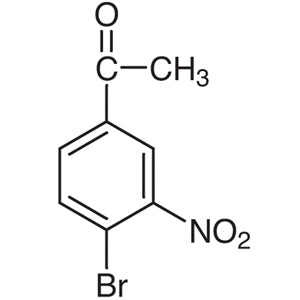
4'-Bromo-3'-nitroacetophenone TCI B3383
Regular price From Rp 664.650,00Regular price -
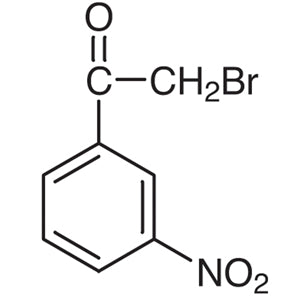
2-Bromo-3'-nitroacetophenone TCI B2855
Regular price From Rp 610.050,00Regular price -
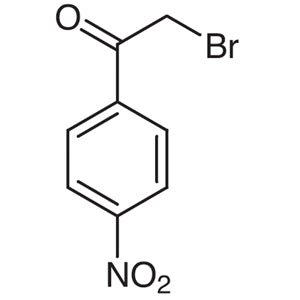
2-Bromo-4'-nitroacetophenone TCI N0473
Regular price From Rp 584.850,00Regular price -
2'-Nitroacetophenone TCI N0110
Regular price From Rp 1.008.000,00Regular price -
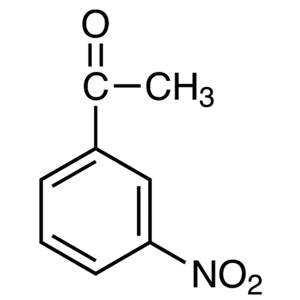
3'-Nitroacetophenone TCI N0109
Regular price From Rp 505.050,00Regular price -
4'-Methoxy-3'-nitroacetophenone TCI M2811
Regular price Rp 1.273.650,00Regular price