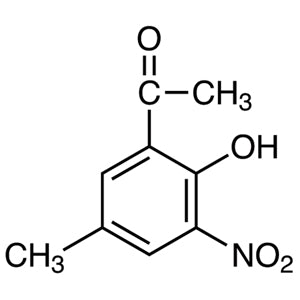
2'-Hydroxy-5'-methyl-3'-nitroacetophenone is a versatile organic compound widely used in laboratory settings for its ability to participate in various synthetic reactions. This compound serves as a key building block in the development of new chemical structures, particularly in the field of organic chemistry. Its unique molecular structure allows for substitution and functional group transformations, making it a valuable resource for chemists engaged in research and development. Due to its reactivity and stability, it is frequently employed in both academic and industrial laboratories to achieve precise chemical outcomes.
The compound is preferred for its predictable chemical behavior and controlled reactivity, which are essential for designing efficient synthetic pathways. Its non-volatile nature simplifies handling and storage, reducing the risk of evaporation during experimental procedures. Additionally, its stable molecular structure ensures consistent results across multiple experiments, making it a reliable choice for researchers aiming for accuracy and reproducibility. These properties contribute to its widespread use in both educational and research environments.
In Indonesian laboratories, 2'-Hydroxy-5'-methyl-3'-nitroacetophenone is commonly utilized in organic synthesis projects aimed at creating new compounds. It is also frequently found in educational settings where students learn about chemical reactions and synthesis techniques. Its availability through AMI Scientific ensures that researchers and educators have access to this essential reagent for their work.
Related TCI products
- TCI B4556 70978-54-0 5'-Bromo-2'-hydroxy-3'-nitroacetophenone
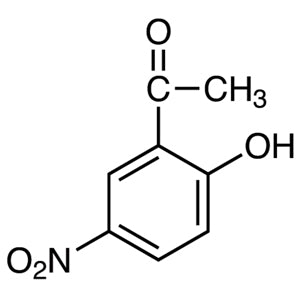
- TCI H1378 1450-76-6 2'-Hydroxy-5'-nitroacetophenone
- TCI H0968 6322-56-1 4'-Hydroxy-3'-nitroacetophenone
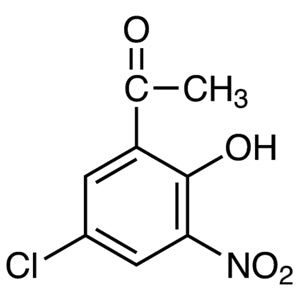
- TCI C2973 84942-40-5 5'-Chloro-2'-hydroxy-3'-nitroacetophenone
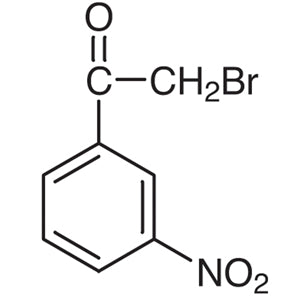
- TCI B3528 6851-99-6 2-Bromo-2'-nitroacetophenone
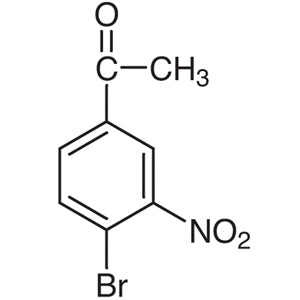
- TCI B3383 18640-58-9 4'-Bromo-3'-nitroacetophenone
- Organic synthesis projects benefit from this compound due to its ability to undergo substitution and functional group transformations, enabling the creation of complex molecular structures.
- Educational institutions use it to teach fundamental concepts of chemical reactivity and synthetic pathways in undergraduate and graduate chemistry courses.
- Industrial research laboratories incorporate it into the development of new pharmaceutical compounds, leveraging its structural versatility for drug discovery initiatives.
- Analytical chemistry experiments utilize its predictable behavior to test reaction conditions and optimize synthetic processes for improved yields.
- Environmental research applications employ it as a model compound to study the behavior of aromatic and heterocyclic substances in various chemical environments.
| Brand | TCI |
|---|---|
| CAS number | 66108-30-3 |
| Molecular formula | — |
| Purity | — |
| Category | Chemistry > Building Blocks > Non-Heterocyclic Building Blocks |
| Pack sizes | Available in various quantities as per standard laboratory supply requirements |
| Physical form | Solid |
| Storage | Store in a cool, dry place away from direct sunlight and moisture |
This compound should be stored in a cool, dry environment to maintain its stability and prevent degradation. It is recommended to use airtight containers to minimize exposure to moisture and air, which could affect its chemical integrity. Due to its non-volatile nature, it does not require special containment beyond standard laboratory storage practices. Always ensure that the storage area is well-ventilated and free from potential contaminants. When handling, it is advisable to use appropriate personal protective equipment to ensure safety during experimental procedures.
—
Produk Terkait
-
5'-Bromo-2'-hydroxy-3'-nitroacetophenone TCI B4556
Regular price From Rp 743.400,00Regular price -
2'-Hydroxy-5'-nitroacetophenone TCI H1378
Regular price From Rp 1.298.850,00Regular price -
4'-Hydroxy-3'-nitroacetophenone TCI H0968
Regular price Rp 928.200,00Regular price -
5'-Chloro-2'-hydroxy-3'-nitroacetophenone TCI C2973
Regular price From Rp 717.150,00Regular price -
2-Bromo-2'-nitroacetophenone TCI B3528
Regular price From Rp 2.545.200,00Regular price -
4'-Bromo-3'-nitroacetophenone TCI B3383
Regular price From Rp 664.650,00Regular price -
2-Bromo-3'-nitroacetophenone TCI B2855
Regular price From Rp 610.050,00Regular price -
2-Bromo-4'-nitroacetophenone TCI N0473
Regular price From Rp 584.850,00Regular price