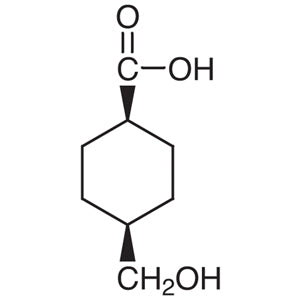
TCI H1242, with CAS number 73094-35-6, is cis-4-(Hydroxymethyl)cyclohexanecarboxylic Acid, a bifunctional alicyclic compound belonging to the family of non-heterocyclic building blocks. The molecule is built on a rigid cyclohexane framework carrying a carboxylic acid group on one side and a hydroxymethyl group on the opposite side, both arranged in the cis configuration. In the organic synthesis laboratory, a compound of this type serves as a connector or linker that establishes a specific distance and spatial orientation between two molecular fragments that a researcher intends to join together.
The main appeal of this material lies in the well-defined geometry of its cyclohexane ring and in the presence of two functional groups that can be reacted separately from one another. The carboxylic acid is ready to form amides, esters, or acyl chlorides, while the primary alcohol is easily converted into ethers, esters, tosylates, aldehydes, or carboxylic acids through oxidation. The cis isomer provides a spatial relationship that differs from that of the trans isomer, so researchers can deliberately control the three-dimensional shape of the target molecule. The conformational rigidity of the cyclohexane ring also helps to reduce the entropic penalty of binding in molecular designs that target specific proteins.
In Indonesian laboratories, a building block of this kind is typically used in university and institutional research groups working on organic synthesis, medicinal chemistry, and materials chemistry. It is handled on the bench scale during the construction of intermediates, where a defined linker geometry matters more than bulk quantity. Researchers generally schedule its use around multi-step synthetic routes, in which one functional group is protected or transformed first and the second is elaborated at a later stage of the sequence.
Related TCI products
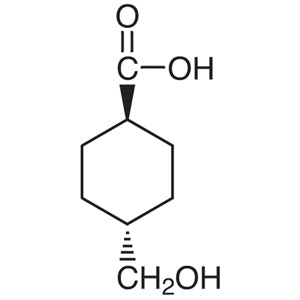
- TCI H1243 66185-74-8 trans-4-(Hydroxymethyl)cyclohexanecarboxylic Acid
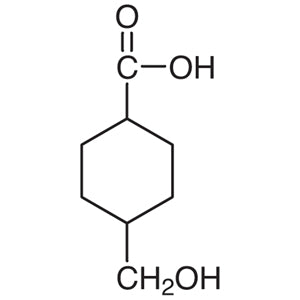
- TCI H1015 13380-84-2 4-(Hydroxymethyl)cyclohexanecarboxylic Acid (cis- and trans- mixture)
- TCI B1492 20605-01-0 Diethyl 2,2-Bis(hydroxymethyl)malonate
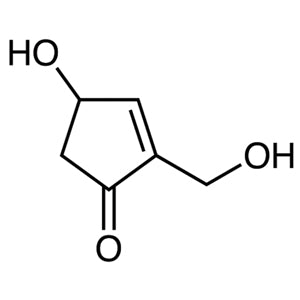
- TCI H1723 76374-26-0 4-Hydroxy-2-(hydroxymethyl)-2-cyclopenten-1-one
- TCI H1605 16375-88-5 N-[4-(Hydroxymethyl)phenyl]acetamide
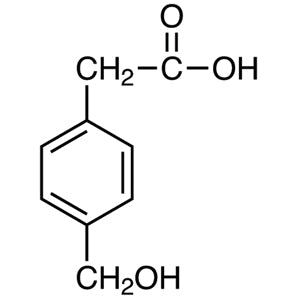
- TCI H1473 73401-74-8 4-(Hydroxymethyl)phenylacetic Acid
- Linker construction in multi-step organic synthesis, where the cyclohexane spacer sets a fixed distance and orientation between two molecular fragments being joined by the researcher.
- Medicinal chemistry scaffold design, because the rigid ring reduces the entropic penalty of binding in molecules intended to target a specific protein of interest.
- Amide and ester library preparation, since the carboxylic acid group readily forms amides, esters, and acyl chlorides for the systematic variation of molecular structures.
- Selective functional group transformation studies, as the primary alcohol can be converted into ethers, esters, tosylates, aldehydes, or carboxylic acids independently of the acid terminus.
- Stereochemical and conformational investigations, where the cis configuration offers a spatial relationship distinct from the trans isomer for deliberate three-dimensional molecular design work.
| Brand | TCI |
|---|---|
| CAS number | 73094-35-6 |
| Molecular formula | — |
| Purity | — |
| Category | Chemistry > Building Blocks > Non-Heterocyclic Building Blocks |
| Pack sizes | available in standard TCI research catalogue pack sizes; please confirm the size required when ordering |
| Physical form | — |
| Storage | keep in a tightly closed container as indicated on the manufacturer label |
- Chemical name: cis-4-(Hydroxymethyl)cyclohexanecarboxylic Acid
Store the container tightly closed in a cool, dry, and well ventilated area, away from heat sources, direct sunlight, and incompatible materials. Keep the product in its original manufacturer container, or transfer it only into clean, chemically compatible and clearly labelled laboratory containers. Handle the compound in a fume hood using standard personal protective equipment, including safety goggles, a laboratory coat, and suitable chemical resistant gloves. Avoid the generation of dust, avoid contact with skin and eyes, and wash hands thoroughly after handling. Because the carboxylic acid and hydroxymethyl groups are both reactive, keep the material away from strong oxidising agents and strong bases. Always consult the manufacturer safety data sheet before use, and follow the storage conditions stated on the product label.
—
Produk Terkait
-
trans-4-(Hydroxymethyl)cyclohexanecarboxylicAcid TCI H1243
Regular price From Rp 3.207.750,00Regular price -
4-(Hydroxymethyl)cyclohexanecarboxylicAcid(cis-andtrans-mixture) TCI H1015
Regular price Rp 4.347.000,00Regular price -
Diethyl2,2-Bis(hydroxymethyl)malonate TCI B1492
Regular price From Rp 3.021.900,00Regular price -
4-Hydroxy-2-(hydroxymethyl)-2-cyclopenten-1-one TCI H1723
Regular price Rp 1.936.200,00Regular price -
N-[4-(Hydroxymethyl)phenyl]acetamide TCI H1605
Regular price From Rp 1.538.250,00Regular price -
4-(Hydroxymethyl)phenylaceticAcid TCI H1473
Regular price From Rp 955.500,00Regular price -
1-(p-Tolyl)-1-cyclohexanecarboxylicAcid TCI T3097
Regular price From Rp 1.644.300,00Regular price -
trans-4-(tert-Butoxycarbonylaminomethyl)cyclohexanecarboxylicAcid TCI B3253
Regular price From Rp 1.510.950,00Regular price

![16375-88-5 N-[4-(Hydroxymethyl)phenyl]acetamide - AMI Scientific](http://amiscientific.com/cdn/shop/files/TCI2510H1605.jpg?v=1767118290&width=533)