

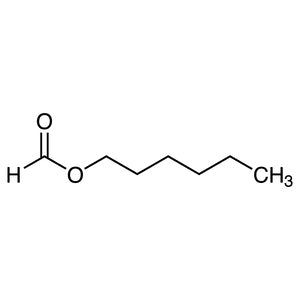
Hexyl Formate with CAS number 629-33-4 is an aliphatic ester formed from formic acid and hexanol, yielding an organic liquid with a characteristic fruit-like aroma. In the laboratory, this compound is used as a starting material for organic synthesis, as a reference compound in aroma and flavour analysis, and as an organic solvent of intermediate polarity. As a formate ester, the molecule carries a carbonyl group that is comparatively reactive toward hydrolysis and transesterification, which is why it frequently appears in experiments that examine the kinetics of ester reactions.
The principal property behind its selection is its character as a medium-chain formate ester that combines the hydrophobic contribution of the hexyl chain with a polar ester group. This combination produces good solubility in organic solvents together with limited solubility in water, a profile that proves useful for extraction and separation work. Formate esters are also known to hydrolyse more readily than esters derived from long-chain carboxylic acids, which makes this compound a practical model system for mechanistic studies. TCI reagent grade delivers the consistency of purity profile that matters for chromatographic analysis.
In Indonesian laboratories, Hexyl Formate is typically found in organic chemistry and analytical chemistry settings where a well-defined ester is needed for routine work. It supports teaching and research laboratories running synthesis exercises, flavour and fragrance laboratories that require a known ester as a comparison standard, and analytical groups that rely on a reproducible reference material. Its handling requirements are those of an ordinary volatile organic liquid, making it straightforward to accommodate in a standard laboratory workflow.
- Organic synthesis starting material: the reactive formate carbonyl allows the compound to serve as a building block that can be transformed through established ester chemistry into further target structures.
- Reference compound in aroma and flavour analysis: its characteristic fruit-like odour and defined identity make it suitable as a comparison standard when aroma-active esters are being identified and confirmed.
- Medium-polarity organic solvent: the balance between the hydrophobic hexyl chain and the polar ester group lets it dissolve a range of organic substances that resist more polar or more non-polar media.
- Ester reaction kinetics studies: because formate esters hydrolyse more readily than long-chain carboxylic acid esters, this compound gives a convenient and practical model for following reaction rates.
- Extraction and separation work: good solubility in organic solvents together with limited water solubility gives the partition behaviour required for liquid-liquid extraction and related separation procedures.
| Brand | TCI, catalogue number H1271 |
|---|---|
| CAS number | 629-33-4 |
| Molecular formula | — |
| Purity | — |
| Category | Chemistry > Building Blocks > Non-Heterocyclic Building Blocks |
| Pack sizes | available in standard TCI reagent pack sizes; please confirm the option required |
| Physical form | organic liquid with a characteristic fruit-like aroma |
| Storage | keep in a cool, tightly closed container away from moisture |
- Chemical class: aliphatic formate ester derived from formic acid and hexanol
Store Hexyl Formate in a cool, well-ventilated area inside a tightly closed container, since the material is a volatile organic liquid and the formate ester group is susceptible to hydrolysis on contact with moisture. Original manufacturer bottles or compatible glass containers with secure closures are appropriate, and containers should be kept closed when not in active use. Handle the compound in a fume hood, keep it away from open flames and ignition sources, and wear standard laboratory personal protective equipment including safety glasses, gloves, and a laboratory coat. Consult the manufacturer safety data sheet before use and dispose of residues according to applicable laboratory waste procedures.
—
Produk Terkait
-
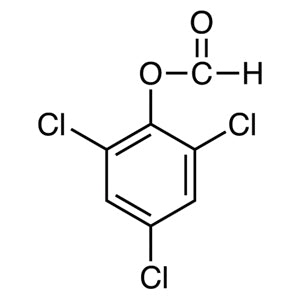
2,4,6-TrichlorophenylFormate TCI T3121
Regular price From Rp 769.650,00Regular price -
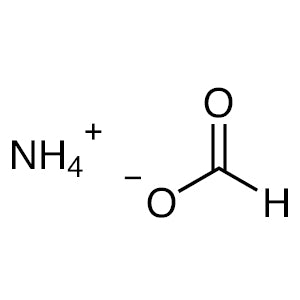
AmmoniumFormate TCI A3378
Regular price From Rp 823.200,00Regular price -
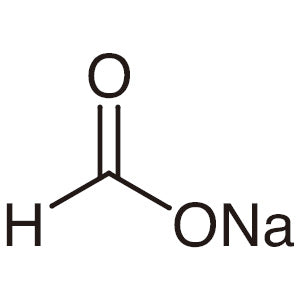
SodiumFormate TCI S0807
Regular price From Rp 505.050,00Regular price -
PotassiumFormate TCI P3246
Regular price From Rp 584.850,00Regular price -
PhenylFormate TCI P2770
Regular price From Rp 2.199.750,00Regular price -
2-PhenylethylFormate TCI F0363
Regular price From Rp 477.750,00Regular price -
CyanomethylFormate[FormylatingReagent] TCI F0356
Regular price From Rp 3.021.900,00Regular price -
2-MethylpentylFormate TCI F0174
Regular price Rp 1.353.450,00Regular price


![Cyanomethyl Formate [Formylating Reagent] (CAS 150760-95-5) - TCI F0356 - AMI Scientific](http://amiscientific.com/cdn/shop/files/TCI2510F0356.jpg?v=1767113591&width=533)
