


2-(Hydroxymethyl)phenylboronic Acid Cyclic Monoester is the cyclic form of an aromatic boronic acid in which the hydroxymethyl group at the ortho position has closed to form a five-membered oxaborole ring. This structure belongs to the benzoxaborole family, one of the most extensively studied boron-based heterocyclic scaffolds of the past two decades. In the laboratory, this material serves as a heterocyclic building block for constructing bioactive molecules, as a diol-binding receptor in chemical sensors, and as an organoboron reagent in the cross-coupling reactions routinely performed in modern organic synthesis.
The characteristic that makes this compound a preferred choice is the behaviour of its boron atom. In the cyclic form, the trigonal planar boron atom converts very readily to the anionic tetrahedral form when it binds a diol group or a hydroxide ion, and this conversion occurs at a pH closer to physiological conditions than is the case for ordinary aryl boronic acids. That property delivers better carbohydrate binding affinity, adequate solubility in aqueous media, and higher storage stability, because the cyclic form is protected against boroxine trimerisation.
In Indonesian laboratories, this building block is typically used in university and institutional research groups working on medicinal chemistry, carbohydrate recognition, and the synthesis of boron-containing heterocycles. It is generally handled at small to moderate scale on the bench, weighed out for multi-step synthetic routes or for the preparation of sensor and receptor systems, and kept as a catalogue reagent so that a synthetic sequence can be repeated with consistent material from one experiment to the next.
TCI brochures (PDF)
- Benzoxaboroles ― Boron-Containing Building Blocks for Drug Discovery 2025-04-01 · p. 1
- Boron Compounds 2025-10-07 · p. 16
Related TCI products
- TCI C2967 864377-33-3 3-(9H-Carbazol-9-yl)phenylboronic Acid (contains varying amounts of Anhydride)
- TCI C2926 419536-33-7 4-(9H-Carbazol-9-yl)phenylboronic Acid (contains varying amounts of Anhydride)
- TCI A2559 117098-94-9 5-Amino-2-(hydroxymethyl)phenylboronic Acid Cyclic Monoester
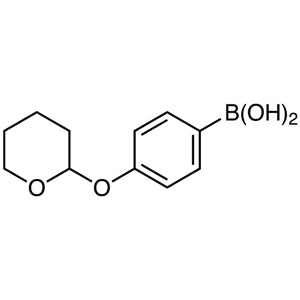
- TCI T3325 182281-01-2 4-(Tetrahydro-2H-pyran-2-yloxy)phenylboronic Acid (contains varying amounts of Anhydride)
- TCI B4523 1537876-31-5 Bis(3-bromophenylboronic Acid) scyllo-Inositol Complex Dipotassium Pentahydrate
- TCI P2282 867044-33-5 4-(2-Phenyl-1H-benzimidazol-1-yl)phenylboronic Acid (contains varying amounts of Anhydride)
- Heterocyclic building block synthesis: the preformed oxaborole ring provides a ready benzoxaborole core, so researchers can elaborate bioactive target molecules without first having to construct the boron heterocycle themselves.
- Chemical sensor development: the boron atom binds diol groups reversibly, making this compound suitable as a recognition element in receptors designed to detect sugars and other polyol-containing analytes.
- Carbohydrate recognition studies: binding proceeds at a pH nearer physiological conditions than with ordinary aryl boronic acids, giving useful carbohydrate affinity in the aqueous media such studies require.
- Cross-coupling reactions: as an organoboron reagent it participates in the cross-coupling chemistry that is standard practice in modern organic synthesis for forming carbon-carbon bonds.
- Medicinal chemistry research: the benzoxaborole scaffold is among the most studied boron frameworks of recent decades, so this material supports exploratory work on boron-containing drug candidates.
| Brand | TCI |
|---|---|
| CAS number | 5735-41-1 |
| Molecular formula | — |
| Purity | — |
| Category | Chemistry > Building Blocks > Heterocyclic Building Blocks |
| Pack sizes | available in the standard TCI catalogue pack sizes; please confirm the pack option when ordering |
| Physical form | — |
| Storage | store in a cool, dry place in a tightly closed container, following the manufacturer's stated storage conditions on the product label |
- Catalogue code: H1280
Store the container tightly closed in a cool, dry, well-ventilated area away from moisture, since organoboron compounds are generally sensitive to prolonged humidity exposure. The cyclic form offers better storage stability than the open boronic acid because it is protected against boroxine trimerisation, but the original supplier container remains the most suitable packaging; if transferred, use a clean, dry, chemically compatible vessel with a secure closure and a clear label. Handle in a fume hood using gloves, safety glasses, and a laboratory coat, weigh the material promptly to limit atmospheric exposure, and consult the manufacturer's safety data sheet before first use.
—
Produk Terkait
-
3-(9H-Carbazol-9-yl)phenylboronicAcid(containsvaryingamountsofAnhydride) TCI C2967
Regular price From Rp 1.246.350,00Regular price -
4-(9H-Carbazol-9-yl)phenylboronicAcid(containsvaryingamountsofAnhydride) TCI C2926
Regular price From Rp 1.485.750,00Regular price -
5-Amino-2-(hydroxymethyl)phenylboronicAcidCyclicMonoester TCI A2559
Regular price Rp 15.793.050,00Regular price -
4-(Tetrahydro-2H-pyran-2-yloxy)phenylboronicAcid(containsvaryingamountsofAnhydride) TCI T3325
Regular price From Rp 1.776.600,00Regular price -
Bis(3-bromophenylboronicAcid)scyllo-InositolComplexDipotassiumPentahydrate TCI B4523
Regular price From Rp 717.150,00Regular price -
4-(2-Phenyl-1H-benzimidazol-1-yl)phenylboronicAcid(containsvaryingamountsofAnhydride) TCI P2282
Regular price Rp 2.625.000,00Regular price -
4-(1-Phenyl-1H-benzimidazol-2-yl)phenylboronicAcid(containsvaryingamountsofAnhydride) TCI P2158
Regular price From Rp 1.298.850,00Regular price -
4-[(1-Pyrrolidinyl)carbonyl]phenylboronicAcid(containsvaryingamountsofAnhydride) TCI P2105
Regular price From Rp 1.724.100,00Regular price




![389621-81-2 4-[(1-Pyrrolidinyl)carbonyl]phenylboronic Acid (contains varying amounts of Anhydride) - AMI Scientific](http://amiscientific.com/cdn/shop/files/TCI2510P2105.jpg?v=1768206136&width=533)