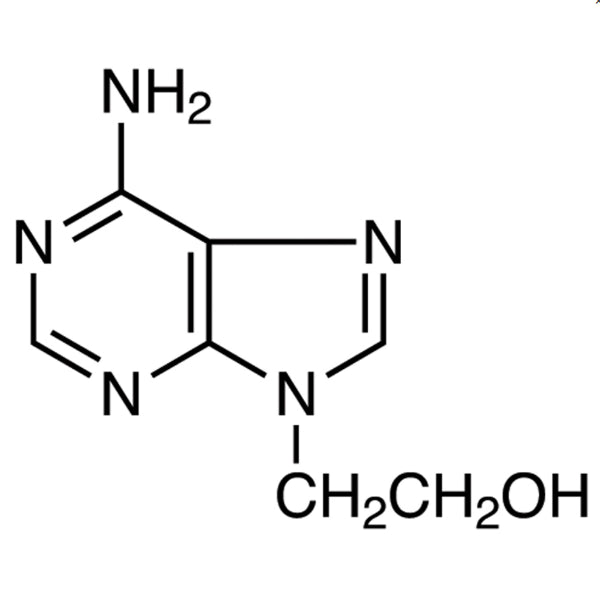
9-(2-Hydroxyethyl)adenine is a chemical compound widely used in laboratory experiments related to biochemistry and molecular biology. It belongs to the category of nucleosides and plays a crucial role in research involving DNA, RNA, and the processes of transcription and translation. This compound is commonly utilized as a building block for the synthesis of other chemical substances or as a reagent in specific chemical reactions requiring nucleoside structures. Its molecular structure is complex, enabling it to interact with various biological molecules, making it a versatile tool in laboratory settings.
The compound's chemical stability under certain conditions makes it an ideal choice for laboratory applications. Its high purity ensures accurate and precise experimental results, which are essential in scientific research. The stability and purity of 9-(2-Hydroxyethyl)adenine contribute to its reliability in both routine and advanced laboratory procedures. These characteristics make it a preferred material for researchers aiming to maintain the integrity of their experiments.
In Indonesian laboratories, 9-(2-Hydroxyethyl)adenine is frequently used in genetic, pharmacological, and biotechnological research. Local researchers employ this compound in drug development, disease mechanism studies, and DNA modification experiments. Its availability and reliability make it a key component in various scientific investigations conducted in Indonesia.
TCI brochures (PDF)
- Nucleosides, Nucleotides, Nucleic Acids and Related Reagents 2026-03-23 · p. 4
- Genetic research utilizes 9-(2-Hydroxyethyl)adenine for studying DNA structure and function due to its nucleoside properties.
- Pharmacological studies benefit from this compound as it aids in the synthesis of drug-related molecules and biochemical pathways.
- Biotechnological applications rely on this compound for DNA modification and molecular biology experiments.
- Molecular biology experiments use it as a reagent in nucleic acid synthesis and hybridization processes.
- Biochemical research employs it to investigate enzyme interactions and metabolic pathways in biological systems.
| Brand | TCI |
|---|---|
| CAS number | 707-99-3 |
| Molecular formula | — |
| Purity | — |
| Category | Life Science > Biochemicals and Reagents > Nucleosides, Nucleotides, Oligonucleotides |
| Pack sizes | Available in various quantities as per standard laboratory requirements |
| Physical form | Solid powder |
| Storage | Store in a cool, dry place away from direct light |
This compound should be stored in a cool, dry environment to maintain its chemical stability. It is recommended to use airtight containers to prevent moisture absorption and contamination. Proper labeling of containers is essential to ensure safe handling and prevent accidental exposure. Laboratory personnel should wear appropriate personal protective equipment when handling this material. Avoid direct contact with skin and eyes, and ensure adequate ventilation in the workspace. Regular monitoring of storage conditions helps maintain the integrity and usability of the compound for scientific research purposes.
—
Produk Terkait
-
(R)-9-(2-Hydroxypropyl)adenine TCI H1291
Regular price From Rp 610.050,00Regular price -
AdenineSulfateDihydrate TCI A0151
Regular price From Rp 3.021.900,00Regular price -
AdenineHydrochlorideHemihydrate TCI A0150
Regular price From Rp 664.650,00Regular price -
Adenine TCI A0149
Regular price From Rp 1.696.800,00Regular price -
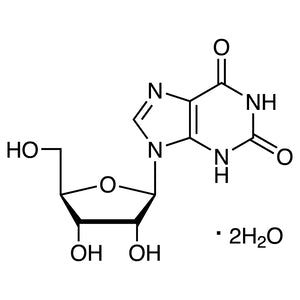
XanthosineDihydrate TCI X0008
Regular price Rp 1.115.100,00Regular price -
ValacyclovirHydrochloride TCI V0111
Regular price From Rp 2.094.750,00Regular price -
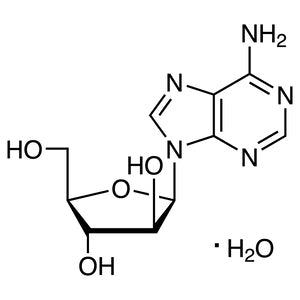
VidarabineMonohydrate TCI V0098
Regular price From Rp 3.658.200,00Regular price -
2',3',5'-Tri-O-acetyl-6-chloro-2-iodopurineRiboside TCI T2691
Regular price From Rp 6.520.500,00Regular price