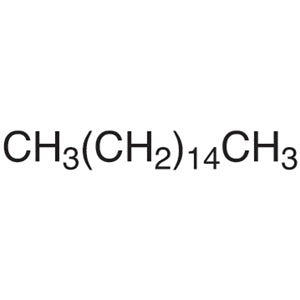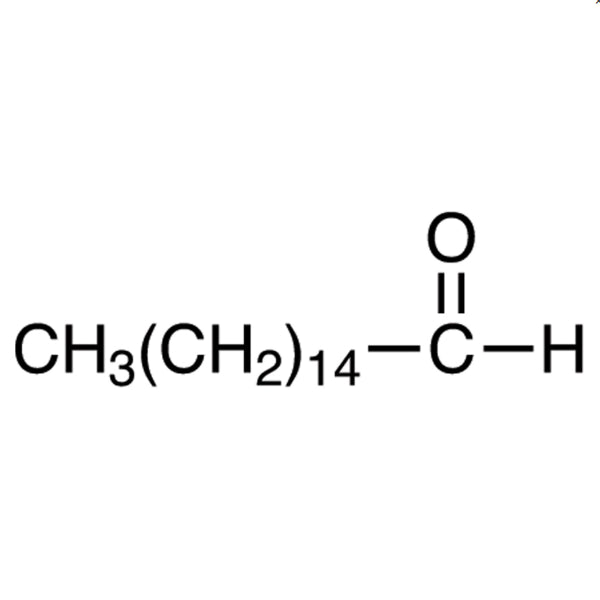
TCI H1296 Hexadecanal, also known as palmitaldehyde, is a straight-chain saturated fatty aldehyde containing sixteen carbon atoms. It is one of the most biologically significant fatty aldehydes, since it is generated inside cells through the breakdown of plasmalogens and sphingolipids. For this reason it is frequently used as a target analyte or as a reference compound in lipid metabolism research. In the laboratory it serves as a starting material for the synthesis of lipid derivatives, as a standard during analytical method development, and as a test compound in studies of membrane biochemistry and chemical communication between organisms.
The property that makes this compound a preferred choice is its C16 chain length, which matches that of palmitic acid, the most abundant lipid in many biological systems. Experimental results obtained with hexadecanal can therefore be related directly to genuine physiological conditions. Its long hydrocarbon chain is strongly hydrophobic and dissolves well in non-polar organic solvents, while the terminal aldehyde group is reactive toward amines, hydrazines, and organometallic reagents, leaving the molecule open to a wide range of chemical transformations. This reactivity is what makes the compound useful for preparing Schiff bases, reduced fatty alcohols, and conjugates.
In Indonesian laboratories, hexadecanal is typically handled in university and institutional research groups working on lipid biochemistry, in analytical laboratories building and validating chromatographic methods, and in synthesis laboratories preparing lipid derivatives. Its role as a reference compound for plasmalogen and sphingolipid degradation products makes it suitable for academic research programmes, method development work, and biochemical studies where a well-defined long-chain fatty aldehyde is required.
Related TCI products
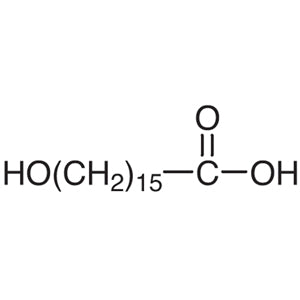
- TCI H0675 506-13-8 16-Hydroxyhexadecanoic Acid
- TCI H0293 505-54-4 Hexadecanedioic Acid
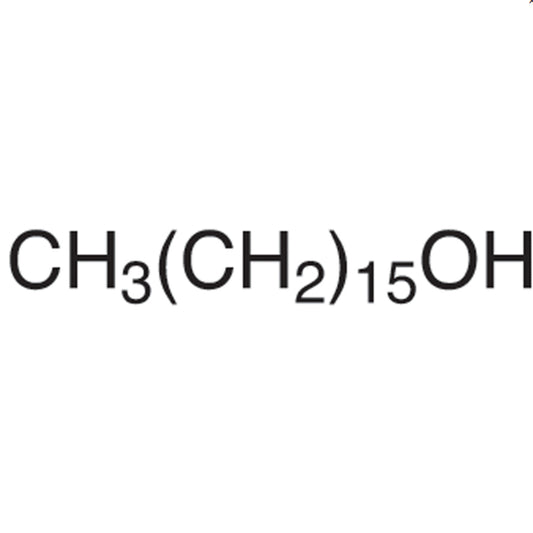
- TCI H0071 36653-82-4 1-Hexadecanol
- TCI S0555 544-76-3 Reference Material for Flash Point Certified by The Japan Petroleum Institute, Hexadecane
- TCI S0288 544-76-3 Hexadecane [Standard Material for GC]
- TCI H0066 544-76-3 Hexadecane
- Lipid metabolism research: hexadecanal is a natural breakdown product of plasmalogens and sphingolipids, making it the appropriate reference compound when tracing these degradation pathways in cells.
- Analytical method development: its defined structure as a straight-chain C16 fatty aldehyde allows it to serve as a standard when chromatographic or spectroscopic methods for fatty aldehydes are being established.
- Synthesis of lipid derivatives: the reactive terminal aldehyde group readily forms Schiff bases with amines, reacts with hydrazines, and undergoes addition with organometallic reagents for further transformation.
- Membrane biochemistry studies: the strongly hydrophobic C16 chain matches the chain length of palmitic acid, so experimental results can be related directly to real physiological membrane conditions.
- Chemical communication studies: hexadecanal is used as a test compound in investigations of chemical signalling between organisms, where a defined long-chain fatty aldehyde is required.
| Brand | TCI |
|---|---|
| CAS number | 629-80-1 |
| Molecular formula | — |
| Purity | — |
| Category | Life Science > Biochemicals and Reagents > Lipids |
| Pack sizes | available in TCI catalogue pack sizes; please confirm the current option when ordering |
| Physical form | — |
| Storage | store according to the conditions stated on the product label and in the supplied documentation |
- Chemical name: Hexadecanal (palmitaldehyde)
Store hexadecanal in a cool location in its original tightly closed container, following the storage conditions stated on the manufacturer's label and safety data sheet. Fatty aldehydes are susceptible to oxidation on exposure to air, so containers should be kept well sealed and opened only when required. Use glass containers that are compatible with non-polar organic solvents, and keep the material away from strong oxidising agents, amines, and other reactive substances. Handle the compound in a well-ventilated area or fume hood, wearing gloves, safety goggles, and a laboratory coat. Consult the safety data sheet supplied with the product before use and before any disposal of residues.
—
Product Categories
Produk Terkait
-
16-HydroxyhexadecanoicAcid TCI H0675
Regular price From Rp 2.041.200,00Regular price -
HexadecanedioicAcid TCI H0293
Regular price From Rp 1.246.350,00Regular price -
1-Hexadecanol TCI H0071
Regular price From Rp 477.750,00Regular price -
ReferenceMaterialforFlashPointCertifiedbyTheJapanPetroleumInstitute,Hexadecane TCI S0555
Regular price Rp 4.161.150,00Regular price -
Hexadecane[StandardMaterialforGC] TCI S0288
Regular price Rp 2.094.750,00Regular price -
Hexadecane TCI H0066
Regular price From Rp 530.250,00Regular price -
Tetradecanal TCI T2696
Regular price Rp 8.825.250,00Regular price -
Pentadecanal TCI P1869
Regular price Rp 9.804.900,00Regular price



![544-76-3 Hexadecane [Standard Material for GC] - AMI Scientific](http://amiscientific.com/cdn/shop/files/TCI2510S0288.jpg?v=1767138614&width=533)