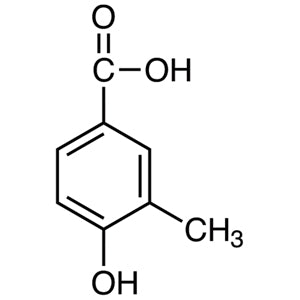
4-Hydroxy-3-methylbenzoic Acid is a benzoic acid derivative carrying a hydroxyl group at the para position and a methyl group at the meta position relative to the carboxyl group. This arrangement makes it a widely used aromatic building block in organic synthesis for constructing esters, amides, ethers, and a broad range of other derivatives. In the laboratory, cresotinate compounds of this type frequently serve as the core scaffold in target molecule design, because their three functional groups can be addressed sequentially with a level of selectivity that is controlled through the choice of reagents.
The characteristic that makes this compound a preferred choice is its substitution pattern, which differs from that of other isomers and therefore gives researchers control over the geometry of the final molecule. The phenolic hydroxyl group at the para position is more sterically accessible than it would be at the ortho position, while the methyl group at the meta position exerts a subtle electronic influence without obstructing reactions at the carboxyl group. As a solid that is stable at room temperature, the compound is straightforward to weigh out and store, and it can be repurified by recrystallisation whenever a higher level of purity is required.
In Indonesian laboratories, this building block is used in synthetic organic chemistry work where a trifunctional aromatic starting material is needed. Its stability as a room temperature solid suits the practical conditions of local research and teaching laboratories, where materials must tolerate ordinary handling and storage between experiments. Researchers select it when a defined substitution pattern is required so that subsequent derivatisation steps proceed with predictable regiochemistry.
Related TCI products
- Ester synthesis — the carboxyl group can be esterified directly, and the distinct reactivity of the phenolic hydroxyl allows the two oxygen functions to be differentiated through reagent choice.
- Amide formation — the carboxylic acid serves as the acyl component in amide coupling, providing a substituted aromatic fragment for building larger target molecules in stepwise routes.
- Ether preparation — the para phenolic hydroxyl is sterically accessible and therefore convenient for alkylation or arylation when an aryl ether linkage is required in the target structure.
- Target molecule scaffold design — its three functional groups can be worked on sequentially, letting researchers assemble complex molecules around a defined aromatic core with controlled selectivity.
- Isomer-controlled synthesis — the meta methyl and para hydroxyl arrangement fixes the geometry of the resulting product, which matters when a specific substitution pattern is needed rather than a mixture.
| Brand | TCI |
|---|---|
| CAS number | 499-76-3 |
| Molecular formula | — |
| Purity | — |
| Category | Chemistry > Building Blocks > Non-Heterocyclic Building Blocks |
| Pack sizes | — |
| Physical form | solid at room temperature |
| Storage | store as a stable solid under normal laboratory storage conditions; pack sizes available on request |
- Product code: H1319
Store the material in a tightly closed container in a cool, dry place away from moisture and direct sunlight. The original supplier container or an equivalent chemically resistant vessel with a well-sealing cap is suitable, and containers should be kept closed when not in active use to limit exposure to atmospheric humidity. Handle the solid in a fume hood or a well-ventilated area to avoid inhalation of dust, and wear standard laboratory personal protective equipment including gloves, safety glasses, and a laboratory coat. Weigh out only the quantity required for the work at hand, avoid returning unused material to the stock container, and label all secondary containers clearly. If a higher level of purity is required after a period of storage, the compound can be repurified by recrystallisation before use.
—
Produk Terkait
-
2-Hydroxy-6-methylbenzoicAcid TCI M3737
Regular price From Rp 2.332.050,00Regular price -
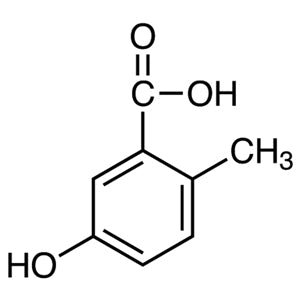
5-Hydroxy-2-methylbenzoicAcid TCI H1586
Regular price From Rp 903.000,00Regular price -
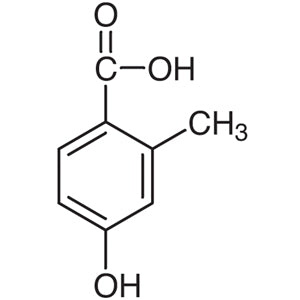
4-Hydroxy-2-methylbenzoicAcid TCI H1311
Regular price From Rp 2.359.350,00Regular price -
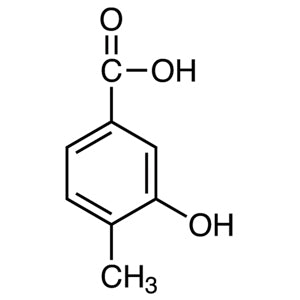
3-Hydroxy-4-methylbenzoicAcid TCI H0929
Regular price From Rp 769.650,00Regular price -
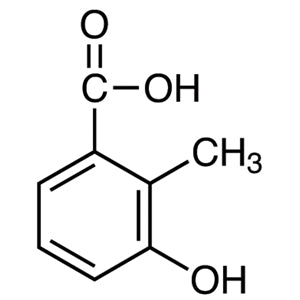
3-Hydroxy-2-methylbenzoicAcid TCI H0885
Regular price From Rp 477.750,00Regular price -
2-Bromo-5-methylbenzoicAcid TCI B4145
Regular price From Rp 1.510.950,00Regular price -
2-Bromo-6-methylbenzoicAcid TCI B4097
Regular price From Rp 1.431.150,00Regular price -
2-Bromo-4-methylbenzoicAcid TCI B3879
Regular price From Rp 795.900,00Regular price