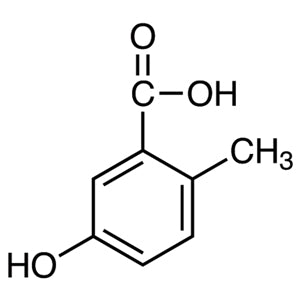
5-Hydroxy-2-methylbenzoic Acid is a chemical compound widely used in laboratory settings for its versatility in organic synthesis. It serves as a key building block in the development of complex organic molecules, particularly in pharmaceutical and industrial chemistry. Its aromatic structure, combined with hydroxyl and carboxylic acid functional groups, makes it a valuable reagent for various chemical transformations. This compound is commonly employed in reactions such as esterification, substitution, and other synthetic pathways that require a stable aromatic core. Its chemical identity and reactivity make it an essential component in the toolkit of chemists and researchers.
The compound's physical and chemical properties contribute to its popularity in laboratory applications. It exhibits stability under controlled conditions, although it is sensitive to moisture and oxidation. Its relatively high melting and boiling points make it suitable for storage in sealed containers away from heat sources. These characteristics ensure consistent performance in experiments, making it a reliable choice for both academic and industrial research. Its predictable behavior and compatibility with a wide range of functional groups further enhance its utility in synthetic chemistry.
In Indonesian laboratories, 5-Hydroxy-2-methylbenzoic Acid is extensively used in chemical and pharmaceutical research. It is a common reagent in university and research institute laboratories, where it supports the development of new compounds and the study of chemical reactions. Its availability and reliability make it a preferred material for both basic and advanced experiments. Its role in the synthesis of pharmaceuticals and dyes underscores its importance in the scientific community across Indonesia.
Related TCI products
- TCI M3737 567-61-3 2-Hydroxy-6-methylbenzoic Acid
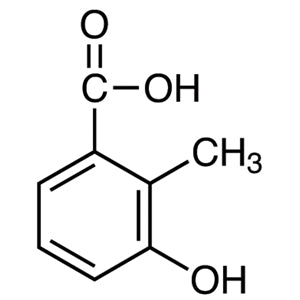
- TCI H0885 603-80-5 3-Hydroxy-2-methylbenzoic Acid
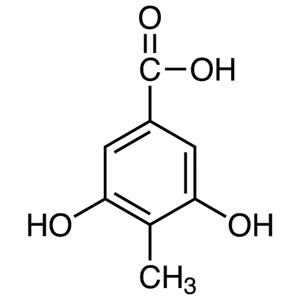
- TCI D4712 28026-96-2 3,5-Dihydroxy-4-methylbenzoic Acid
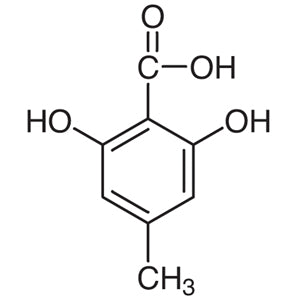
- TCI D2770 480-67-1 2,6-Dihydroxy-4-methylbenzoic Acid
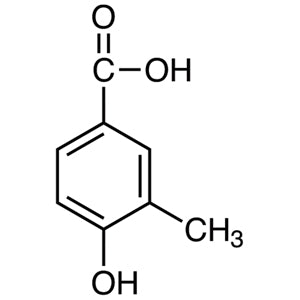
- TCI H1319 499-76-3 4-Hydroxy-3-methylbenzoic Acid
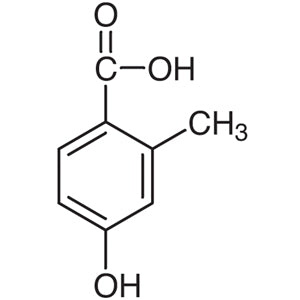
- TCI H1311 578-39-2 4-Hydroxy-2-methylbenzoic Acid
- Organic synthesis is a primary application where this compound is used to build complex molecules through substitution and esterification reactions.
- Pharmaceutical research benefits from its role in the development of drug compounds due to its aromatic structure and functional groups.
- Dye and pigment production utilizes its chemical properties to create colored compounds with desired characteristics.
- Industrial chemical manufacturing incorporates it as a building block for various chemical processes and intermediate products.
- Analytical chemistry uses it as a standard reference material for testing and quality control procedures in laboratory settings.
| Brand | TCI |
|---|---|
| CAS number | 578-22-3 |
| Molecular formula | — |
| Purity | — |
| Category | Chemistry > Building Blocks > Non-Heterocyclic Building Blocks |
| Pack sizes | Available in various quantities as per standard laboratory supply |
| Physical form | Solid |
| Storage | Store in sealed containers away from heat and moisture |
This compound should be stored in a cool, dry place in tightly sealed containers to prevent exposure to moisture and oxidation. It is recommended to keep it away from heat sources and direct sunlight to maintain its chemical stability. Due to its sensitivity, it is important to handle it with care during preparation and use. Laboratory personnel should ensure proper ventilation when working with this material to minimize potential exposure. The compound is best suited for storage in glass or high-density polyethylene containers to preserve its integrity over time. Regular monitoring of storage conditions is advised to ensure optimal performance in experimental applications.
—
Produk Terkait
-
2-Hydroxy-6-methylbenzoicAcid TCI M3737
Regular price From Rp 2.332.050,00Regular price -
3-Hydroxy-2-methylbenzoicAcid TCI H0885
Regular price From Rp 477.750,00Regular price -
3,5-Dihydroxy-4-methylbenzoicAcid TCI D4712
Regular price From Rp 1.431.150,00Regular price -
2,6-Dihydroxy-4-methylbenzoicAcid TCI D2770
Regular price Rp 7.234.500,00Regular price -
4-Hydroxy-3-methylbenzoicAcid TCI H1319
Regular price From Rp 1.378.650,00Regular price -
4-Hydroxy-2-methylbenzoicAcid TCI H1311
Regular price From Rp 2.359.350,00Regular price -
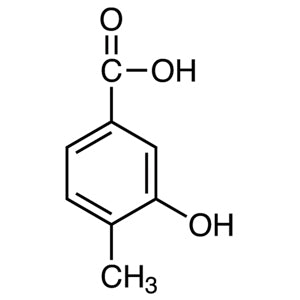
3-Hydroxy-4-methylbenzoicAcid TCI H0929
Regular price From Rp 769.650,00Regular price -
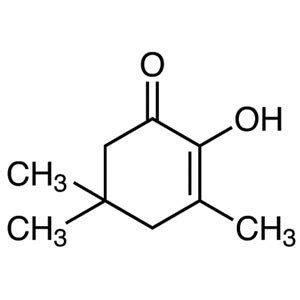
2-Hydroxy-3,5,5-trimethyl-2-cyclohexen-1-one TCI T2723
Regular price Rp 1.273.650,00Regular price