

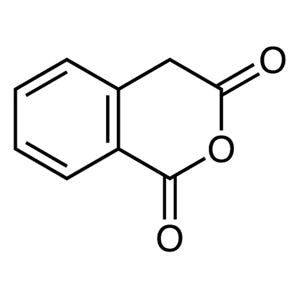
Homophthalic Anhydride is a six-membered cyclic anhydride built on a benzene framework fused to a dicarbonyl ring, which gives the compound two reactive carbonyl centres together with a benzylic position that is readily deprotonated. The material belongs to the class of non-heterocyclic building blocks that are highly valued in organic synthesis, because in a single reaction step it is able to construct new and structurally complex rings. In the laboratory it serves as an efficient shortcut towards lactam and isoquinolinone frameworks, structural motifs frequently encountered in research on bioactive compounds and synthetic natural products.
The property that makes this reagent attractive is its high yet well-directed reactivity. The anhydride ring is readily opened by nucleophiles such as amines and alcohols, while the comparatively acidic benzylic proton allows the formation of an enol or enolate that can subsequently react with imines and other electrophiles. The combination of these two characteristics means that annulation reactions can proceed in a single pot with several bonds being formed at the same time, so the overall step economy of a synthetic sequence becomes considerably more efficient. Its presentation as a solid also makes weighing straightforward for the analyst.
In Indonesian laboratories this building block is typically used in university research groups, organic synthesis laboratories, and method development units working on heterocyclic chemistry. It is generally weighed out in small portions for exploratory reactions and scale-up trials, then handled under dry conditions on the bench or in a fume hood. Because it condenses several synthetic steps into one operation, it is a practical choice for research programmes that need to build complex ring systems without a long sequence of intermediates.
- Isoquinolinone synthesis — the anhydride ring and the acidic benzylic position work together so that the isoquinolinone core can be assembled in a single condensation step with an imine partner.
- Lactam framework construction — reaction with amines opens the anhydride and delivers nitrogen-containing ring systems directly, shortening routes towards lactam scaffolds studied in bioactive compound research.
- One-pot annulation reactions — because several bonds are formed at once in the same vessel, this reagent is well suited to step-economical annulation studies that avoid isolating intermediates.
- Bioactive compound and natural product research — the isoquinolinone and lactam motifs it generates occur frequently in synthetic natural product targets, making it a convenient starting point for such programmes.
- Nucleophilic ring-opening chemistry — amines and alcohols readily open the anhydride ring, allowing controlled preparation of derivatives for structure–activity and methodology investigations.
| Brand | TCI |
|---|---|
| CAS number | 703-59-3 |
| Molecular formula | — |
| Purity | — |
| Category | Chemistry > Building Blocks > Non-Heterocyclic Building Blocks |
| Pack sizes | available in the standard pack sizes listed on the product page |
| Physical form | solid, which makes accurate weighing straightforward |
| Storage | keep in a tightly closed container under dry conditions |
- Product code: H1346
Store the container tightly closed in a cool, dry place, away from moisture, since cyclic anhydrides are sensitive to hydrolysis on contact with water or humid air. Original supplier packaging or a well-sealed glass container is suitable, and repeated exposure of the bulk material to ambient air should be minimised by weighing out only the portion required. Handle the solid in a fume hood using gloves, safety glasses, and a laboratory coat, avoid generating dust during transfer, and keep the material separated from amines, alcohols, and other nucleophiles that would react with it. Consult the manufacturer's safety data sheet before use and dispose of residues according to applicable laboratory waste procedures.
—
Produk Terkait
-
HomophthalicAcid TCI T0262
Regular price Rp 1.273.650,00Regular price -
3-BromophthalicAnhydride TCI B4061
Regular price From Rp 1.246.350,00Regular price -
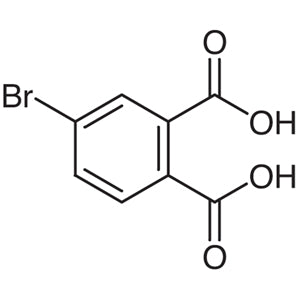
4-BromophthalicAcid TCI B2257
Regular price From Rp 584.850,00Regular price -
N-Bromophthalimide TCI B1697
Regular price From Rp 875.700,00Regular price -
4-BromophthalicAnhydride TCI B1693
Regular price From Rp 2.386.650,00Regular price -
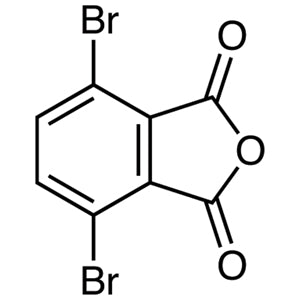
3,6-DibromophthalicAnhydride TCI D4724
Regular price From Rp 3.155.250,00Regular price -
ValericAnhydride TCI V0006
Regular price From Rp 875.700,00Regular price -
Bicyclo[2.2.2]oct-5-ene-2,3-dicarboxylicAnhydride TCI B3038
Regular price Rp 3.605.700,00Regular price





![6708-37-8 Bicyclo[2.2.2]oct-5-ene-2,3-dicarboxylic Anhydride - AMI Scientific](http://amiscientific.com/cdn/shop/files/TCI2510B3038.jpg?v=1767089273&width=533)