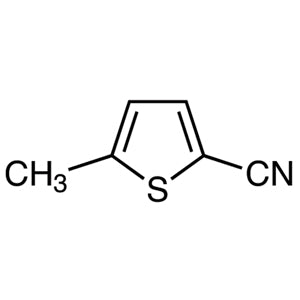
1,3,6-Hexanetricarbonitrile is a chemical compound widely used in organic synthesis as a building block for complex molecule development. This compound features a carbon chain with three nitrile groups, making it highly reactive and versatile in various chemical reactions. In the laboratory, it serves as a fundamental reagent for creating heterocyclic compounds, polymers, and functionalized molecules. Its structural simplicity and chemical reactivity make it an essential tool for chemists working on advanced synthetic routes.
The compound is known for its chemical stability and high reactivity under different reaction conditions. It has a high melting point and is resistant to organic solvents, which makes it suitable for reactions requiring elevated temperatures or reactive environments. These properties ensure that it maintains its integrity during synthesis processes, contributing to the accuracy and reliability of laboratory results. Its ability to withstand harsh conditions enhances its utility in both academic and industrial research settings.
In Indonesian laboratories, 1,3,6-Hexanetricarbonitrile is commonly used in organic chemistry research conducted by universities and research institutions. Its availability and reliability support high-quality research aligned with international standards. The compound plays a crucial role in the development of new materials and pharmaceuticals, making it a preferred choice for scientists in Indonesia. Its consistent performance and well-documented properties make it an indispensable component in the chemical research toolkit.
Related TCI products
- TCI A3039 103646-82-8 5-Amino-1-(p-tolyl)pyrazole-4-carbonitrile
- TCI C4103 24973-49-7 [1,1'-Biphenyl]-2-carbonitrile
- TCI C2327 183582-92-5 1,3,5-Cyclohexanetricarbonitrile (cis- and trans- mixture)
- TCI C1967 168280-46-4 (1alpha,3alpha,5alpha)-1,3,5-Cyclohexanetricarbonitrile
- TCI B6956 690260-67-4 2'-Bromo-[1,1'-biphenyl]-3-carbonitrile
- TCI B5965 160521-46-0 3'-Bromo[1,1'-biphenyl]-4-carbonitrile
- Synthesis of heterocyclic compounds, as its nitrile groups enable the formation of complex ring structures essential in pharmaceutical and material science research.
- Polymer production, where its carbon chain structure provides a foundation for creating various types of synthetic polymers with desired properties.
- Functionalized molecule development, due to its reactivity and compatibility with a wide range of chemical modifications and reaction conditions.
- Organic chemistry education, as it is a standard reagent used in teaching and training for advanced synthetic techniques and reaction mechanisms.
- Industrial chemical processes, where its stability and reactivity make it suitable for large-scale synthesis and production of specialty chemicals.
| Brand | TCI |
|---|---|
| CAS number | 1772-25-4 |
| Molecular formula | — |
| Purity | — |
| Category | Chemistry > Building Blocks > Non-Heterocyclic Building Blocks |
| Pack sizes | Available in various quantities as per supplier specifications |
| Physical form | Solid |
| Storage | Store in a cool, dry, and well-ventilated area away from moisture and direct sunlight |
This compound should be stored in a cool, dry, and well-ventilated area to maintain its chemical stability. It is recommended to use airtight containers to prevent exposure to moisture and air, which could affect its reactivity. Since it is a solid, it should be kept in a sealed container to avoid contamination and degradation. Laboratory personnel should handle it with care, using appropriate personal protective equipment such as gloves and safety goggles. It is important to ensure that the storage area is free from incompatible materials to prevent any potential chemical interactions. Proper storage conditions help preserve the compound’s integrity and ensure its effectiveness in laboratory applications.
—
Produk Terkait
-
5-Amino-1-(p-tolyl)pyrazole-4-carbonitrile TCI A3039
Regular price Rp 3.312.750,00Regular price -
[1,1'-Biphenyl]-2-carbonitrile TCI C4103
Regular price From Rp 2.094.750,00Regular price -
1,3,5-Cyclohexanetricarbonitrile(cis-andtrans-mixture) TCI C2327
Regular price Rp 4.957.050,00Regular price -
(1alpha,3alpha,5alpha)-1,3,5-Cyclohexanetricarbonitrile TCI C1967
Regular price Rp 4.797.450,00Regular price -
2'-Bromo-[1,1'-biphenyl]-3-carbonitrile TCI B6956
Regular price From Rp 2.757.300,00Regular price -
3'-Bromo[1,1'-biphenyl]-4-carbonitrile TCI B5965
Regular price From Rp 2.359.350,00Regular price -
3'-Bromo[1,1'-biphenyl]-3-carbonitrile TCI B5964
Regular price From Rp 2.094.750,00Regular price -
5-Methylthiophene-2-carbonitrile TCI M2959
Regular price Rp 1.749.300,00Regular price

![[1,1'-Biphenyl]-2-carbonitrile (CAS 24973-49-7) - TCI C4103 - AMI Scientific](http://amiscientific.com/cdn/shop/files/TCI2510C4103.jpg?v=1769180472&width=533)


![2'-Bromo-[1,1'-biphenyl]-3-carbonitrile (CAS 690260-67-4) - TCI B6956 - AMI Scientific](http://amiscientific.com/cdn/shop/files/TCI2510B6956.jpg?v=1771058291&width=533)
![3'-Bromo[1,1'-biphenyl]-4-carbonitrile (CAS 160521-46-0) - TCI B5965 - AMI Scientific](http://amiscientific.com/cdn/shop/files/TCI2510B5965.jpg?v=1769180247&width=533)
![3'-Bromo[1,1'-biphenyl]-3-carbonitrile (CAS 1040141-34-1) - TCI B5964 - AMI Scientific](http://amiscientific.com/cdn/shop/files/TCI2510B5964.jpg?v=1769144661&width=533)