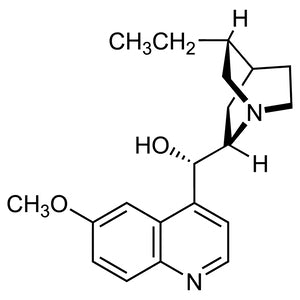
Hydroquinidine, with the CAS number 1435-55-8, is a chemical compound widely utilized in laboratory settings for its catalytic properties. It belongs to the class of organocatalysts and is commonly found in the field of catalysis and inorganic chemistry. This compound plays a crucial role in accelerating chemical reactions without undergoing significant degradation, making it an essential tool for researchers. Its unique molecular structure allows it to interact effectively with various substrates, enabling the development of more efficient and precise chemical processes.
One of the key attributes that make Hydroquinidine a preferred choice is its chemical stability under specific conditions. This stability ensures consistent performance in laboratory experiments, reducing the risk of unpredictable outcomes. Additionally, Hydroquinidine exhibits strong binding capabilities with different substrates, enhancing its versatility in catalytic applications. These properties make it an ideal candidate for use in both academic and industrial research environments.
In Indonesian laboratories, Hydroquinidine is frequently employed in scientific research, particularly in organic chemistry and catalysis. It is commonly found in university laboratories, research institutions, and other scientific facilities where chemical reactions require precision and efficiency. Its reliability and effectiveness have made it a standard component in many experimental setups, supporting the advancement of chemical research in the region.
TCI brochures (PDF)
- Asymmetric Organocatalysts 2025-06-12 · p. 8
Related TCI products
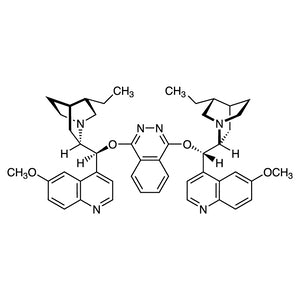
- TCI H1114 140853-10-7 Hydroquinidine 1,4-Phthalazinediyl Diether
- TCI H0752 1476-98-8 Hydroquinidine Hydrochloride
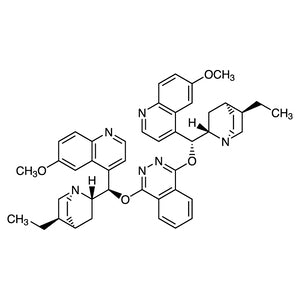
- TCI H1115 140924-50-1 Hydroquinine 1,4-Phthalazinediyl Diether
- TCI D6112 522-66-7 (-)-Dihydroquinine
- TCI T4195 67123-97-1 H-DL-Tic-OH
- TCI T3080 1089663-51-3 N-(2-Thiophenesulfonyl)-L-prolinamide
- Organic synthesis reactions benefit from Hydroquinidine’s ability to catalyze complex transformations efficiently, enhancing reaction yields and reducing byproduct formation.
- Catalytic asymmetric synthesis relies on Hydroquinidine’s chiral properties, enabling the selective production of enantiomerically pure compounds.
- Analytical chemistry applications use Hydroquinidine as a reagent for detecting and quantifying specific compounds in complex mixtures.
- Pharmaceutical research incorporates Hydroquinidine to develop new drug compounds by facilitating key chemical transformations in drug synthesis.
- Environmental studies utilize Hydroquinidine to analyze and monitor the presence of certain contaminants in water and soil samples.
| Brand | TCI |
|---|---|
| CAS number | 1435-55-8 |
| Molecular formula | — |
| Purity | — |
| Category | Chemistry > Catalysis and Inorganic Chemistry > Organocatalysts [Catalysis] |
| Pack sizes | Available in various quantities as per supplier specifications |
| Physical form | Solid powder |
| Storage | Store in a cool, dry place away from direct light and moisture |
Hydroquinidine should be stored in a cool, dry environment to maintain its chemical stability and prevent degradation. It is recommended to keep it in airtight containers to minimize exposure to moisture and air, which can affect its performance. Due to its potential reactivity, it should be handled with care, using appropriate personal protective equipment such as gloves and safety goggles. It is important to store Hydroquinidine away from incompatible substances to ensure safety in the laboratory. Regular monitoring of storage conditions helps maintain the integrity of the compound for consistent experimental results.
—
Produk Terkait
-
Hydroquinidine1,4-PhthalazinediylDiether TCI H1114
Regular price Rp 4.056.150,00Regular price -
HydroquinidineHydrochloride TCI H0752
Regular price Rp 2.757.300,00Regular price -
Hydroquinine1,4-PhthalazinediylDiether TCI H1115
Regular price From Rp 1.193.850,00Regular price -
(-)-Dihydroquinine TCI D6112
Regular price From Rp 2.094.750,00Regular price -
H-DL-Tic-OH TCI T4195
Regular price Rp 2.359.350,00Regular price -
N-(2-Thiophenesulfonyl)-L-prolinamide TCI T3080
Regular price Rp 3.155.250,00Regular price -
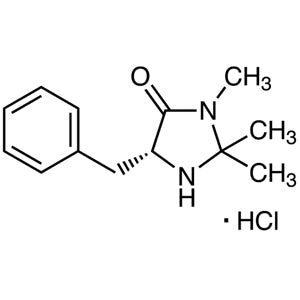
(S)-(-)-5-Benzyl-2,2,3-trimethyl-4-imidazolidinoneHydrochloride TCI T2991
Regular price From Rp 1.220.100,00Regular price -
(R)-(+)-5-Benzyl-2,2,3-trimethyl-4-imidazolidinoneHydrochloride TCI T2990
Regular price From Rp 1.087.800,00Regular price