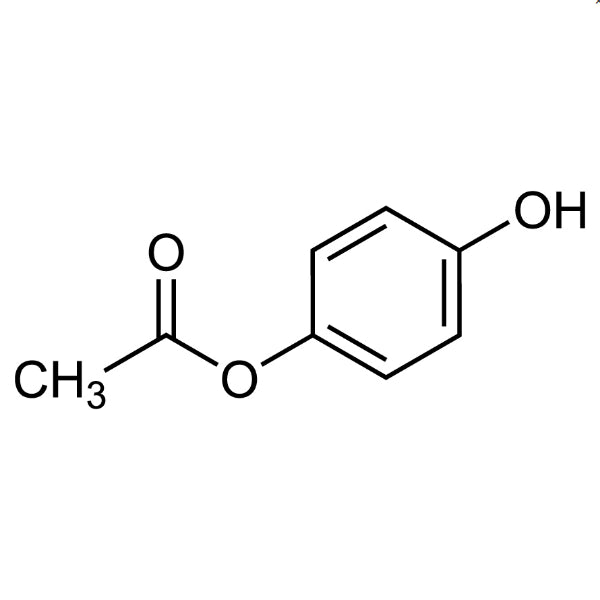
TCI H1920 4-Hydroxyphenyl Acetate is the monoacetate ester of hydroquinone, an aromatic compound carrying one free phenolic hydroxyl group and a second hydroxyl group that has been protected as an acetate ester. This half-protected structure makes it a highly useful non-heterocyclic building block for synthetic chemists, because it allows selective modification at one side of the aromatic ring without disturbing the other. In the laboratory it is also widely used as a model substrate in studies of hydrolysis reactions and as an analytical reference compound.
The property that gives this material its value is the clear difference in reactivity between the free phenol group and the acetate group. The phenol can be etherified, alkylated, acylated, or oxidised, while the acetate serves as a protecting group that is readily removed again under mild basic conditions or enzymatically to reveal hydroquinone. The para-substituted aromatic ring gives a characteristic ultraviolet absorption, so the compound and its hydrolysis products are easily followed with a UV detector. The difference in polarity between the ester and the free phenol also makes the two straightforward to separate.
In Indonesian laboratories this building block is typically encountered in university and institutional organic synthesis groups, in research on protecting-group strategies, and in analytical work where a well-defined phenolic ester is needed as a reference. It suits multi-step preparative routes as well as smaller method-development experiments, and its behaviour under basic and enzymatic conditions makes it a convenient teaching and validation substrate for students and researchers working with chromatographic and spectroscopic detection.
Related TCI products
- TCI A2960 42059-48-3 4-Acetyl-3-hydroxyphenyl Acetate
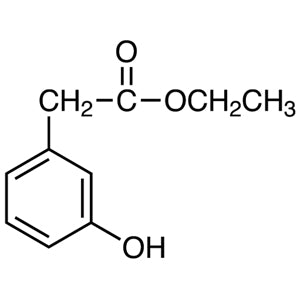
- TCI E1242 22446-38-4 Ethyl (3-Hydroxyphenyl)acetate
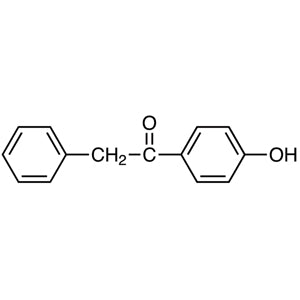
- TCI B4722 2491-32-9 Benzyl 4-Hydroxyphenyl Ketone
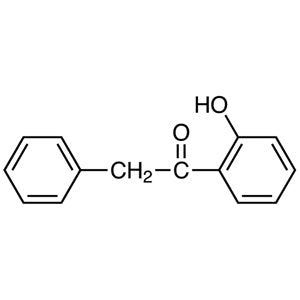
- TCI B4673 2491-31-8 Benzyl 2-Hydroxyphenyl Ketone
- TCI M1810 6386-38-5 Methyl 3-(3,5-Di-tert-butyl-4-hydroxyphenyl)propionate
- TCI H1819 621-54-5 3-(3-Hydroxyphenyl)propanoic Acid
- Selective aromatic functionalisation: the free phenol can be modified while the acetate holds the opposite position protected, giving controlled access to unsymmetrically substituted hydroquinone derivatives in multi-step routes.
- Protecting-group chemistry: the acetate is installed and later removed under mild basic or enzymatic conditions, making this compound a practical demonstration and working substrate for phenol protection strategies.
- Hydrolysis reaction studies: the ester is cleaved to hydroquinone under defined conditions, so reaction rate, catalysis, and pH dependence can be followed in a clean, well-behaved model system.
- Enzyme and esterase assay work: enzymatic release of the free phenol changes the ultraviolet absorption of the mixture, allowing conversion to be monitored continuously with a standard UV detector or spectrophotometer.
- Analytical reference and chromatographic method development: the polarity difference between the ester and the free phenol lets both species be separated and identified, supporting peak assignment and method validation.
| Brand | TCI (Tokyo Chemical Industry) |
|---|---|
| CAS number | 3233-32-7 |
| Molecular formula | — |
| Purity | — |
| Category | Chemistry > Building Blocks > Non-Heterocyclic Building Blocks |
| Pack sizes | supplied in standard TCI catalogue pack sizes; please confirm the available packing when ordering |
| Physical form | — |
| Storage | keep in the closed original container, protected from light and moisture, as indicated on the product label |
- Chemical class: monoacetate ester of hydroquinone; para-substituted aromatic building block
Store the container tightly closed in a cool, dry, well-ventilated area, away from direct sunlight, heat sources, and moisture, since the acetate group can be hydrolysed under humid or basic conditions. Keep the material in its original supplier packaging, or in a clean amber glass container with a chemically resistant closure if it must be transferred. Handle in a fume hood using safety glasses, gloves, and a laboratory coat, and avoid generating dust or breathing vapour. Keep it separate from strong bases and strong oxidising agents, label all secondary containers clearly, and follow the manufacturer safety data sheet and your institutional waste procedures for disposal.
—
Produk Terkait
-
4-Acetyl-3-hydroxyphenylAcetate TCI A2960
Regular price From Rp 1.696.800,00Regular price -
Ethyl(3-Hydroxyphenyl)acetate TCI E1242
Regular price From Rp 1.060.500,00Regular price -
Benzyl4-HydroxyphenylKetone TCI B4722
Regular price From Rp 1.035.300,00Regular price -
Benzyl2-HydroxyphenylKetone TCI B4673
Regular price From Rp 2.094.750,00Regular price -
Methyl3-(3,5-Di-tert-butyl-4-hydroxyphenyl)propionate TCI M1810
Regular price From Rp 557.550,00Regular price -
3-(3-Hydroxyphenyl)propanoicAcid TCI H1819
Regular price From Rp 875.700,00Regular price -
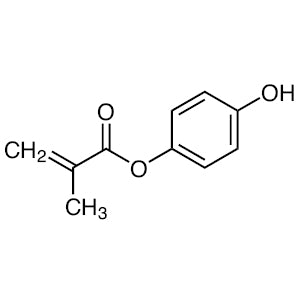
4-HydroxyphenylMethacrylate(stabilizedwithHQ) TCI H1790
Regular price From Rp 1.881.600,00Regular price -
4-(4-Hydroxyphenyl)-3-buten-2-one TCI H1564
Regular price Rp 1.936.200,00Regular price