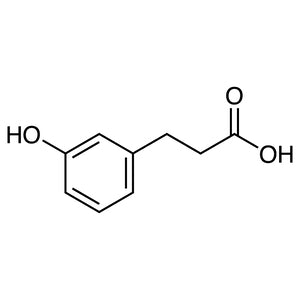
3-(3-Hydroxyphenyl)propanoic Acid is a chemical compound widely utilized in organic synthesis within laboratory settings. It serves as a foundational building block for the creation of more complex molecules, playing a crucial role in various chemical reactions. This compound is particularly valued for its versatility, allowing chemists to explore multiple synthetic pathways. Its presence in laboratory workflows supports both academic research and industrial applications, making it a staple in chemical laboratories across Indonesia.
The compound's chemical structure, featuring a hydroxyphenyl group attached to a propanoic acid chain, contributes to its reactivity and utility. It exhibits good solubility in organic solvents such as ethyl acetate and acetone, facilitating efficient handling and reaction processes. Its stability under controlled conditions also enhances its reliability in experimental setups. These properties make it a preferred choice for chemists aiming to develop new compounds with specific functional groups or applications.
In Indonesian laboratories, 3-(3-Hydroxyphenyl)propanoic Acid is commonly used in basic chemical research and industrial applications. It is a key component in experiments involving the synthesis of pharmaceuticals, materials, and analytical compounds. Its availability and predictable behavior make it a go-to material for researchers and students alike, supporting both educational and applied scientific work.
Related TCI products
- TCI M3883 13794-15-5 2-(4-Methoxyphenoxy)propanoic Acid
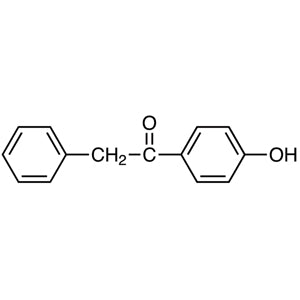
- TCI B4722 2491-32-9 Benzyl 4-Hydroxyphenyl Ketone
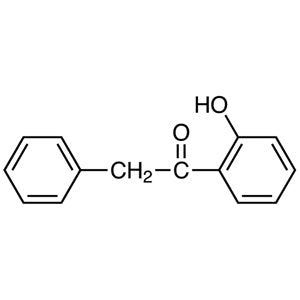
- TCI B4673 2491-31-8 Benzyl 2-Hydroxyphenyl Ketone
- TCI A2960 42059-48-3 4-Acetyl-3-hydroxyphenyl Acetate
- TCI M1810 6386-38-5 Methyl 3-(3,5-Di-tert-butyl-4-hydroxyphenyl)propionate
- TCI H1920 3233-32-7 4-Hydroxyphenyl Acetate
- Organic synthesis is a primary application where this compound is used to build complex molecules through esterification and substitution reactions.
- Pharmaceutical research benefits from its role in the development of drug compounds, as it can be modified to create bioactive molecules.
- Material science applications utilize its chemical structure to create polymers and functional materials with specific properties.
- Analytical chemistry experiments often incorporate this compound as a standard or reagent for calibration and reaction testing.
- Educational institutions use it in teaching laboratories to demonstrate fundamental chemical reactions and synthetic techniques.
| Brand | TCI |
|---|---|
| CAS number | 621-54-5 |
| Molecular formula | — |
| Purity | — |
| Category | Chemistry > Building Blocks > Non-Heterocyclic Building Blocks |
| Pack sizes | Available in various quantities as per standard laboratory supply formats |
| Physical form | Solid, typically in crystalline or powder form |
| Storage | Store in a cool, dry place away from direct sunlight and moisture |
This compound should be stored in a cool, dry environment to maintain its chemical stability and prevent degradation. It is recommended to use airtight containers to protect it from moisture and air exposure, which can affect its reactivity and purity. Proper labeling of storage containers is essential for safe handling and identification. In laboratory settings, it should be kept away from incompatible substances such as strong oxidizing agents. Regular inspection of storage conditions ensures that the compound remains in optimal condition for use. Adhering to standard safety protocols during handling is crucial to maintaining a safe and efficient laboratory environment.
—
Produk Terkait
-
2-(4-Methoxyphenoxy)propanoicAcid TCI M3883
Regular price From Rp 1.035.300,00Regular price -
Benzyl4-HydroxyphenylKetone TCI B4722
Regular price From Rp 1.035.300,00Regular price -
Benzyl2-HydroxyphenylKetone TCI B4673
Regular price From Rp 2.094.750,00Regular price -
4-Acetyl-3-hydroxyphenylAcetate TCI A2960
Regular price From Rp 1.696.800,00Regular price -
Methyl3-(3,5-Di-tert-butyl-4-hydroxyphenyl)propionate TCI M1810
Regular price From Rp 557.550,00Regular price -
4-HydroxyphenylAcetate TCI H1920
Regular price From Rp 1.378.650,00Regular price -
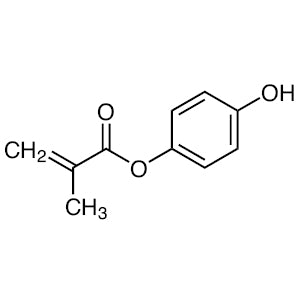
4-HydroxyphenylMethacrylate(stabilizedwithHQ) TCI H1790
Regular price From Rp 1.881.600,00Regular price -
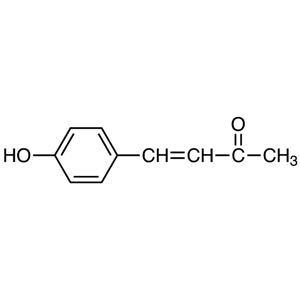
4-(4-Hydroxyphenyl)-3-buten-2-one TCI H1564
Regular price Rp 1.936.200,00Regular price