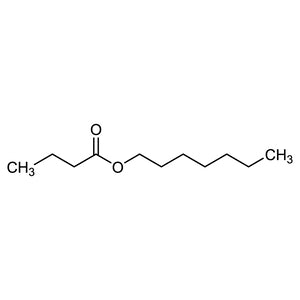
Heptyl Butyrate with CAS number 5870-93-9 is an ester formed from the reaction of heptanol with butyric acid, and it is classified as a non-heterocyclic building block widely used in chemistry and applied biology laboratories. The compound is broadly recognised as a volatile component that plays a role in chemical ecology studies, particularly research into insect responses to aroma compounds. Beyond that role, it is used as an analytical standard in ester profiling work and as a starting material for straightforward organic reactions. Its volume-based packaging makes it easy for researchers to transfer the material directly by pipette.
The properties that make this compound a frequent choice are its volatility, which is high enough for analysis by gas chromatography, combined with a heptyl chain that imparts a clear lipophilic character. This combination yields a compound that vaporises readily in headspace systems yet can still be extracted efficiently from aqueous phases. Its ester group hydrolyses under both strongly acidic and strongly basic conditions, providing a route for further modification, while under normal storage conditions the compound remains reasonably stable. Its liquid form also simplifies the preparation of stock solutions using common organic solvents.
In Indonesian laboratories, this material typically appears in research groups working on chemical ecology, entomology, flavour and aroma analysis, and basic organic synthesis. Academic and institutional laboratories generally use it in small volumes for the preparation of standard solutions and volatile test mixtures. The volume-based pack format suits work patterns in which the material is measured directly by pipette, making it practical both for routine analytical runs and for exploratory experimental work.
TCI brochures (PDF)
- Lipids 2025-12-17 · p. 12
- Chemical ecology research, where this volatile ester serves as a test stimulus for studying how insects respond to specific aroma compounds under controlled experimental conditions.
- Analytical standard preparation for ester profiling, since its volatility allows reliable detection and reproducible retention behaviour in gas chromatographic separation of ester mixtures.
- Headspace analysis method development, because the compound vaporises readily from solution and therefore provides a practical model analyte for optimising sampling and injection parameters.
- Starting material for simple organic reactions, as the ester functional group hydrolyses under strongly acidic or basic conditions and opens routes to further chemical modification.
- Extraction and partitioning studies, where the lipophilic heptyl chain gives predictable behaviour when recovering the compound efficiently from aqueous phases into organic solvent systems.
| Brand | TCI |
|---|---|
| CAS number | 5870-93-9 |
| Molecular formula | — |
| Purity | — |
| Category | Chemistry > Building Blocks > Non-Heterocyclic Building Blocks |
| Pack sizes | — |
| Physical form | Liquid, supplied in volume-based pack sizes |
| Storage | Reasonably stable under normal storage conditions |
- Catalogue Code: H1929
Store the container tightly closed in a cool, dry and well-ventilated area, away from strong acids and strong bases, since the ester group is susceptible to hydrolysis under those conditions. Use chemically compatible glass containers with sealed closures to limit evaporative loss of this volatile liquid. Handle the material inside a fume hood and wear standard personal protective equipment, including safety glasses, gloves and a laboratory coat. Keep the container away from ignition sources and return it promptly to designated chemical storage after each use.
—
Produk Terkait
-
HeptylAcetate TCI A0904
Regular price From Rp 477.750,00Regular price -
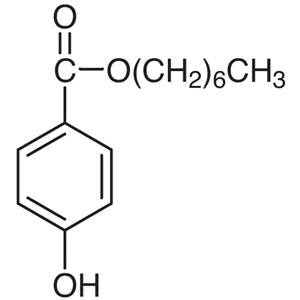
Heptyl4-Hydroxybenzoate TCI H0212
Regular price From Rp 1.246.350,00Regular price -
HeptylChloroformate TCI C0722
Regular price From Rp 1.378.650,00Regular price -
sec-ButylButyrate TCI B3559
Regular price From Rp 2.094.750,00Regular price -
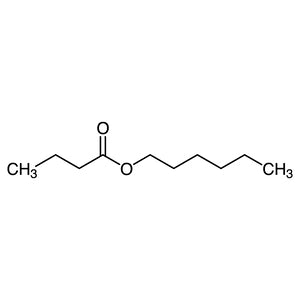
HexylButyrate TCI B1891
Regular price From Rp 980.700,00Regular price -
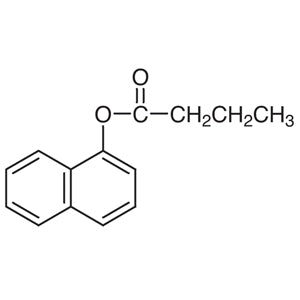
1-NaphthylButyrate TCI B1096
Regular price Rp 3.710.700,00Regular price -
trans-2-HexenylButyrate TCI B1075
Regular price Rp 2.254.350,00Regular price -
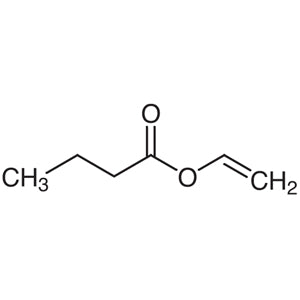
VinylButyrate(stabilizedwithMEHQ) TCI B0765
Regular price From Rp 505.050,00Regular price