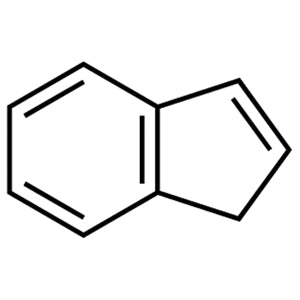
Indene is a liquid bicyclic hydrocarbon consisting of a benzene ring fused to a cyclopentene ring, which gives it a methylene group positioned between the aromatic system and the double bond. In the laboratory this compound plays an important role as a starting material toward the indenyl anion, one of the most widely used substituted cyclopentadienyl ligands in organometallic chemistry. Beyond that role, indene serves as a precursor to indanones, indanols, and a broad range of substituted indane frameworks that appear frequently in medicinal chemistry and materials chemistry research.
The property that determines its selection is the relative acidity of the methylene group at position 1, which is unusually high for a hydrocarbon because the anion formed on deprotonation is stabilized by delocalization across the entire indenyl system. From this point, indene is readily converted into indenyl salts that are subsequently reacted with transition metal halides to form complexes. Because it is a liquid, indene is conveniently measured by pipette or syringe and is easily purified by distillation, which makes it practical to handle at the bench scale typical of synthetic work.
In Indonesian laboratories, indene is normally encountered in synthetic organic and organometallic research groups preparing ligands and metal complexes, as well as in medicinal chemistry programs building indane and indanone scaffolds. It is worth noting that indene tends to undergo oxidation and polymerization on prolonged exposure to air and light, so the freshness of the material strongly influences results. Laboratories therefore tend to plan their work around material that has been recently opened and properly stored.
TCI brochures (PDF)
- Ligands 2025-12-01 · p. 19
Related TCI products
- TCI M1425 2-Methylbenzo[e]indene (mixture of 1H- and 3H-form)
- TCI I0354 95-13-6 Indene
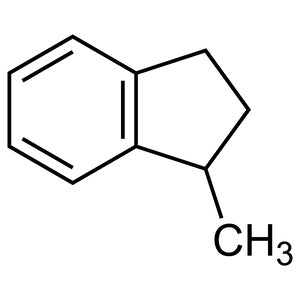
- TCI M3865 767-58-8 1-Methyl-2,3-dihydro-1H-indene
- TCI D3191 6543-29-9 5,10-Dihydroindeno[2,1-a]indene
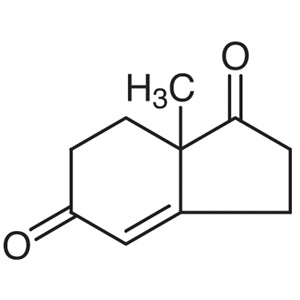
- TCI T2635 19576-08-0 2,3,7,7a-Tetrahydro-7a-methyl-1H-indene-1,5(6H)-dione
- TCI M3689 22955-77-7 Methyl 1-Oxo-2,3-dihydro-1H-indene-2-carboxylate
- Indenyl ligand preparation — deprotonation of the position 1 methylene group yields the indenyl anion, a substituted cyclopentadienyl ligand widely used across organometallic chemistry.
- Transition metal complex synthesis — the indenyl salt generated from indene is reacted with transition metal halides to construct organometallic complexes for further study.
- Indanone and indanol synthesis — indene acts as a direct precursor to these oxygenated indane derivatives that recur throughout synthetic and medicinal chemistry programs.
- Substituted indane scaffold construction — the fused bicyclic framework provides a ready entry point to indane cores encountered in medicinal chemistry research.
- Materials chemistry building block work — indane-derived frameworks accessible from indene are commonly applied in materials chemistry research requiring rigid fused-ring structures.
| Brand | TCI |
|---|---|
| CAS number | 95-13-6 |
| Molecular formula | — |
| Purity | — |
| Category | Chemistry > Building Blocks > Non-Heterocyclic Building Blocks |
| Pack sizes | available in the pack sizes listed for this catalogue item |
| Physical form | liquid |
| Storage | keep protected from air and light; oxidation and polymerization occur on prolonged exposure |
Store indene in a tightly closed container that protects the contents from air and light, since prolonged exposure to either promotes oxidation and polymerization and degrades the material over time. Amber glass bottles or containers kept in a dark, well-ventilated cabinet are appropriate. As a liquid, it should be dispensed by pipette or syringe, and transfers are best carried out promptly so the container is not left open. Handle in a fume hood using standard laboratory personal protective equipment, including gloves, safety glasses, and a laboratory coat. Because freshness strongly affects performance, record the opening date and purify by distillation before use when material quality is in question.
—
Produk Terkait
-
(mixtureof1H-and3H-form) TCI M1425
Regular price From Rp 3.287.550,00Regular price -
Indene TCI I0354
Regular price Rp 2.942.100,00Regular price -
1-Methyl-2,3-dihydro-1H-indene TCI M3865
Regular price Rp 9.514.050,00Regular price -
5,10-Dihydroindeno[2,1-a]indene TCI D3191
Regular price Rp 4.347.000,00Regular price -
2,3,7,7a-Tetrahydro-7a-methyl-1H-indene-1,5(6H)-dione TCI T2635
Regular price From Rp 2.306.850,00Regular price -
Methyl1-Oxo-2,3-dihydro-1H-indene-2-carboxylate TCI M3689
Regular price Rp 3.843.000,00Regular price -
Acenaphthylene TCI A0005
Regular price From Rp 769.650,00Regular price -
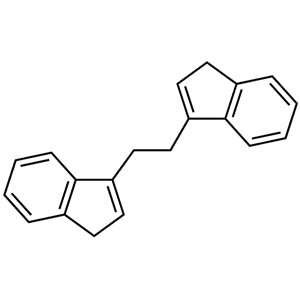
1,2-Bis(3-indenyl)ethane TCI B2281
Regular price From Rp 1.035.300,00Regular price
![2-Methylbenzo[e]indene (mixture of 1H- and 3H-form) - AMI Scientific](http://amiscientific.com/cdn/shop/files/TCI2510M1425.jpg?v=1767124955&width=533)

![5,10-Dihydroindeno[2,1-a]indene (CAS 6543-29-9) - TCI D3191 - AMI Scientific](http://amiscientific.com/cdn/shop/files/TCI2510D3191.jpg?v=1767105768&width=533)