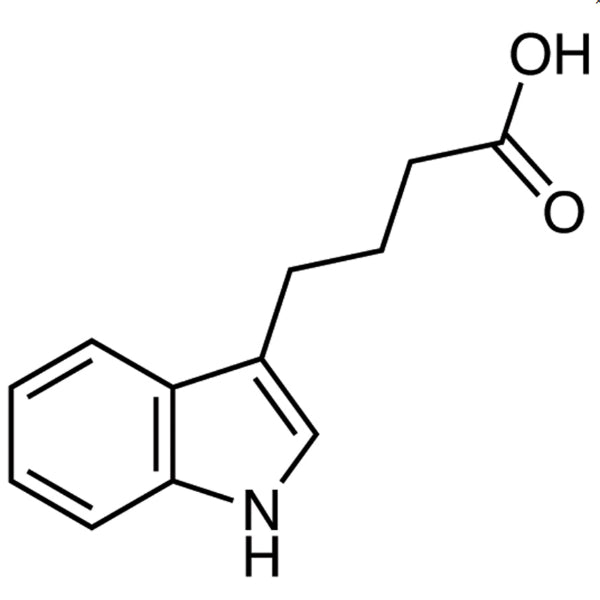
3-Indolebutyric Acid (IBA) is a chemical compound widely utilized in plant biotechnology for stimulating root growth in plants. As an auxin, it plays a crucial role in regulating plant cell growth and differentiation. In laboratory settings, IBA is essential for accelerating tissue culture processes and promoting root development in plant explants. Its application extends to research focused on nutrient efficiency and plant responses to environmental conditions.
IBA is valued for its chemical stability under certain conditions, making it reliable for experimental use. However, it is sensitive to oxidative exposure and light, which necessitates careful handling and storage. These properties make it a preferred choice for researchers aiming to maintain the integrity and effectiveness of their experiments. The compound's ability to trigger root growth ensures its relevance in various biotechnological applications.
In Indonesian laboratories, IBA is extensively used in agricultural, horticultural, and plant conservation research. It supports the development of tissue culture techniques and is a key component in studies aimed at improving plant growth and resilience. Its widespread use across research institutions and universities highlights its importance in advancing plant biotechnology in the region.
TCI brochures (PDF)
- Synthetic Auxin and Selective Binding to Modified Receptor 2025-05-26 · p. 2
- Plant Hormones 2025-01-30 · p. 1
- Agrochemical Ingredients for Research and Experimental Use 2026-01-08 · p. 7
- Plant Research Reagents 2026-02-24 · p. 13
- Reagents for Biological Research 2025-03-11 · p. 55
- Plant Tissue Culture: IBA is used to stimulate root formation in plant explants, enhancing the success rate of tissue culture experiments.
- Root Induction Studies: It is a key reagent for investigating the mechanisms of root development in various plant species.
- Nutrient Efficiency Research: IBA helps in studying how plants utilize nutrients and respond to different environmental conditions.
- Environmental Stress Response Analysis: It is employed to evaluate how plants react to stress factors such as drought or salinity.
- Conservation Biology: IBA supports the propagation of rare and endangered plant species through effective root induction techniques.
| Brand | TCI |
|---|---|
| CAS number | 133-32-4 |
| Molecular formula | — |
| Purity | — |
| Category | Life Science > Molecular Biology > Plant Biotechnology |
| Pack sizes | Available in various quantities as per standard laboratory requirements |
| Physical form | Solid |
| Storage | Store in a cool, dark place away from light and oxidizing agents |
IBA should be stored in a cool, dark environment to prevent degradation due to light and oxidative exposure. It is recommended to keep it in airtight containers to minimize contact with air and moisture. Laboratory personnel should handle the compound with care, using appropriate personal protective equipment such as gloves and safety goggles. Avoid exposure to heat and direct sunlight to maintain its chemical stability. Proper storage ensures the compound remains effective for research applications. Always ensure that the storage area is well-ventilated and free from potential contaminants.
—
Product Categories
Produk Terkait
-
Adenine TCI A0149
Regular price From Rp 1.696.800,00Regular price -
trans-Zeatin TCI Z0012
Regular price Rp 6.520.500,00Regular price -
XyleminDihydrochloride TCI X0080
Regular price From Rp 2.518.950,00Regular price -
Uniconazole TCI U0155
Regular price From Rp 1.565.550,00Regular price -
Brassinazole TCI B2829
Regular price From Rp 6.465.900,00Regular price -
4-BromophenoxyaceticAcid TCI B2746
Regular price From Rp 637.350,00Regular price -
BenzoicAcid TCI B2635
Regular price From Rp 505.050,00Regular price -
N6-Benzyladenine TCI B1088
Regular price From Rp 903.000,00Regular price