

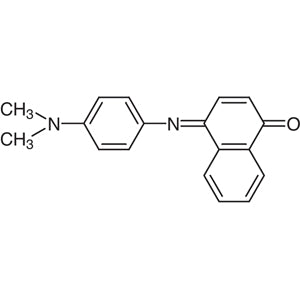
Indophenol Blue is a chemical compound widely used as a dye in various laboratory experiments. It serves as a valuable tool in chemical and biochemical analyses, particularly in reactions involving reducing agents. This dye is essential for visual observation during experiments, as it changes color based on chemical reactions, making it easier for researchers to monitor and interpret results. Its role in qualitative and quantitative analysis cannot be overstated, as it enables the identification of specific compounds through color changes.
One of the key properties that make Indophenol Blue a preferred choice is its chemical stability under certain conditions, although it is highly sensitive to oxidation. This sensitivity allows it to react with reducing agents such as sulfides or acetylene, resulting in color changes that are easily observable. Its ability to shift from blue to other colors makes it an ideal indicator for detecting the presence of specific substances. Additionally, its solid form facilitates storage and handling, making it practical for use in laboratory settings.
In Indonesian laboratories, Indophenol Blue is commonly used in chemical research and educational institutions. It plays a crucial role in both academic and industrial settings, supporting experiments that require visual color change indicators. Its reliability and ease of use make it a staple in laboratories across Indonesia, where it is integral to both teaching and research activities.
- Chemical Analysis: Indophenol Blue is ideal for chemical analysis due to its ability to change color in response to reducing agents, aiding in the detection of specific compounds.
- Biochemical Testing: It is frequently used in biochemical testing to monitor reactions involving sulfides or acetylene, providing clear visual indicators of chemical changes.
- Educational Research: In academic settings, it supports teaching and research by offering a simple and effective method for demonstrating chemical reactions and color changes.
- Qualitative Analysis: Its color-changing properties make it a preferred choice for qualitative analysis, helping researchers identify substances based on visible reactions.
- Industrial Applications: It is used in industrial laboratories to test for the presence of reducing agents, ensuring accurate and reliable results in quality control processes.
| Brand | TCI |
|---|---|
| CAS number | 132-31-0 |
| Molecular formula | — |
| Purity | — |
| Category | Chemistry > Stains and Dyes (for Research and Experimental Use) > Stains and Dyes (Other) (for Research and Experimental Use) |
| Pack sizes | Available in various pack sizes for laboratory use |
| Physical form | Solid |
| Storage | Store in a cool, dry place away from light and oxidizing agents |
Indophenol Blue should be stored in a cool, dry place, away from direct light and oxidizing agents to maintain its chemical stability. It is best kept in a sealed container to prevent exposure to air and moisture, which can affect its reactivity. Due to its sensitivity to oxidation, it should be handled with care to avoid contamination. In laboratory settings, it is recommended to use glass or plastic containers that are resistant to chemical reactions. Always ensure proper ventilation when handling the compound, and avoid contact with skin or inhalation of vapors. Proper storage and handling practices help preserve the integrity and effectiveness of Indophenol Blue in experimental applications.
—
Produk Terkait
-
5'-Isopropyl-2'-methylindophenolSodiumSalt[RedoxIndicator] TCI M0408
Regular price Rp 1.167.600,00Regular price -
2,6-DichloroindophenolSodiumSaltDihydrate TCI D0375
Regular price From Rp 1.115.100,00Regular price
![5418-43-9 5'-Isopropyl-2'-methylindophenol Sodium Salt [Redox Indicator] - AMI Scientific](http://amiscientific.com/cdn/shop/files/TCI2510M0408.jpg?v=1768361315&width=533)
