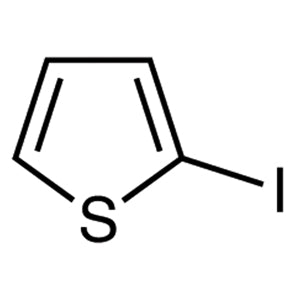
2-Iodothiophene is a chemical compound belonging to the heterocyclic category, characterized by a thiophene ring with an iodine atom substituted at the second position. This compound plays a vital role in laboratory settings, particularly in organic chemistry and pharmacology, where it serves as a fundamental building block for the synthesis of complex molecules. Its unique chemical structure enables it to participate in various reactions, making it an essential reagent for researchers aiming to develop new compounds with biological activity.
The reactivity of 2-Iodothiophene is a key factor in its popularity among chemists. Its aromatic nature, combined with the presence of sulfur, contributes to its ability to undergo substitution and ring-opening reactions efficiently. These properties make it a preferred choice for creating derivatives with enhanced functional groups. The compound's stability under normal conditions further supports its use in controlled laboratory environments, ensuring consistent results during synthesis processes.
In Indonesian laboratories, 2-Iodothiophene is widely used in scientific research across multiple disciplines, including organic chemistry, pharmacology, and materials science. Its versatility and reactivity make it a valuable resource for researchers working on drug development, chemical synthesis, and the creation of advanced materials. The compound is frequently selected due to its ability to participate in a wide range of chemical transformations, supporting innovation in both academic and industrial research settings.
TCI brochures (PDF)
- Thiophenes 2026-06-29 · p. 4
Related TCI products
- TCI I0380 10486-61-0 3-Iodothiophene
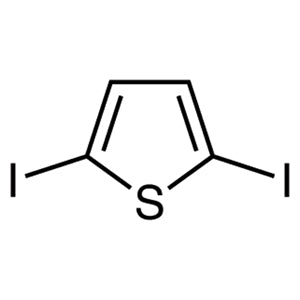
- TCI D2611 625-88-7 2,5-Diiodothiophene
- TCI B4586 306769-48-2 2-Bromo-3-dodecyl-5-iodothiophene (stabilized with Copper chip)
- TCI B4585 1034352-30-1 2-Bromo-3-(2-ethylhexyl)-5-iodothiophene (stabilized with Copper chip)
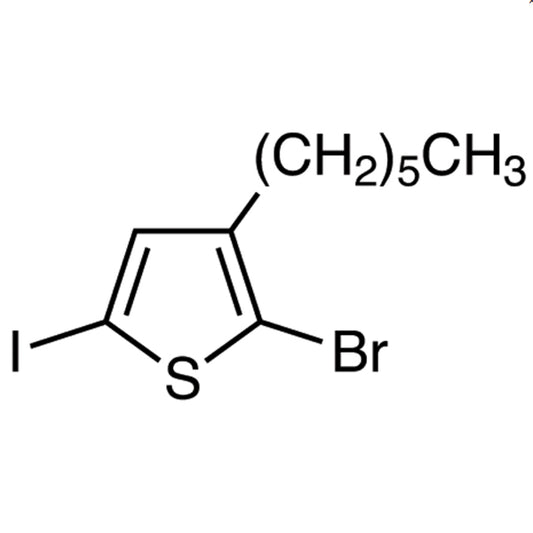
- TCI B3865 160096-76-4 2-Bromo-3-hexyl-5-iodothiophene (stabilized with Copper chip)
- Organic synthesis applications benefit from 2-Iodothiophene due to its ability to participate in substitution and ring-opening reactions, making it ideal for creating complex heterocyclic compounds.
- Pharmacological research utilizes this compound as a building block for synthesizing bioactive molecules, supporting drug discovery and development efforts.
- Material science applications leverage its reactivity to develop new polymers and functional materials with tailored properties.
- Analytical chemistry laboratories use it as a reference standard for identifying and quantifying thiophene derivatives in various samples.
- Industrial chemical processes incorporate 2-Iodothiophene to produce intermediates for pharmaceutical and specialty chemical manufacturing.
| Brand | TCI |
|---|---|
| CAS number | 3437-95-4 |
| Molecular formula | — |
| Purity | — |
| Category | Chemistry > Building Blocks > Heterocyclic Building Blocks |
| Pack sizes | Available in various quantities as per supplier specifications |
| Physical form | Solid or liquid, depending on the specific product variant |
| Storage | Store in a cool, dry place away from light and incompatible substances |
2-Iodothiophene should be stored in a cool, dry environment, away from direct sunlight and sources of heat. It is recommended to keep the compound in a sealed container to prevent exposure to moisture and air. Due to its reactivity, it should be stored separately from strong oxidizing agents and incompatible materials. Proper ventilation is essential when handling this compound to minimize inhalation risks. Laboratory personnel should wear appropriate personal protective equipment, including gloves and safety goggles, to ensure safe handling. Regular monitoring of storage conditions is advised to maintain the compound's stability and effectiveness for research purposes.
—
Produk Terkait
-
3-Iodothiophene TCI I0380
Regular price From Rp 769.650,00Regular price -
2,5-Diiodothiophene TCI D2611
Regular price Rp 2.571.450,00Regular price -
2-Bromo-3-dodecyl-5-iodothiophene(stabilizedwithCopperchip) TCI B4586
Regular price Rp 2.730.000,00Regular price -
2-Bromo-3-(2-ethylhexyl)-5-iodothiophene(stabilizedwithCopperchip) TCI B4585
Regular price From Rp 2.279.550,00Regular price -
2-Bromo-3-hexyl-5-iodothiophene(stabilizedwithCopperchip) TCI B3865
Regular price From Rp 2.411.850,00Regular price