2-Bromo-3-hexyl-5-iodothiophene (stabilized with Copper chip) is a specialized organic compound used in scientific research, particularly in the development of organic semiconductors and conductive polymers. This material plays a crucial role in laboratories where advanced material synthesis and characterization are required. Its unique molecular structure, incorporating bromo, iodine, and thiophene groups, makes it highly valuable for creating materials with tailored electronic properties. Due to its chemical versatility, it is widely used in the fabrication of organic films, solar cells, and flexible electronic components.
The compound is preferred for its chemical stability and reactivity, which are enhanced by the inclusion of a copper chip. This stabilization feature ensures that the material remains intact during storage and use, reducing the risk of degradation. Its molecular structure allows it to participate in complex chemical reactions such as polymerization and surface modification. The combination of reactivity and stability makes it ideal for applications requiring precise control over material synthesis and performance.
In Indonesian laboratories, this compound is commonly used in material science and semiconductor technology research. Researchers at educational institutions and research organizations rely on it for developing new materials with advanced electronic properties. Its application is central to projects involving organic electronics, photovoltaics, and flexible devices, making it a key component in modern scientific innovation.
TCI brochures (PDF)
- Thiophenes 2026-06-29 · p. 3
- Building Blocks for Organic Semiconductor 2026-03-24 · p. 36
Related TCI products
- TCI B4586 306769-48-2 2-Bromo-3-dodecyl-5-iodothiophene (stabilized with Copper chip)
- TCI B4585 1034352-30-1 2-Bromo-3-(2-ethylhexyl)-5-iodothiophene (stabilized with Copper chip)
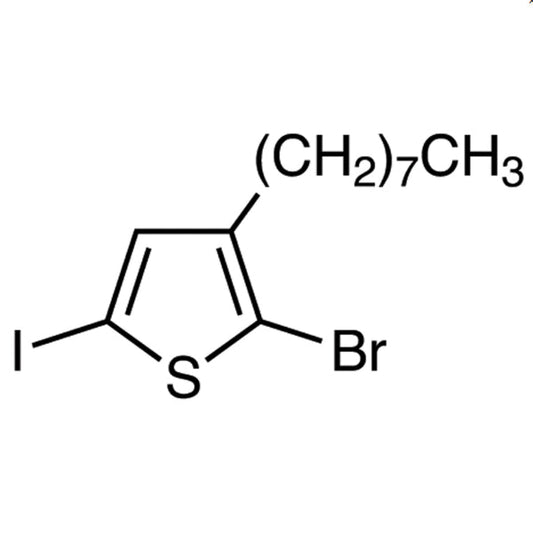
- TCI B4584 1085181-82-3 2-Bromo-5-iodo-3-n-octylthiophene (stabilized with Copper chip)
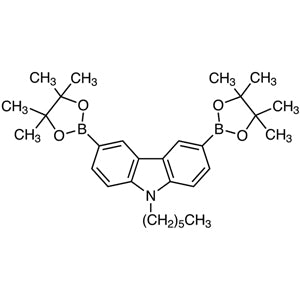
- TCI H1649 628336-95-8 9-Hexyl-3,6-bis(4,4,5,5-tetramethyl-1,3,2-dioxaborolan-2-yl)-9H-carbazole
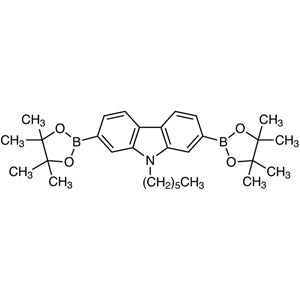
- TCI H1642 871696-12-7 9-Hexyl-2,7-bis(4,4,5,5-tetramethyl-1,3,2-dioxaborolan-2-yl)-9H-carbazole
- TCI D5410 150623-72-6 3,6-Dibromo-9-hexyl-9H-carbazole
- Organic Semiconductor Development: This compound is ideal for creating organic semiconductors due to its unique electronic properties and chemical reactivity.
- Conductive Polymer Synthesis: Its molecular structure supports the synthesis of conductive polymers, making it a preferred choice for advanced material research.
- Flexible Electronic Components: The compound is used in the fabrication of flexible electronic components, enabling innovation in wearable and bendable technologies.
- Organic Film Fabrication: It plays a key role in the production of organic films, which are essential for various electronic and optoelectronic applications.
- Surface Modification Research: Its chemical versatility allows it to be used in surface modification studies, enhancing the functionality of materials in diverse applications.
| Brand | TCI |
|---|---|
| CAS number | 160096-76-4 |
| Molecular formula | — |
| Purity | — |
| Category | Materials Science > Material Building Blocks > Polymer/Macromolecule Semiconductor Building Blocks |
| Pack sizes | As per manufacturer specifications |
| Physical form | Solid |
| Storage | Store in a cool, dry place away from moisture and direct sunlight |
This compound should be stored in a cool, dry environment to maintain its stability and prevent degradation. It is recommended to use airtight containers to protect it from moisture and air exposure. Due to its chemical reactivity, it should be handled with appropriate personal protective equipment, including gloves and safety goggles. Avoid direct contact with skin and eyes, and ensure proper ventilation when working with the material. It is important to keep the compound away from incompatible substances to prevent unwanted chemical reactions. Regular monitoring of storage conditions will help ensure the material remains in optimal condition for laboratory use.
—
Produk Terkait
-
2-Bromo-3-dodecyl-5-iodothiophene(stabilizedwithCopperchip) TCI B4586
Regular price Rp 2.782.500,00Regular priceRp 1.961.400,00Sale price Rp 2.782.500,00 -
2-Bromo-3-(2-ethylhexyl)-5-iodothiophene(stabilizedwithCopperchip) TCI B4585
Regular price From Rp 2.332.050,00Regular priceRp 1.646.400,00Sale price From Rp 2.332.050,00 -
2-Bromo-5-iodo-3-n-octylthiophene(stabilizedwithCopperchip) TCI B4584
Regular price Rp 2.439.150,00Regular priceRp 1.720.950,00Sale price Rp 2.439.150,00 -
9-Hexyl-3,6-bis(4,4,5,5-tetramethyl-1,3,2-dioxaborolan-2-yl)-9H-carbazole TCI H1649
Regular price From Rp 1.563.450,00Regular priceRp 1.108.800,00Sale price From Rp 1.563.450,00 -
9-Hexyl-2,7-bis(4,4,5,5-tetramethyl-1,3,2-dioxaborolan-2-yl)-9H-carbazole TCI H1642
Regular price From Rp 1.538.250,00Regular priceRp 1.090.950,00Sale price From Rp 1.538.250,00 -
3,6-Dibromo-9-hexyl-9H-carbazole TCI D5410
Regular price From Rp 1.087.800,00Regular priceRp 775.950,00Sale price From Rp 1.087.800,00 -
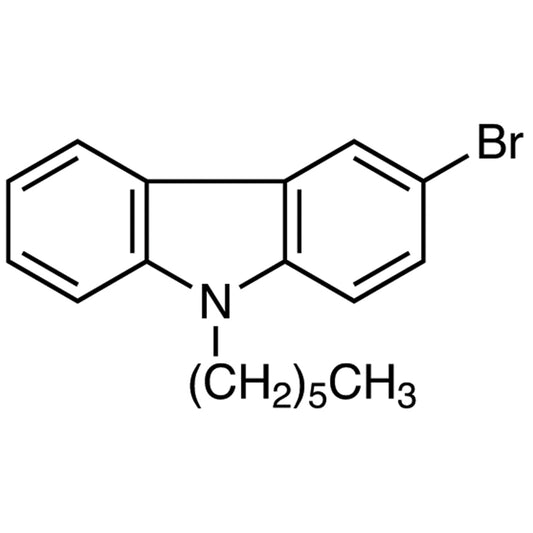
3-Bromo-9-hexyl-9H-carbazole TCI B5608
Regular price From Rp 1.220.100,00Regular priceRp 868.350,00Sale price From Rp 1.220.100,00 -
2-Bromo-9-hexyl-9H-carbazole TCI B5607
Regular price From Rp 1.961.400,00Regular priceRp 1.387.050,00Sale price From Rp 1.961.400,00