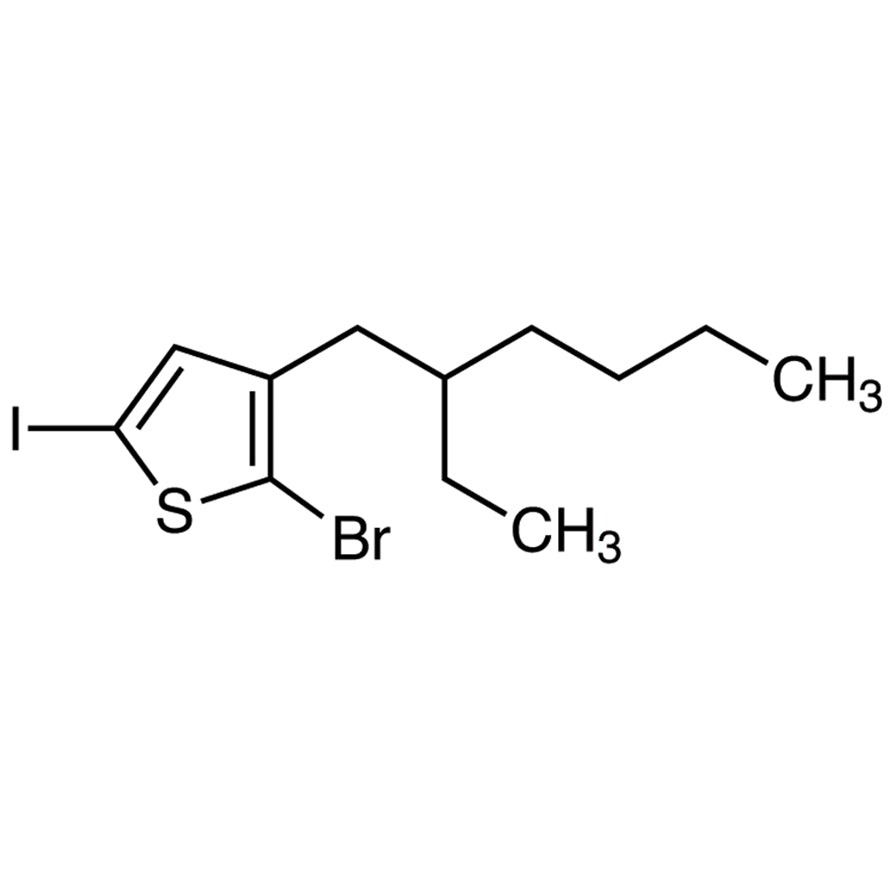
2-Bromo-3-(2-ethylhexyl)-5-iodothiophene (stabilized with Copper chip) is a specialized chemical compound used in scientific research, particularly in the development of semiconductor and polymer materials. This compound plays a crucial role in laboratories where advanced material synthesis is required, offering a foundation for creating electronic and optical components. Its molecular structure enables specific chemical reactions during the synthesis of complex materials, making it an essential tool for researchers working on next-generation materials.
The compound’s stability is enhanced through stabilization with a copper chip, which minimizes excessive reactivity and ensures safe handling during experimental processes. This feature makes it a preferred choice for applications requiring controlled chemical behavior. Additionally, the thiophene ring within its structure contributes to good conductivity, which is vital for electronic applications. The compound’s versatility and chemical stability make it a valuable asset in modern material science research.
In Indonesian laboratories, this compound is commonly used in semiconductor material research, especially in the development of environmentally friendly and sustainable materials. Its availability in solid form and various packaging options allows for easy use in both small-scale and large-scale experiments. Researchers in various institutions frequently rely on this compound for its reliability and performance in material synthesis processes.
TCI brochures (PDF)
- Thiophenes 2026-06-29 · p. 3
- Building Blocks for Organic Semiconductor 2026-03-24 · p. 37
Related TCI products
- TCI B4586 306769-48-2 2-Bromo-3-dodecyl-5-iodothiophene (stabilized with Copper chip)
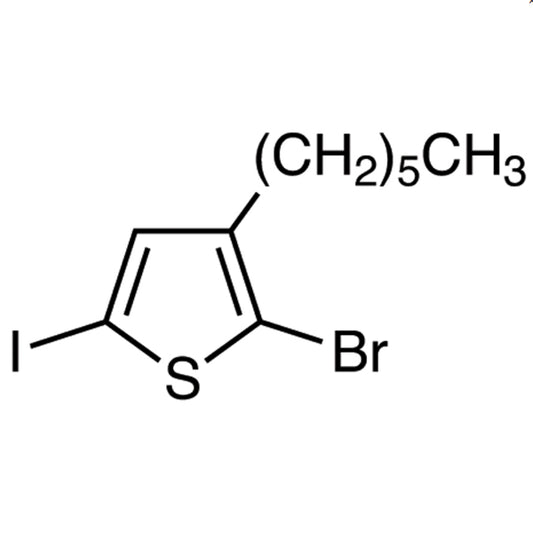
- TCI B3865 160096-76-4 2-Bromo-3-hexyl-5-iodothiophene (stabilized with Copper chip)
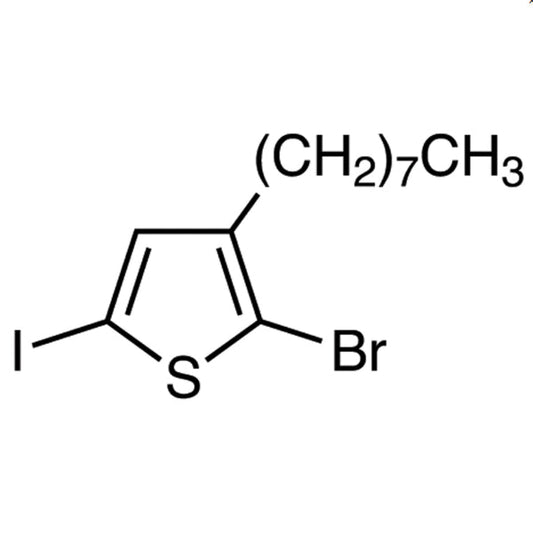
- TCI B4584 1085181-82-3 2-Bromo-5-iodo-3-n-octylthiophene (stabilized with Copper chip)
- TCI B5490 1160823-78-8 4,8-Bis[(2-ethylhexyl)oxy]-2,6-bis(trimethylstannyl)benzo[1,2-b:4,5-b']dithiophene
- TCI B5485 1352642-35-3 4,8-Bis[5-(2-ethylhexyl)thiophen-2-yl]benzo[1,2-b:4,5-b']dithiophene
- TCI B4892 357219-41-1 9,9-Bis(2-ethylhexyl)-2,7-bis(4,4,5,5-tetramethyl-1,3,2-dioxaborolan-2-yl)fluorene
- Semiconductor material development: This compound is ideal for synthesizing organic semiconductors due to its conductive thiophene ring and stable molecular structure.
- Polymer synthesis: Its complex molecular framework enables the creation of advanced polymers with tailored electronic properties for optoelectronic applications.
- Electronic component fabrication: The compound serves as a building block for producing conductive materials used in electronic devices and sensors.
- Renewable energy research: Its conductive properties make it suitable for developing materials used in solar cells and energy storage systems.
- Optical material innovation: The compound’s molecular structure supports the creation of optically active materials used in display technologies and photonic devices.
| Brand | TCI |
|---|---|
| CAS number | 1034352-30-1 |
| Molecular formula | — |
| Purity | — |
| Category | Materials Science > Material Building Blocks > Polymer/Macromolecule Semiconductor Building Blocks |
| Pack sizes | Available in various quantities to suit different experimental needs |
| Physical form | Solid |
| Storage | Store in a cool, dry place away from direct sunlight and moisture |
This compound should be stored in a cool, dry environment, away from direct sunlight and moisture to maintain its stability. It is recommended to use airtight containers made of glass or high-density polyethylene to prevent contamination and degradation. Due to its chemical nature, it should be handled with appropriate personal protective equipment, including gloves and safety goggles, to ensure laboratory safety. Avoid exposure to heat or open flames, as it may react under extreme conditions. Regular monitoring of storage conditions is advised to ensure the compound remains in optimal condition for use in research applications.
—
Produk Terkait
-
2-Bromo-3-dodecyl-5-iodothiophene(stabilizedwithCopperchip) TCI B4586
Regular price Rp 2.782.500,00Regular priceRp 1.961.400,00Sale price Rp 2.782.500,00 -
2-Bromo-3-hexyl-5-iodothiophene(stabilizedwithCopperchip) TCI B3865
Regular price From Rp 2.464.350,00Regular priceRp 1.738.800,00Sale price From Rp 2.464.350,00 -
2-Bromo-5-iodo-3-n-octylthiophene(stabilizedwithCopperchip) TCI B4584
Regular price Rp 2.439.150,00Regular priceRp 1.720.950,00Sale price Rp 2.439.150,00 -
4,8-Bis[(2-ethylhexyl)oxy]-2,6-bis(trimethylstannyl)benzo[1,2-b:4,5-b']dithiophene TCI B5490
Regular price From Rp 3.419.850,00Regular priceRp 2.406.600,00Sale price From Rp 3.419.850,00 -
4,8-Bis[5-(2-ethylhexyl)thiophen-2-yl]benzo[1,2-b:4,5-b']dithiophene TCI B5485
Regular price Rp 3.603.600,00Regular priceRp 2.535.750,00Sale price Rp 3.603.600,00 -
9,9-Bis(2-ethylhexyl)-2,7-bis(4,4,5,5-tetramethyl-1,3,2-dioxaborolan-2-yl)fluorene TCI B4892
Regular price From Rp 3.207.750,00Regular priceRp 2.258.550,00Sale price From Rp 3.207.750,00 -
4,8-Bis[5-(2-ethylhexyl)thiophen-2-yl]-2,6-bis(trimethylstannyl)benzo[1,2-b:4,5-b']dithiophene TCI B4437
Regular price Rp 5.300.400,00Regular priceRp 3.722.250,00Sale price Rp 5.300.400,00 -
4,4-Bis(2-ethylhexyl)-4H-cyclopenta[2,1-b:3,4-b']dithiophene TCI B4102
Regular price From Rp 7.526.400,00Regular priceRp 5.278.350,00Sale price From Rp 7.526.400,00