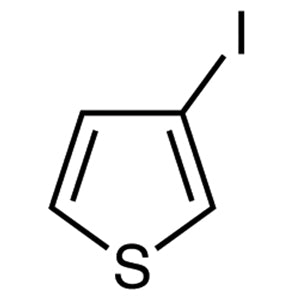
3-Iodothiophene is a chemical compound widely used as a building block in the synthesis of heterocyclic compounds. It serves as a fundamental component in organic chemistry, enabling the creation of complex molecular structures through controlled chemical reactions. Its unique structure combines the aromaticity of thiophene with an iodine substituent, making it highly versatile for various synthetic pathways. In laboratory settings, 3-Iodothiophene is essential for researchers aiming to develop new pharmaceuticals, agrochemicals, and specialty chemicals. Its stability and reactivity make it an indispensable tool in modern chemical research.
The compound is favored for its chemical properties that support a wide range of synthetic applications. The iodine group provides a reactive site for substitution reactions, enhancing the compound’s utility in functional group transformations. Its controlled reactivity ensures predictable outcomes in laboratory experiments, reducing the risk of unwanted side reactions. Additionally, 3-Iodothiophene exhibits good solubility in common organic solvents, which simplifies its use in various reaction conditions. These characteristics make it a preferred choice for chemists working on complex molecule synthesis.
In Indonesian laboratories, 3-Iodothiophene is commonly used in organic chemistry research, particularly in the development of new compounds and materials. Its availability and reliability make it a go-to reagent for academic and industrial research. The compound supports a variety of experimental setups, from small-scale synthesis to larger preparative reactions. Its consistent performance and safety profile contribute to its widespread use in both educational and research environments.
Related TCI products
- TCI I0374 3437-95-4 2-Iodothiophene
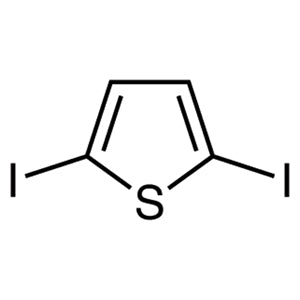
- TCI D2611 625-88-7 2,5-Diiodothiophene
- TCI B4586 306769-48-2 2-Bromo-3-dodecyl-5-iodothiophene (stabilized with Copper chip)
- TCI B4585 1034352-30-1 2-Bromo-3-(2-ethylhexyl)-5-iodothiophene (stabilized with Copper chip)
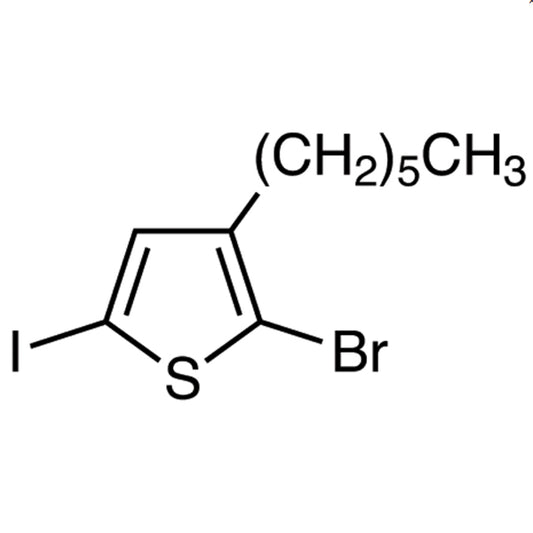
- TCI B3865 160096-76-4 2-Bromo-3-hexyl-5-iodothiophene (stabilized with Copper chip)
- Organic synthesis of heterocyclic compounds due to its reactive iodine group and thiophene core.
- Development of pharmaceuticals and agrochemicals through controlled substitution reactions.
- Preparation of specialty chemicals requiring precise molecular structures and functional groups.
- Research in material science for the creation of advanced polymers and coatings.
- Educational use in teaching organic chemistry and synthetic methodology to students and researchers.
| Brand | TCI |
|---|---|
| CAS number | 10486-61-0 |
| Molecular formula | — |
| Purity | — |
| Category | Chemistry > Building Blocks > Heterocyclic Building Blocks |
| Pack sizes | Available in various quantities as per supplier specifications |
| Physical form | Solid or liquid depending on the specific product variant |
| Storage | Store in a cool, dry place away from light and incompatible materials |
3-Iodothiophene should be stored in a cool, dry environment to maintain its chemical stability. It is recommended to keep it in airtight containers to prevent exposure to moisture and air, which could affect its reactivity. The compound should be stored away from strong oxidizing agents and incompatible substances to avoid potential chemical interactions. Laboratory personnel should handle the material with appropriate personal protective equipment, including gloves and safety goggles, to ensure safe handling. Regular monitoring of storage conditions is advised to maintain the integrity of the compound and ensure safe usage in experimental settings.
—
Produk Terkait
-
2-Iodothiophene TCI I0374
Regular price From Rp 2.174.550,00Regular price -
2,5-Diiodothiophene TCI D2611
Regular price Rp 2.571.450,00Regular price -
2-Bromo-3-dodecyl-5-iodothiophene(stabilizedwithCopperchip) TCI B4586
Regular price Rp 2.730.000,00Regular price -
2-Bromo-3-(2-ethylhexyl)-5-iodothiophene(stabilizedwithCopperchip) TCI B4585
Regular price From Rp 2.279.550,00Regular price -
2-Bromo-3-hexyl-5-iodothiophene(stabilizedwithCopperchip) TCI B3865
Regular price From Rp 2.411.850,00Regular price