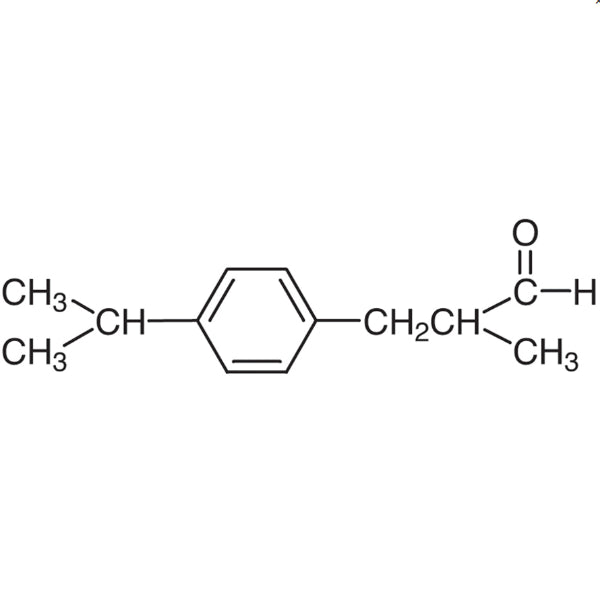
3-(4-Isopropylphenyl)isobutyraldehyde is a chemical compound widely used in organic synthesis reactions within laboratory settings. It serves as a versatile building block in the creation of aromatic compounds and their derivatives. Its molecular structure allows for various substitution and reaction mechanisms, making it an essential tool for chemists engaged in synthetic processes. This compound is particularly valuable for its reactivity and compatibility with a range of chemical transformations.
The compound's key properties include the presence of an aldehyde group and a hydrocarbon chain, which contribute to its high reactivity. These features enable it to participate in multiple chemical reactions, such as oxidation, reduction, and condensation. Its sensitivity to environmental conditions also makes it a suitable candidate for controlled laboratory applications. The distinct aroma of the compound further aids in identification and handling during experimental procedures.
In Indonesian laboratories, 3-(4-Isopropylphenyl)isobutyraldehyde is commonly used in organic chemistry research, especially in the synthesis of aromatic compounds. It is also employed in pharmaceutical and industrial chemical research to develop new compounds with broad applications. Its role in creating complex molecular structures makes it a preferred choice for researchers looking to expand their synthetic capabilities.
- Organic synthesis of aromatic compounds due to its reactivity and structural versatility.
- Development of pharmaceutical intermediates through controlled chemical transformations.
- Creation of industrial chemical derivatives for specialized applications in manufacturing.
- Research in chemical reaction mechanisms involving aldehyde functional groups.
- Synthesis of complex molecular structures requiring precise functional group manipulation.
| Brand | TCI |
|---|---|
| CAS number | 103-95-7 |
| Molecular formula | — |
| Purity | — |
| Category | Chemistry > Building Blocks > Non-Heterocyclic Building Blocks |
| Pack sizes | Available in standard laboratory quantities |
| Physical form | Liquid |
| Storage | Store in a cool, dry place away from light and incompatible materials |
This compound should be stored in a cool, dry place, away from direct sunlight and sources of heat. It is recommended to use sealed containers made of glass or high-density polyethylene to prevent exposure to air and moisture. Due to its sensitivity, it should be handled in a well-ventilated area or fume hood to minimize inhalation risks. Avoid contact with incompatible substances such as strong oxidizing agents. Always wear appropriate personal protective equipment, including gloves and safety goggles, when handling this material. Proper storage and handling ensure the compound remains stable and suitable for use in laboratory applications.
—
Produk Terkait
-
3-(3-Isopropylphenyl)butanal TCI F1415
Regular price Rp 3.100.650,00Regular price -
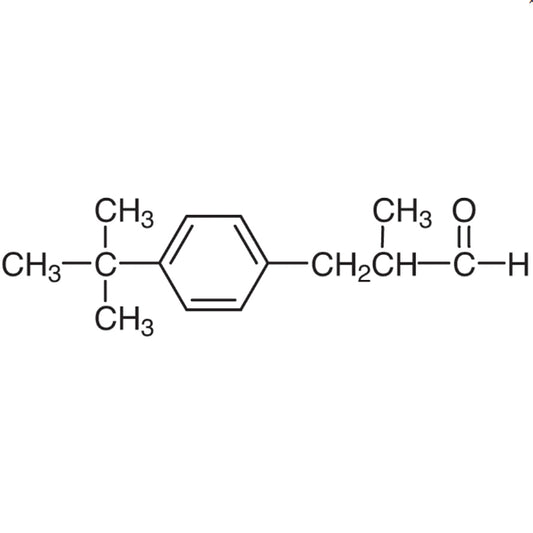
3-(4-tert-Butylphenyl)isobutyraldehyde TCI B1145
Regular price From Rp 795.900,00Regular price -
Isobutyraldehyde TCI I0101
Regular price From Rp 452.550,00Regular price -
Butyraldehyde TCI B0751
Regular price From Rp 477.750,00Regular price -
4-(4-Propylphenyl)benzoicAcid TCI P1037
Regular price Rp 2.411.850,00Regular price -
IsoamylIsobutyrate TCI I0676
Regular price From Rp 610.050,00Regular price -
PhenylIsobutyrate TCI I0482
Regular price Rp 2.625.000,00Regular price -
BenzylIsobutyrate TCI I0424
Regular price Rp 477.750,00Regular price