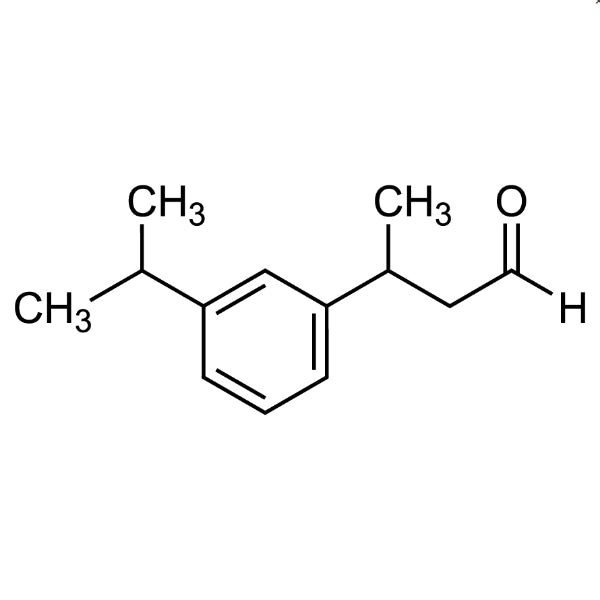
3-(3-Isopropylphenyl)butanal is a chemical compound widely used in laboratory settings for the synthesis of complex molecules. As a building block in organic chemistry, it plays a crucial role in creating compounds with specific molecular structures. Its versatility makes it a valuable tool for researchers aiming to develop new pharmaceuticals, industrial chemicals, and other specialized materials. This compound is commonly used in synthetic pathways where precise molecular modifications are required.
The compound's high reactivity and functional group characteristics make it a preferred choice in chemical reactions. The aldehyde group allows for various chemical transformations, including reduction, oxidation, and nucleophilic attacks. These properties enable chemists to tailor the compound into a wide range of derivatives. Additionally, its stability under controlled conditions ensures consistent performance in laboratory experiments.
In Indonesian laboratories, 3-(3-Isopropylphenyl)butanal is frequently used in organic chemistry research and the development of new chemical compounds. It supports academic and industrial projects focused on drug discovery, material science, and chemical synthesis. Its role in creating complex molecular structures is essential for advancing scientific innovation in the region.
Related TCI products
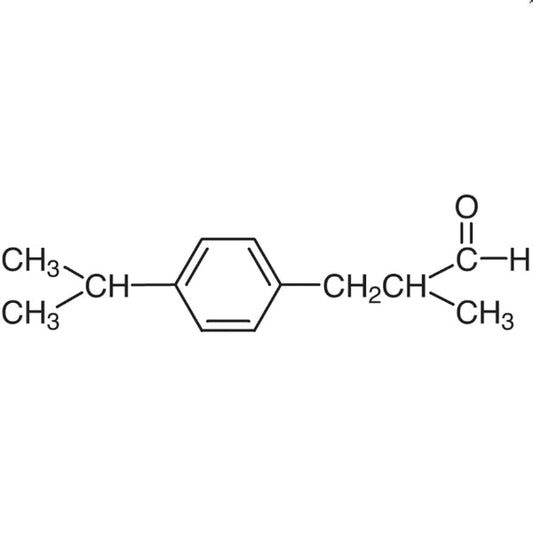
- TCI I0377 103-95-7 3-(4-Isopropylphenyl)isobutyraldehyde
- TCI P1037 88038-94-2 4-(4-Propylphenyl)benzoic Acid
- TCI B2756 2162-74-5 Bis(2,6-diisopropylphenyl)carbodiimide
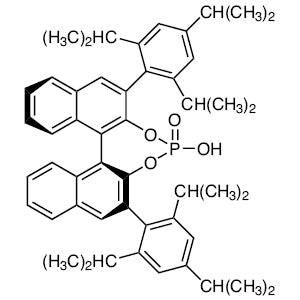
- TCI B6259 874948-63-7 (S)-3,3'-Bis(2,4,6-triisopropylphenyl)-1,1'-binaphthyl-2,2'-diyl Hydrogen Phosphate
- TCI I0738 304-17-6 N-Isopropylphthalimide
- TCI B4268 82953-57-9 N,N'-Bis(2,6-diisopropylphenyl)-3,4,9,10-perylenetetracarboxylic Diimide
- Organic synthesis projects benefit from this compound's reactivity and structural versatility, enabling the creation of complex molecules.
- Pharmaceutical research utilizes it for the development of new drugs, as it can be modified into various functional derivatives.
- Industrial chemical production relies on its ability to participate in multiple chemical reactions, enhancing the efficiency of synthesis processes.
- Academic research in chemistry uses it as a key building block for teaching and experimental studies on molecular structure and reactivity.
- Material science applications leverage its properties for the synthesis of advanced polymers and specialty chemicals.
| Brand | TCI |
|---|---|
| CAS number | 125109-85-5 |
| Molecular formula | — |
| Purity | — |
| Category | Chemistry > Building Blocks > Non-Heterocyclic Building Blocks |
| Pack sizes | Available in various quantities as per standard laboratory supply options |
| Physical form | Liquid |
| Storage | Store in a cool, dry place away from direct sunlight and incompatible materials |
This compound should be stored in a cool, dry environment to maintain its stability and prevent degradation. It is recommended to use sealed containers made of materials compatible with organic solvents to avoid contamination. Due to its reactivity, it should be kept away from strong oxidizing agents and reactive metals. Proper ventilation is essential when handling the compound to minimize exposure. Always wear appropriate personal protective equipment, including gloves and safety goggles, when working with this substance. Regular inspection of storage conditions ensures the compound remains suitable for use in laboratory applications.
—
Produk Terkait
-
3-(4-Isopropylphenyl)isobutyraldehyde TCI I0377
Regular price Rp 1.115.100,00Regular price -
4-(4-Propylphenyl)benzoicAcid TCI P1037
Regular price Rp 2.411.850,00Regular price -
Bis(2,6-diisopropylphenyl)carbodiimide TCI B2756
Regular price From Rp 584.850,00Regular price -
(S)-3,3'-Bis(2,4,6-triisopropylphenyl)-1,1'-binaphthyl-2,2'-diylHydrogenPhosphate TCI B6259
Regular price Rp 7.234.500,00Regular price -
N-Isopropylphthalimide TCI I0738
Regular price Rp 4.056.150,00Regular price -
N,N'-Bis(2,6-diisopropylphenyl)-3,4,9,10-perylenetetracarboxylicDiimide TCI B4268
Regular price From Rp 11.343.150,00Regular price -
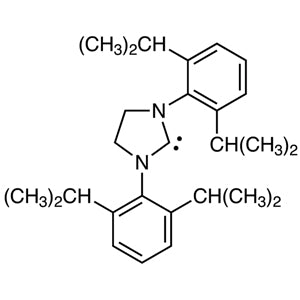
1,3-Bis(2,6-diisopropylphenyl)imidazolidin-2-ylidene TCI B3506
Regular price Rp 7.792.050,00Regular price -
1,3-Bis(2,6-diisopropylphenyl)imidazol-2-ylidene TCI B3465
Regular price From Rp 3.578.400,00Regular price