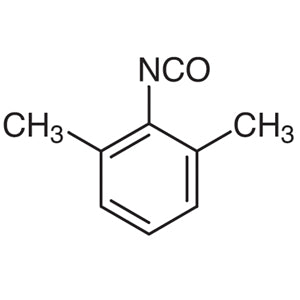
2,6-Dimethylphenyl Isocyanate is a chemical compound widely used as a foundational building block in organic synthesis. It plays a crucial role in laboratories by enabling the creation of complex organic molecules through its reactive isocyanate functional group. This compound is essential for various chemical reactions, including nucleophilic substitutions and molecular coupling, making it a versatile tool for synthetic chemists. Its ability to form new bonds under controlled conditions allows researchers to develop polymers, pharmaceuticals, and industrial chemicals with specific properties.
The compound is valued for its high reactivity and its capacity to participate in a wide range of chemical transformations. Its stability under certain conditions ensures reliable performance in laboratory settings, while its sensitivity to moisture and air necessitates careful handling. These properties make it a preferred choice for chemists seeking to achieve precise and reproducible results. The compound’s reactivity also supports its use in advanced synthetic pathways, where accuracy and efficiency are paramount.
In Indonesian laboratories, 2,6-Dimethylphenyl Isocyanate is commonly used in organic chemistry research, particularly in the synthesis of complex compounds and the development of new materials. It is a key reagent in academic and industrial research settings, supporting both basic and applied studies. Its role in creating high-precision chemical structures makes it an essential component of many experimental protocols in Indonesian chemical research institutions.
Related TCI products
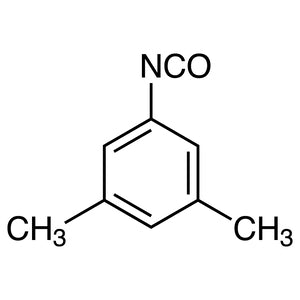
- TCI D3474 54132-75-1 3,5-Dimethylphenyl Isocyanate
- TCI A2982 661489-23-2 (E)-3-(4-Amino-3,5-dimethylphenyl)acrylonitrile Hydrochloride
- TCI B3205 69342-47-8 4-Butylphenyl Isocyanate
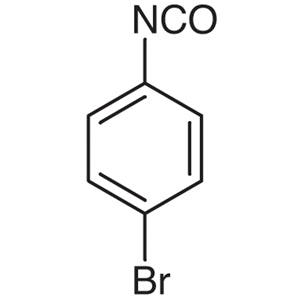
- TCI B0636 2493-02-9 4-Bromophenyl Isocyanate
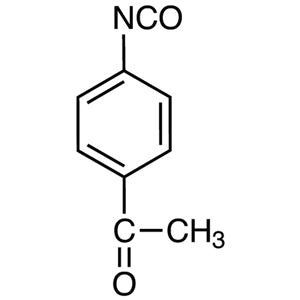
- TCI A2933 49647-20-3 4-Acetylphenyl Isocyanate
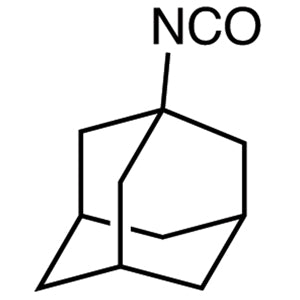
- TCI A1706 4411-25-0 1-Adamantyl Isocyanate
- Organic synthesis of complex molecules due to its reactive isocyanate group and versatility in chemical reactions.
- Development of new polymers and industrial chemicals through its ability to form stable bonds under controlled conditions.
- Pharmaceutical research applications for creating compounds with specific biological activities and molecular structures.
- Academic research in Indonesian universities for teaching and experimental purposes requiring high reactivity and precision.
- Industrial chemical production where the compound is used as a building block for specialized chemical products.
| Brand | TCI |
|---|---|
| CAS number | 28556-81-2 |
| Molecular formula | — |
| Purity | — |
| Category | Chemistry > Building Blocks > Non-Heterocyclic Building Blocks |
| Pack sizes | Available in standard laboratory quantities as per supplier specifications |
| Physical form | Liquid |
| Storage | Requires storage in a dry, cool, and well-ventilated area away from moisture and air |
2,6-Dimethylphenyl Isocyanate should be stored in a dry, cool, and well-ventilated area to prevent degradation due to moisture and air exposure. It is recommended to use airtight containers made of materials compatible with its chemical properties, such as glass or high-density polyethylene. Handling should be done with appropriate personal protective equipment to minimize exposure. The compound is sensitive to humidity, so it should be kept in a controlled environment to maintain its stability and reactivity. Proper labeling and storage conditions are essential to ensure safety and effectiveness in laboratory use.
—
Produk Terkait
-
3,5-DimethylphenylIsocyanate TCI D3474
Regular price From Rp 2.306.850,00Regular price -
(E)-3-(4-Amino-3,5-dimethylphenyl)acrylonitrileHydrochloride TCI A2982
Regular price Rp 2.174.550,00Regular price -
4-ButylphenylIsocyanate TCI B3205
Regular price From Rp 1.087.800,00Regular price -
4-BromophenylIsocyanate TCI B0636
Regular price From Rp 2.279.550,00Regular price -
4-AcetylphenylIsocyanate TCI A2933
Regular price From Rp 2.094.750,00Regular price -
1-AdamantylIsocyanate TCI A1706
Regular price From Rp 1.298.850,00Regular price -
TrichloroacetylIsocyanate TCI T1047
Regular price From Rp 769.650,00Regular price -
p-ToluenesulfonylIsocyanate TCI T0998
Regular price Rp 530.250,00Regular price