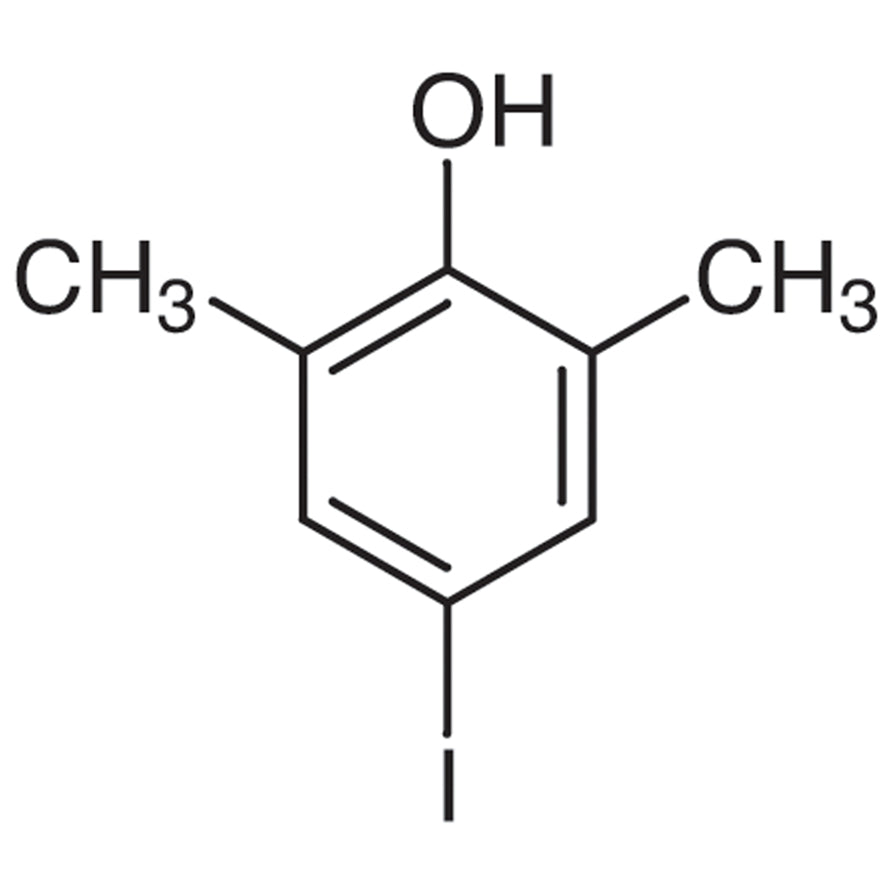
TCI I0600 4-Iodo-2,6-dimethylphenol is a phenol derivative carrying two methyl groups at the positions ortho to the hydroxyl and a single iodine atom at the para position. In the organic synthesis laboratory, this compound serves as an aromatic building block with two sharply different centres of reactivity that can therefore be addressed separately: a nucleophilic phenol group ready to be etherified, acylated, or converted into a triflate, and a carbon–iodine bond that acts as the entry point for transition-metal-catalysed cross-coupling reactions. This combination opens up stepwise synthetic routes starting from one and the same material.
The most defining feature of this compound is the pair of methyl groups flanking the hydroxyl. Their presence produces a sterically hindered phenol, a motif widely recognised for slowing down side reactions at oxygen and for stabilising the phenoxy radical formed on oxidation — the working principle behind many hindered antioxidants. That steric hindrance also makes reactions at oxygen more selective and prevents unwanted oxidative coupling at the ortho positions, since both of those positions are already occupied. The iodine atom at the para position, meanwhile, is the most readily displaced of the common aryl halides, which allows coupling to proceed under milder conditions than the corresponding bromide or chloride and with good chemoselectivity when several halogen types are present in one molecule.
In Indonesian laboratories, this building block is typically used by university and institutional research groups working on organic synthesis, medicinal chemistry, and materials chemistry, where a substituted phenol scaffold is required as an intermediate rather than as a finished product. It is generally purchased in small research quantities for method development, route scouting, and thesis-level work, and is handled alongside the usual palladium catalysts, bases, and anhydrous solvents already present in a synthetic laboratory.
TCI brochures (PDF)
- Iodinated Phenol/Benzoic Acid/Benzaldehyde Building Blocks 2024-11-15 · p. 1
- Transition-metal-catalysed cross-coupling: the para carbon–iodine bond undergoes oxidative addition readily, making this a convenient aryl partner for Suzuki, Sonogashira, Heck, and related carbon–carbon bond-forming reactions under comparatively mild conditions.
- Synthesis of hindered phenol derivatives: the two ortho methyl groups reproduce the classic hindered-phenol motif, so the compound serves as a starting point for preparing antioxidant-type structures and for studying phenoxy radical stability.
- Selective phenol functionalisation: the hydroxyl can be etherified, acylated, or converted into a triflate while the aryl iodide is left untouched, allowing chemists to protect or derivatise oxygen before addressing the halide.
- Stepwise multi-stage synthesis: because the two reactive sites respond to different reagent classes, a single batch of this material can be elaborated in sequence to build more complex substituted aromatic targets.
- Medicinal and materials chemistry intermediates: the substituted phenol scaffold is a common fragment in exploratory route design, where researchers need a defined, orthogonally reactive aromatic core to append further substituents onto.
| Brand | TCI (Tokyo Chemical Industry) |
|---|---|
| CAS number | 10570-67-9 |
| Molecular formula | — |
| Purity | — |
| Category | Chemistry > Building Blocks > Non-Heterocyclic Building Blocks |
| Pack sizes | available in standard TCI research-scale packaging; please confirm the currently listed pack sizes when ordering |
| Physical form | — |
| Storage | keep in the tightly closed original container, protected from light |
- Product code: I0600
Store the container tightly closed in a cool, dry, well-ventilated place, away from direct sunlight, heat, and sources of ignition. Aryl iodides and phenols are both sensitive to prolonged light exposure and to air oxidation, so the original amber or opaque supplier container is the most suitable vessel, and material should be returned to storage promptly after weighing rather than left open on the bench. Handle in a fume hood using gloves, safety glasses, and a laboratory coat, avoiding contact with skin and eyes and inhalation of dust. Keep separate from strong oxidising agents and strong bases. Always consult the manufacturer's Safety Data Sheet before use, and dispose of residues and contaminated materials through the laboratory's designated chemical waste stream.
—
Produk Terkait
-
4-Triphenylmethylphenol TCI T1654
Regular price Rp 3.180.450,00Regular price -
2-Bromo-4,5-dimethylphenol TCI B5394
Regular price From Rp 3.127.950,00Regular price -
4-Bromo-3-methylphenol TCI B3658
Regular price From Rp 1.644.300,00Regular price -
4-Bromo-3,5-dimethylphenol TCI B2146
Regular price From Rp 1.087.800,00Regular price -
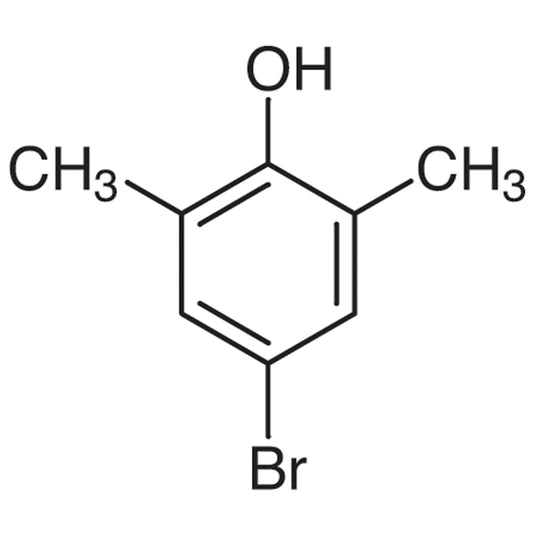
4-Bromo-2,6-dimethylphenol TCI B2060
Regular price From Rp 3.260.250,00Regular price -
2-tert-Butyl-4-ethylphenol TCI B1810
Regular price Rp 795.900,00Regular price -
2-Amyl-5-methylphenol TCI A2710
Regular price From Rp 1.510.950,00Regular price -
2,3,6-Trimethylphenol TCI T0877
Regular price From Rp 664.650,00Regular price