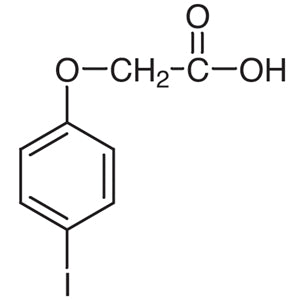
4-Iodophenoxyacetic Acid is an aromatic compound that combines an iodine-substituted benzene ring with a phenoxyacetic acid side chain. This arrangement makes it a bifunctional building block, meaning it carries two distinct reactive points that can be addressed separately in a planned sequence. In organic synthesis laboratories, compounds of this type are highly valued because they allow researchers to construct complex molecules step by step without having to prepare elaborate starting materials from scratch, saving both time and the overall number of reaction stages required.
The principal property behind the selection of this material is the carbon-iodine bond on the aromatic ring. Among the aromatic halides, iodides undergo oxidative addition to palladium catalysts most readily, which makes them highly reactive in cross-coupling reactions such as Suzuki, Sonogashira, Heck, and Buchwald-Hartwig couplings. These reactions generally proceed under milder conditions than those required for the corresponding bromide or chloride analogues. The carboxylic acid group on the phenoxyacetic chain, meanwhile, provides a handle for amide formation, esterification, or anchoring onto solid-phase resins, while the ether bridge between the two portions links them into a single workable scaffold.
In Indonesian laboratories, this building block is typically used in university research groups, chemistry departments, and institutional research units working on methodology development and the preparation of target molecules. It suits work where a reliable, well-defined intermediate is needed for multi-step synthesis routes, and where the two reactive handles allow a single reagent to serve several different synthetic directions. Purchasing a characterised building block of this kind also shortens preparation work considerably for teams running limited-scale exploratory chemistry.
- Palladium-catalysed cross-coupling chemistry: the aryl iodide undergoes oxidative addition readily, making it a dependable partner in Suzuki, Sonogashira, Heck, and Buchwald-Hartwig reactions under comparatively mild conditions.
- Stepwise construction of multi-substituted aromatics: the two independent reactive sites allow researchers to plan a defined reaction order and elaborate the molecule progressively without protecting-group complications at every stage.
- Amide bond formation studies: the free carboxylic acid group serves as a direct coupling handle for reaction with amines, supporting the preparation of amide-linked derivatives and analogue series.
- Esterification and carboxyl derivatisation work: the acetic acid side chain can be converted to esters or other carboxyl derivatives, giving access to modified scaffolds from a single common starting material.
- Solid-phase synthesis and resin anchoring: the carboxylic acid provides an attachment point for tethering the scaffold to solid support, allowing the iodide position to be elaborated while bound to resin.
| Brand | TCI |
|---|---|
| CAS number | 1878-94-0 |
| Molecular formula | — |
| Purity | — |
| Category | Chemistry > Building Blocks > Non-Heterocyclic Building Blocks |
| Pack sizes | available in standard TCI research-scale packaging; please confirm the required pack size when ordering |
| Physical form | — |
| Storage | store in a tightly closed container in a cool, dry place away from light |
- Catalogue code: I0644
Keep the container tightly closed and store it in a cool, dry, well-ventilated area, protected from light and away from incompatible materials. Original supplier packaging is the preferred container; where transfer is necessary, use clean, dry, chemically compatible glassware with a secure closure and label it clearly with the compound name and CAS number. Handle the material in a fume hood, wearing safety glasses, gloves, and a laboratory coat, and avoid generating dust when weighing. Return the container to its designated storage location promptly after use, and consult the manufacturer's safety data sheet for full handling, exposure, and disposal guidance before beginning any work.
—
Produk Terkait
-
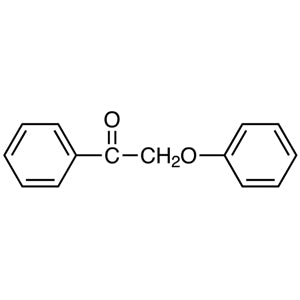
2-Phenoxyacetophenone TCI P2121
Regular price Rp 1.298.850,00Regular price -
4'-Phenoxyacetophenone TCI P1355
Regular price Rp 1.298.850,00Regular price -
PhenoxyaceticAnhydride TCI P0111
Regular price From Rp 4.399.500,00Regular price -
PhenoxyaceticAcid TCI P0107
Regular price From Rp 637.350,00Regular price -
2,4,6-TrichlorophenoxyaceticAcid TCI T1063
Regular price From Rp 3.232.950,00Regular price -
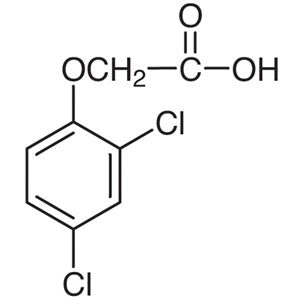
2,4-DichlorophenoxyaceticAcid TCI D0396
Regular price From Rp 664.650,00Regular price -
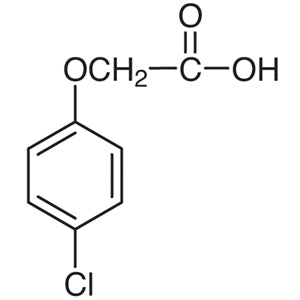
4-ChlorophenoxyaceticAcid TCI C0250
Regular price From Rp 505.050,00Regular price -
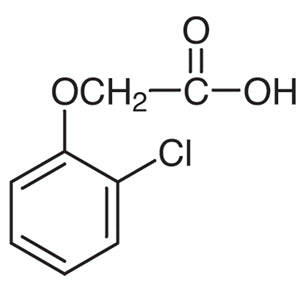
2-ChlorophenoxyaceticAcid TCI C0249
Regular price Rp 2.889.600,00Regular price