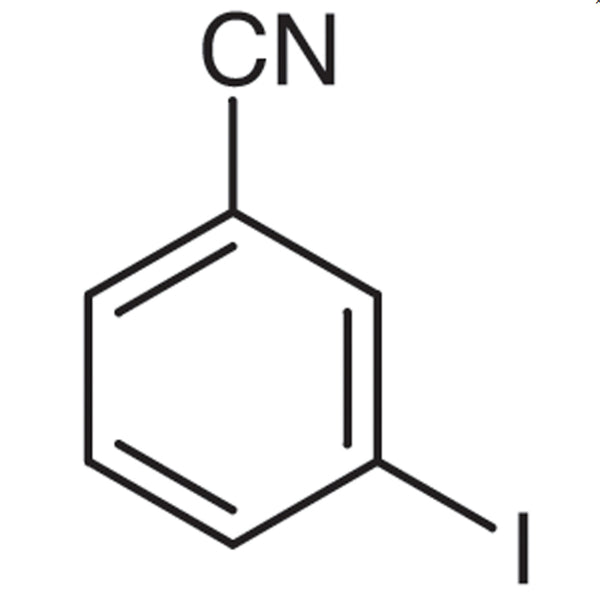

TCI I0660 3-Iodobenzonitrile is the meta isomer of iodobenzonitrile, an aromatic compound in which the iodine atom and the cyano group are separated by one position on the benzene ring. It belongs to the family of non-heterocyclic building blocks and serves an important role as a starting material for the construction of complex molecules in synthesis laboratories. Its primary function is to supply an aryl halide reaction point that is easily activated, together with a nitrile group that can be transformed further, so that a single material already opens up a wide range of possible synthetic routes.
The main advantage of this compound lies in its meta substitution pattern, which produces a molecular geometry distinctly different from that of the ortho and para isomers. This difference in geometry matters a great deal when researchers design molecules with a specific spatial shape — for example ligands, target molecules that must occupy a receptor cavity, or linking units within a material. The carbon–iodine bond remains the weakest and most reactive bond in the molecule, so coupling reactions can proceed selectively without disturbing the nitrile group. Its solid form also makes handling and weighing straightforward at small scale.
Laboratories in Indonesia make continual use of this material in synthetic organic chemistry work, where a reliable and well-defined building block is needed as the starting point of a reaction sequence. The compound suits university research groups, medicinal chemistry laboratories, and materials development work, where a small quantity of a solid intermediate is weighed out, reacted, and then carried forward through subsequent steps of a synthesis programme.
- Cross-coupling reaction substrate — the reactive carbon–iodine bond is readily activated, letting researchers form new carbon–carbon or carbon–heteroatom bonds selectively while the nitrile group remains untouched.
- Medicinal chemistry intermediate synthesis — the meta geometry positions substituents in a specific spatial arrangement, which is valuable when designing target molecules that must fit a receptor cavity.
- Ligand construction — the compound provides a defined aromatic scaffold with two differentiated handles, allowing chemists to build ligand frameworks with a controlled molecular shape.
- Nitrile group transformation chemistry — the cyano function can be converted into other groups, so a single starting material gives access to several downstream functionalities and synthetic routes.
- Materials chemistry linking units — the meta-substituted ring works as a connecting unit whose angled geometry differs from linear para analogues, shaping the architecture of the resulting material.
| Brand | TCI (Tokyo Chemical Industry) |
|---|---|
| CAS number | 69113-59-3 |
| Molecular formula | — |
| Purity | — |
| Category | Chemistry > Building Blocks > Non-Heterocyclic Building Blocks |
| Pack sizes | available in standard laboratory research pack sizes; please confirm the available option when ordering |
| Physical form | solid, convenient for handling and weighing at small scale |
| Storage | keep in a tightly closed original container in a cool, dry place |
- Product code: I0660
Store the material in its original tightly closed container in a cool, dry, well-ventilated place, away from direct sunlight, moisture, and sources of heat or ignition. Glass containers with secure closures are suitable for any repackaged portions, and containers should be clearly labelled. Handle the solid inside a fume hood, using gloves, safety glasses, and a laboratory coat, and avoid generating dust during weighing. Close the container promptly after use, keep it separate from incompatible reagents, and dispose of residues and contaminated materials through the laboratory's chemical waste procedures. Always consult the manufacturer's safety data sheet before use.
—
Produk Terkait
-
5-Bromo-2-iodobenzonitrile TCI B2215
Regular price Rp 743.400,00Regular price -
4-Amino-3-iodobenzonitrile TCI A2747
Regular price From Rp 743.400,00Regular price -
4-Iodobenzonitrile TCI I0661
Regular price From Rp 1.724.100,00Regular price -
2-Iodobenzonitrile TCI I0659
Regular price From Rp 1.749.300,00Regular price -
2-Chloro-5-iodobenzonitrile TCI C2212
Regular price From Rp 823.200,00Regular price -
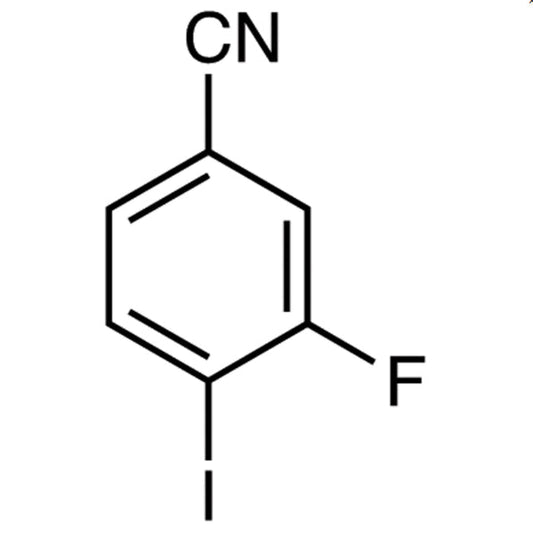
3-Fluoro-4-iodobenzonitrile TCI F1093
Regular price Rp 1.298.850,00Regular price -
2-Fluoro-6-iodobenzonitrile TCI F0660
Regular price From Rp 505.050,00Regular price -
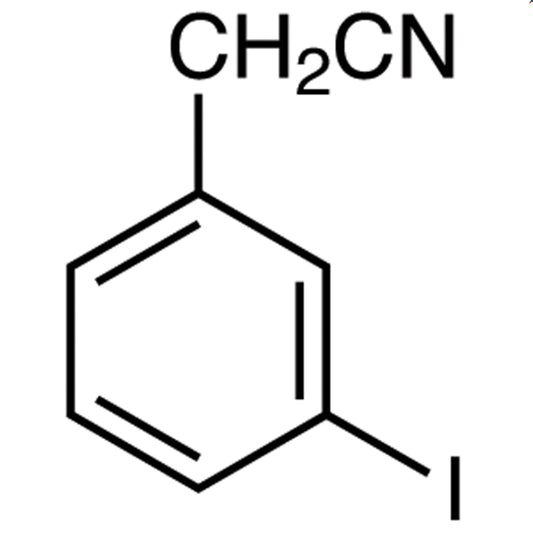
3-IodobenzylCyanide TCI I1002
Regular price From Rp 1.856.400,00Regular price