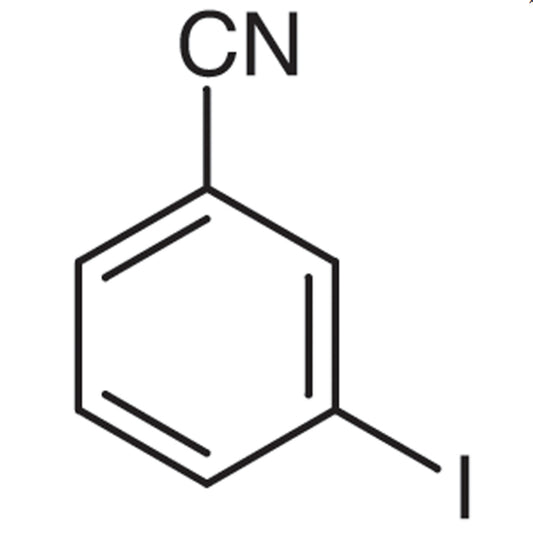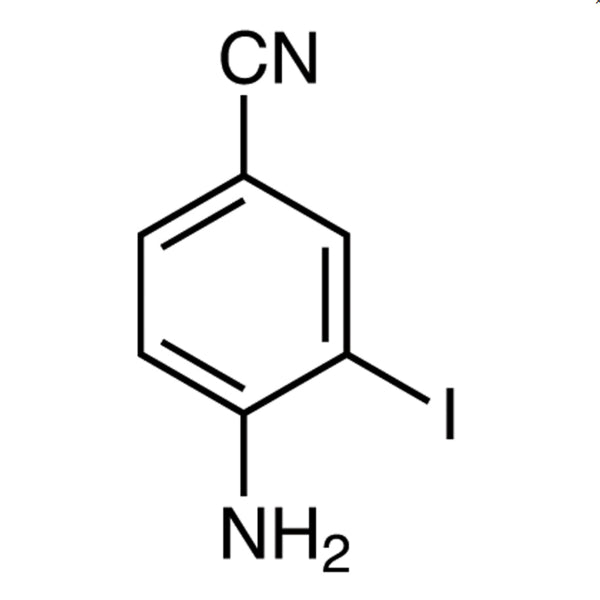
4-Amino-3-iodobenzonitrile is a chemical compound widely used as a building block in the synthesis of complex organic molecules. This versatile reagent plays a crucial role in laboratory settings, particularly in organic chemistry and pharmaceutical research. Its unique structure, containing an amino group, an iodine atom, and a nitrile group, allows it to participate in various chemical reactions such as substitution, reduction, and nucleophilic reactions. Due to its functional groups and stable molecular framework, it is a valuable tool for chemists seeking to construct intricate molecular architectures.
The compound's reactivity is enhanced by the presence of iodine in the aromatic ring, which increases its susceptibility to different reaction conditions. Meanwhile, the nitrile group contributes to its electronic properties, making it suitable for substitution reactions. These characteristics make 4-Amino-3-iodobenzonitrile a preferred choice for researchers aiming to develop new compounds with specific functional properties. Its stability and reactivity ensure that it remains a reliable component in synthetic pathways.
In Indonesian laboratories, 4-Amino-3-iodobenzonitrile is commonly used in scientific research across various fields, including organic chemistry, pharmacy, and industrial chemistry. Its availability in practical packaging makes it accessible to researchers and educational institutions, supporting the advancement of chemical studies. The compound's utility in creating complex structures and its relevance in applied research further solidify its importance in the scientific community.
- Organic synthesis is a key application where 4-Amino-3-iodobenzonitrile is used to construct complex molecules through various reaction mechanisms.
- Pharmaceutical research benefits from this compound due to its ability to participate in nucleophilic substitution and reduction reactions, aiding in drug development.
- Industrial chemistry utilizes this reagent for the production of specialty chemicals and intermediates due to its functional group versatility.
- Analytical chemistry employs this compound as a reference standard for spectroscopic and chromatographic analyses.
- Teaching laboratories use it to demonstrate fundamental chemical reactions and molecular structure manipulation in undergraduate and graduate courses.
| Brand | TCI |
|---|---|
| CAS number | 33348-34-4 |
| Molecular formula | — |
| Purity | — |
| Category | Chemistry > Building Blocks > Non-Heterocyclic Building Blocks |
| Pack sizes | Available in various quantities to suit different research needs |
| Physical form | Solid, typically in crystalline or powder form |
| Storage | Store in a cool, dry place away from light and moisture |
4-Amino-3-iodobenzonitrile should be stored in a cool, dry environment, away from direct light and moisture to maintain its chemical integrity. It is recommended to use airtight containers to prevent exposure to air and humidity, which could affect its stability. Due to its reactivity, it should be handled in a well-ventilated area, and appropriate personal protective equipment should be worn when working with it. Avoid contact with incompatible substances, and ensure proper disposal methods are followed. Regular monitoring of storage conditions is advised to ensure the compound remains in optimal condition for laboratory use.
—
Produk Terkait
-
5-Bromo-2-iodobenzonitrile TCI B2215
Regular price Rp 743.400,00Regular price -
4-Iodobenzonitrile TCI I0661
Regular price From Rp 1.724.100,00Regular price -
3-Iodobenzonitrile TCI I0660
Regular price From Rp 2.466.450,00Regular price -
2-Iodobenzonitrile TCI I0659
Regular price From Rp 1.749.300,00Regular price -
2-Chloro-5-iodobenzonitrile TCI C2212
Regular price From Rp 823.200,00Regular price -
5-Amino-2-chlorotoluene-4-sulfonicAcid TCI A0287
Regular price From Rp 637.350,00Regular price -
4-Amino-4'-(N,N-dimethylamino)stilbene TCI A0291
Regular price From Rp 1.936.200,00Regular price -
2-Amino-3-hydroxyanthraquinone TCI A0315
Regular price From Rp 903.000,00Regular price