


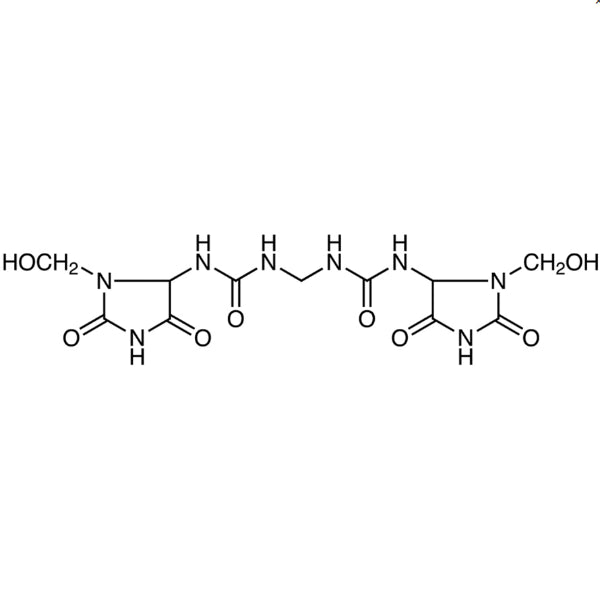
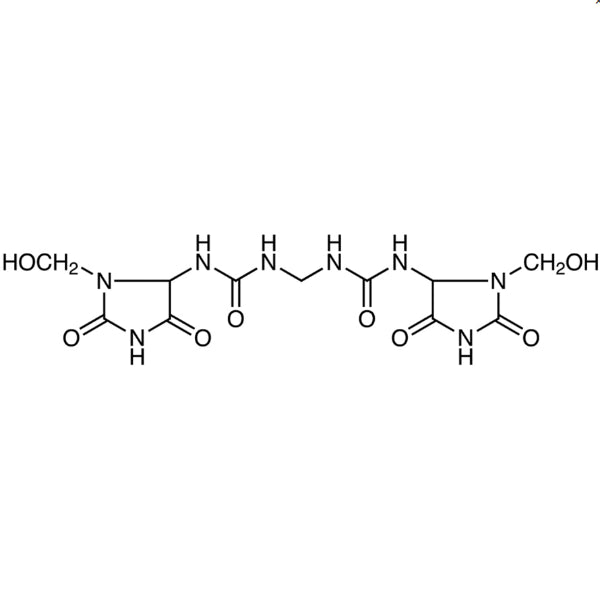
Imidazolidinyl Urea is a chemical compound widely used in the fields of biochemistry and pharmaceutical research. As a key reagent in laboratory settings, it plays a vital role in facilitating chemical reactions, particularly in the synthesis of compounds requiring high reactivity. Its ability to act as a binder or modifier in various chemical processes makes it an essential component for researchers working on complex molecular transformations. This compound is particularly valuable in organic chemistry applications where precise control over reaction conditions is necessary.
The unique properties of Imidazolidinyl Urea, such as its amphoteric nature, make it a preferred choice for a wide range of laboratory applications. It can interact effectively with both acidic and basic substrates, enabling versatile chemical reactions. Its stable chemical structure ensures consistent performance under different experimental conditions, making it reliable for use in both routine and advanced research. Additionally, its availability and cost-effectiveness contribute to its popularity in laboratory environments.
In Indonesian laboratories, Imidazolidinyl Urea is commonly used in biochemistry and pharmaceutical research. It is an essential reagent for synthesizing various organic compounds and is frequently employed in the development of new drugs and biochemical products. Its role in supporting both academic and industrial research makes it a standard component in many laboratory workflows across Indonesia.
TCI brochures (PDF)
- Antimicrobials and Antitumor Agents for Research and Experimental Use 2025-04-24 · p. 8
- Pharmaceutical Ingredients for Research and Experimental Use 2026-03-09 · p. 8
- Biochemical Synthesis: Imidazolidinyl Urea is used in the synthesis of organic compounds due to its ability to act as a reagent in chemical reactions.
- Pharmaceutical Research: It supports the development of new drugs by facilitating the modification of complex molecular structures.
- Organic Chemistry Reactions: Its amphoteric nature allows it to participate in a variety of reactions, enhancing the efficiency of chemical processes.
- Analytical Chemistry: It is used in the preparation of reagents for analytical procedures, ensuring accurate and reliable results.
- Biotechnology Applications: It plays a role in the development of biotechnological products, supporting research in molecular biology and biochemistry.
| Brand | TCI |
|---|---|
| CAS number | 39236-46-9 |
| Molecular formula | — |
| Purity | — |
| Category | Life Science > Biochemicals and Reagents > Antibiotics |
| Pack sizes | Available in standard laboratory quantities |
| Physical form | Solid |
| Storage | Store in a cool, dry place away from direct sunlight |
Imidazolidinyl Urea should be stored in a cool, dry environment to maintain its chemical stability. It is recommended to keep it in a sealed container to prevent moisture absorption, which could affect its performance. Suitable containers include glass or plastic vessels that are resistant to chemical reactions. General laboratory precautions include handling it with appropriate personal protective equipment to ensure safety during use. It is important to avoid exposure to high temperatures and direct sunlight to preserve its integrity. Proper storage ensures that the compound remains effective for its intended applications in research settings.
—
Product Categories
- Biochemicals and ReagentsAntibioticsAntibiotics (Chemical Structure Class)
- Biochemicals and ReagentsPharmaceutical Research Reagents (for Experimental Use)Antimicrobial Ingredients (for Research and Experimental Use)
- MicrobiologyAntibioticsAntibiotics (Chemical Structure Class)
- Pharmaceutical Development and Drug Discovery ResearchPharmaceutical Research Reagents (for Experimental Use)Antimicrobial Ingredients (for Research and Experimental Use)
- Pharmaceutical Development and Drug Discovery ResearchAntibioticsAntibiotics (Chemical Structure Class)
Produk Terkait
-
DiazolidinylUrea TCI D3769
Regular price From Rp 1.035.300,00Regular price -
4-AminosalicylicAcid TCI A0420
Regular price From Rp 769.650,00Regular price -
Sodium4-AminosalicylateDihydrate TCI A0423
Regular price From Rp 875.700,00Regular price -
Wortmannin TCI W0007
Regular price Rp 11.580.450,00Regular price -
ValganciclovirHydrochloride TCI V0158
Regular price From Rp 1.565.550,00Regular price -
ValnemulinHydrochloride TCI V0144
Regular price From Rp 4.929.750,00Regular price -
Sulfamerazine TCI U0176
Regular price From Rp 2.359.350,00Regular price -
SulfadiazineSodium TCI U0171
Regular price Rp 1.167.600,00Regular price


