

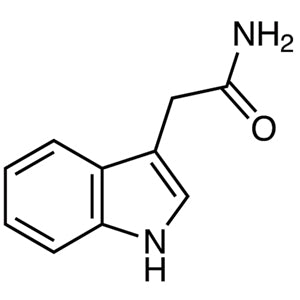
Indole-3-acetamide is a chemical compound classified under the heterocyclic category, commonly used as a building block in the synthesis of complex organic compounds. This compound features a unique molecular structure composed of an indole ring connected to an amide group, making it a versatile intermediate in chemical reactions. In laboratory settings, it plays a crucial role as a precursor for the synthesis of bioactive compounds, including those with plant growth regulatory properties. Its stability and moderate reactivity make it a valuable tool for researchers working in organic chemistry.
Indole-3-acetamide is chemically neutral and exhibits low reactivity with common solvents, which simplifies processing and storage procedures. It has good solubility in organic solvents such as ethyl acetate and acetone, enhancing its usability in various synthetic protocols. Its non-toxic nature and absence of hazardous components make it suitable for use in laboratories adhering to high safety standards. These properties contribute to its popularity among researchers in Indonesia and other regions.
In Indonesian laboratories, indole-3-acetamide is frequently utilized in organic chemistry research, particularly in pharmaceutical and biochemical studies. Due to its structural versatility and chemical stability, it is a preferred choice for synthesizing compounds with biological activity. Its application in research settings underscores its importance in advancing scientific investigations in the field of natural product chemistry.
Related TCI products
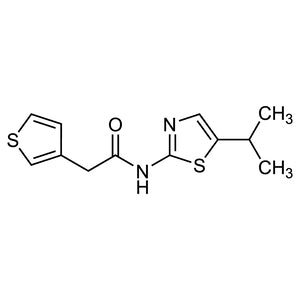
- TCI M3882 267654-65-9 N-(5-Isopropylthiazol-2-yl)-2-(thiophen-3-yl)acetamide
- TCI I0743 1196-70-9 Indole-6-carboxaldehyde
- TCI I0852 19005-93-7 Indole-2-carboxaldehyde
- TCI T4293 1,1,2-Trimethyl-1H-benzo[e]indole-7-sulfonic Acid Monohydrate
- TCI T3351 55577-25-8 2-(p-Tolyl)indole
- TCI T3119 881219-73-4 1,2,3-Trimethyl-3H-benzo[e]indole
- Organic synthesis applications benefit from indole-3-acetamide's structural versatility, making it ideal for creating complex bioactive molecules.
- Pharmaceutical research utilizes this compound to develop plant growth regulators and other bioactive agents with therapeutic potential.
- Biochemical experiments rely on its stability and solubility properties, enabling efficient synthesis of compounds in controlled environments.
- Laboratory protocols for natural product chemistry often incorporate indole-3-acetamide due to its role in synthesizing compounds with biological activity.
- Research in plant science leverages its ability to act as a precursor for compounds that influence plant growth and development.
| Brand | TCI |
|---|---|
| CAS number | 879-37-8 |
| Molecular formula | — |
| Purity | — |
| Category | Chemistry > Building Blocks > Heterocyclic Building Blocks |
| Pack sizes | Available in various quantities as per standard laboratory supply |
| Physical form | Solid |
| Storage | Store in a cool, dry place away from direct sunlight |
Indole-3-acetamide should be stored in a cool, dry environment to maintain its chemical stability. It is recommended to keep the compound in a tightly sealed container to prevent moisture absorption and contamination. Due to its neutral chemical nature, it does not require special handling beyond standard laboratory safety practices. It is advisable to store it away from incompatible substances to ensure long-term usability. Proper labeling and storage conditions help in maintaining the integrity of the compound during research applications. Regular inspection of storage conditions ensures that the material remains in optimal condition for laboratory use.
—
Produk Terkait
-
N-(5-Isopropylthiazol-2-yl)-2-(thiophen-3-yl)acetamide TCI M3882
Regular price Rp 2.411.850,00Regular price -
Indole-6-carboxaldehyde TCI I0743
Regular price From Rp 2.359.350,00Regular price -
Indole-2-carboxaldehyde TCI I0852
Regular price From Rp 3.949.050,00Regular price -
AcidMonohydrate TCI T4293
Regular price From Rp 1.696.800,00Regular price -
2-(p-Tolyl)indole TCI T3351
Regular price From Rp 2.625.000,00Regular price -
1,2,3-Trimethyl-3H-benzo[e]indole TCI T3119
Regular price From Rp 1.035.300,00Regular price -
1,2,3,4-Tetrahydrocyclopenta[b]indole TCI T3116
Regular price Rp 1.115.100,00Regular price -
2,3,3-Trimethyl-3H-benzo[g]indole TCI T2601
Regular price Rp 4.452.000,00Regular price


![1,1,2-Trimethyl-1H-benzo[e]indole-7-sulfonic Acid Monohydrate - AMI Scientific](http://amiscientific.com/cdn/shop/files/TCI2510T4293.jpg?v=1767145027&width=533)

![881219-73-4 1,2,3-Trimethyl-3H-benzo[e]indole - AMI Scientific](http://amiscientific.com/cdn/shop/files/TCI2510T3119.jpg?v=1767143808&width=533)
![2047-91-8 1,2,3,4-Tetrahydrocyclopenta[b]indole - AMI Scientific](http://amiscientific.com/cdn/shop/files/TCI2510T3116.jpg?v=1767143800&width=533)
![74470-85-2 2,3,3-Trimethyl-3H-benzo[g]indole - AMI Scientific](http://amiscientific.com/cdn/shop/files/TCI2510T2601.jpg?v=1767143100&width=533)