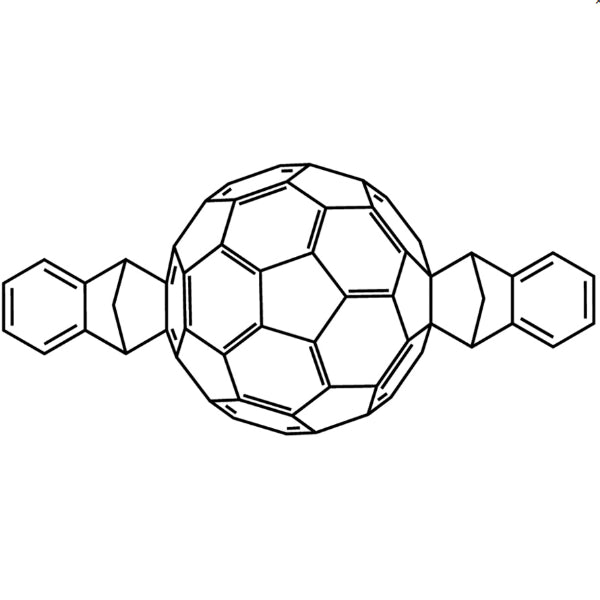
TCI I0900 1207461-57-1 ICBA is a chemical compound widely used in the field of organic photovoltaic (OPV) research. As a key electron-donating material, it plays a crucial role in the active layer of organic solar cells, where it facilitates light absorption and the generation of electric current. This compound is essential for researchers aiming to develop efficient and sustainable energy solutions through photovoltaic technology. Its application extends beyond basic research, supporting the advancement of renewable energy systems in both academic and industrial settings.
The chemical stability and compatibility with various organic solvents make TCI I0900 1207461-57-1 ICBA a preferred choice for laboratory use. It can form uniform thin films, which are critical for the fabrication of high-performance solar cells. These properties ensure consistent and accurate results, making it a reliable material for experimental studies. Additionally, its ability to maintain structural integrity under different processing conditions enhances its versatility in laboratory applications.
In Indonesian laboratories, TCI I0900 1207461-57-1 ICBA is commonly used in academic and industrial research focused on renewable energy technologies. It supports initiatives aligned with national policies promoting the adoption of clean energy solutions. Its role in advancing OPV research makes it an important component in the development of sustainable energy technologies within the country.
- Organic Photovoltaic (OPV) Research – TCI I0900 1207461-57-1 ICBA is ideal for OPV research due to its electron-donating properties and compatibility with organic solvents, enabling the fabrication of efficient solar cell layers.
- Thin Film Deposition Studies – The material’s ability to form uniform thin films makes it suitable for studies involving spin coating, inkjet printing, and other thin-film deposition techniques.
- Semiconductor Material Development – It is used in the development of organic semiconductor materials, contributing to the advancement of next-generation photovoltaic technologies.
- Renewable Energy Innovation – Its role in OPV research aligns with efforts to develop sustainable energy solutions, supporting both academic and industrial innovation in Indonesia.
- Energy Efficiency Testing – The compound is utilized in testing the efficiency and performance of organic solar cells under various environmental conditions.
| Brand | TCI |
|---|---|
| CAS number | 1207461-57-1 |
| Molecular formula | — |
| Purity | — |
| Category | Materials Science > Electronic Materials > Organic Solar Cell (OPV) Materials |
| Pack sizes | — |
| Physical form | — |
| Storage | Store in a cool, dry place away from direct sunlight |
TCI I0900 1207461-57-1 ICBA should be stored in a cool, dry environment to maintain its chemical stability. It is recommended to keep the material in airtight containers to prevent exposure to moisture and air, which could affect its performance. Laboratory personnel should handle the compound with care, using appropriate personal protective equipment such as gloves and safety goggles. The material is not classified as hazardous under standard laboratory conditions, but standard safety protocols should be followed during handling. Proper storage and handling ensure the material remains effective for research applications and supports the safety of laboratory operations.
—
Produk Terkait
-
TCI B5774 5,10-Bis(4,4,5,5-tetramethyl-1,3,2-dioxaborolan-2-yl)naphtho[1,2-c:5,6-c']bis([1,2,5]oxadiazole)
Regular price Rp 10.255.350,00Regular price -
Dihydroiodide TCI B6569
Regular price From Rp 1.936.200,00Regular price -
Trifluoromethanesulfonate TCI B7003
Regular price From Rp 1.936.200,00Regular price
![5,10-Bis(4,4,5,5-tetramethyl-1,3,2-dioxaborolan-2-yl)naphtho[1,2-c:5,6-c']bis([1,2,5]oxadiazole) - TCI B5774 - AMI Scientific](http://amiscientific.com/cdn/shop/files/TCI2510B5774.jpg?v=1769180228&width=533)