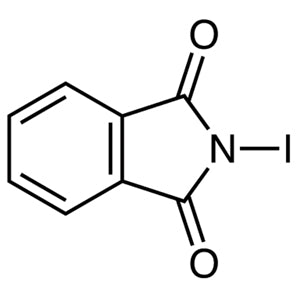
N-Iodophthalimide is a chemical compound widely used in organic synthesis, particularly in the formation of C-X (halogen) bonds during chemical reactions. This reagent plays a crucial role in laboratories where precise and controlled chemical transformations are required. Its unique chemical structure enables it to participate in substitution reactions and other processes that require iodide as a reactive component. As a synthetic reagent, it is highly valued for its ability to introduce iodide groups into organic molecules with specificity and efficiency.
The properties that make N-Iodophthalimide a preferred choice include its chemical stability under certain conditions and its reactivity in appropriate chemical environments. These characteristics allow it to be an ideal candidate for reactions that demand precision and control. Its ability to interact with a wide range of organic compounds further enhances its versatility, making it a valuable tool in the synthesis of complex molecules. The combination of stability and reactivity ensures that it remains a reliable and effective reagent in various synthetic applications.
In Indonesian laboratories, N-Iodophthalimide is commonly used in research and development settings where organic synthesis is a key focus. It is particularly favored for its role in creating iodinated compounds with specific structural features. Its application is widespread in academic and industrial settings, supporting both fundamental research and the development of new chemical products. The compound's reliability and effectiveness make it a staple in many chemical laboratories across Indonesia.
TCI brochures (PDF)
- Halogenation Reagents 2026-04-03 · p. 7
- Organic synthesis reactions where iodide introduction is required for functional group modification.
- Preparation of iodinated organic compounds for pharmaceutical and agrochemical applications.
- Catalytic processes involving halogenation and substitution reactions in complex molecule synthesis.
- Research in halogen bond formation for advanced chemical transformations and material development.
- Development of new synthetic methodologies in academic and industrial chemistry laboratories.
| Brand | TCI |
|---|---|
| CAS number | 20919-42-0 |
| Molecular formula | — |
| Purity | — |
| Category | Chemistry > Synthetic Reagents > C-X(Halogen) Bond Formation [Synthetic Reagents] |
| Pack sizes | Available in various quantities as per supplier specifications |
| Physical form | Solid, crystalline powder |
| Storage | Store in a cool, dry place away from light and moisture |
N-Iodophthalimide should be stored in a cool, dry place, away from light and moisture to maintain its chemical stability. It is recommended to use airtight containers to prevent exposure to air and humidity. As a reactive chemical, it should be handled with care in a well-ventilated laboratory environment. Proper personal protective equipment, including gloves and safety goggles, should be worn during handling. The compound is not flammable but may react with certain substances, so it should be stored separately from incompatible materials. Regular monitoring of storage conditions is essential to ensure the integrity and safety of the reagent.
—
Produk Terkait
-
N-(4-Bromophenyl)phthalimide TCI B2707
Regular price From Rp 2.730.000,00Regular price -
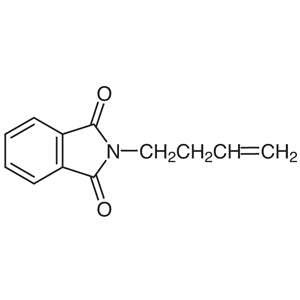
N-(3-Buten-1-yl)phthalimide TCI B1881
Regular price Rp 7.897.050,00Regular price -
PhthalimidePotassiumSalt TCI P0403
Regular price From Rp 557.550,00Regular price -
Phthalimide TCI P0402
Regular price From Rp 530.250,00Regular price -
N-(2-Hydroxyethyl)phthalimide TCI H0245
Regular price From Rp 689.850,00Regular price -
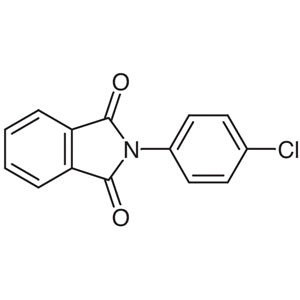
N-(4-Chlorophenyl)phthalimide TCI C1958
Regular price From Rp 1.378.650,00Regular price -
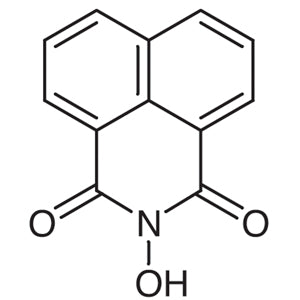
N-Hydroxy-1,8-naphthalimide TCI H1040
Regular price From Rp 928.200,00Regular price -
N-Bromophthalimide TCI B1697
Regular price From Rp 875.700,00Regular price