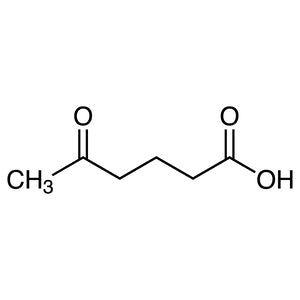
5-Oxohexanoic Acid (TCI K0014), with CAS number 3128-06-1, is a versatile chemical compound widely used in laboratory settings for its reactivity and structural versatility. As a non-heterocyclic building block, it serves as a foundational element in the synthesis of complex organic molecules and heterocyclic compounds. Its role in chemical reactions such as esterification, reduction, and substitution makes it an essential tool for chemists working on molecular design and functional group modification. This compound is commonly found in research and educational laboratories across Indonesia, supporting both academic and industrial chemical development.
The compound’s stable molecular structure and high reactivity make it a preferred choice for organic synthesis. It is capable of participating in a wide range of chemical transformations, making it adaptable to various synthetic strategies. Its compatibility with multiple reagents and its ability to form diverse chemical intermediates contribute to its popularity in both research and teaching environments. The compound’s predictable behavior under different reaction conditions ensures reliable results, which is crucial for scientific experimentation and innovation.
In Indonesian laboratories, 5-Oxohexanoic Acid is frequently used in organic chemistry research and pharmaceutical development. It is particularly valuable in the synthesis of heterocyclic compounds and the study of molecular structures. Its availability in practical packaging supports ease of use and storage, making it a reliable resource for both academic and industrial applications. Its role in testing reactivity and developing new chemical compounds underscores its importance in the scientific community.
- Synthesis of heterocyclic compounds for the development of new pharmaceuticals due to its ability to form stable intermediates and participate in multiple reaction pathways.
- Preparation of esters in organic chemistry reactions because of its reactivity in esterification processes and compatibility with various functional groups.
- Research on complex molecular structures in organic chemistry due to its structural versatility and capacity to undergo diverse chemical transformations.
- Testing reactivity in laboratory experiments to evaluate the behavior of different reagents and reaction conditions.
- Educational use in chemistry courses to demonstrate fundamental chemical reactions and synthesis techniques.
| Brand | TCI |
|---|---|
| CAS number | 3128-06-1 |
| Molecular formula | — |
| Purity | — |
| Category | Chemistry > Building Blocks > Non-Heterocyclic Building Blocks |
| Pack sizes | Available in various quantities as per supplier specifications |
| Physical form | Solid (as per standard chemical properties) |
| Storage | Store in a cool, dry place away from direct sunlight and moisture |
5-Oxohexanoic Acid should be stored in a cool, dry environment to maintain its chemical stability and prevent degradation. It is recommended to use airtight containers to protect the compound from moisture and air exposure. Due to its reactivity, it should be handled with care, and appropriate personal protective equipment should be worn when working with it. Avoid contact with incompatible substances to ensure safe laboratory practices. Proper labeling and storage conditions are essential to maintain the integrity of the compound and ensure safe usage in laboratory settings.
—
Produk Terkait
-
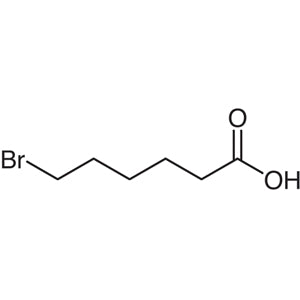
6-BromohexanoicAcid TCI B1290
Regular price From Rp 2.068.500,00Regular price -
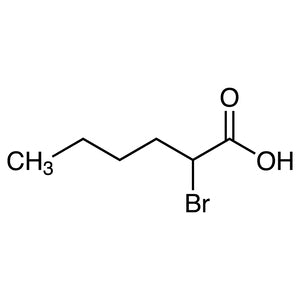
2-BromohexanoicAcid TCI B0601
Regular price From Rp 610.050,00Regular price -
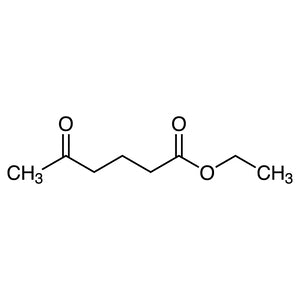
Ethyl5-Oxohexanoate TCI O0638
Regular price From Rp 1.565.550,00Regular price -
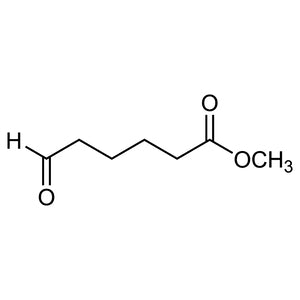
Methyl6-Oxohexanoate TCI M3890
Regular price Rp 3.260.250,00Regular price -
Ethyl3-Oxohexanoate TCI K0030
Regular price From Rp 717.150,00Regular price -
6-ChlorohexanoicAcid TCI C1507
Regular price From Rp 1.590.750,00Regular price -
3,5,5-TrimethylhexanoicAcid TCI T0630
Regular price From Rp 477.750,00Regular price -
6-PhenylhexanoicAcid TCI P1108
Regular price From Rp 4.479.300,00Regular price