6-Bromohexanoic Acid is a chemical compound widely used as a foundational building block in the synthesis of complex organic compounds. It plays a crucial role in organic chemistry laboratories, where it serves as a versatile reagent for various chemical reactions. This compound is particularly valuable in the development of pharmaceuticals, industrial chemicals, and functional molecules due to its structural adaptability and reactivity. Its presence in laboratory settings supports both academic and industrial research, enabling the creation of new materials and compounds with specific properties.
The compound’s key feature is the bromo group attached at the sixth carbon position of the hexanoic acid chain. This bromo group significantly enhances the compound’s reactivity, making it suitable for substitution, elimination, and nucleophilic reactions. Its high reactivity allows chemists to modify molecular structures with precision, which is essential in the design of new drugs and specialized chemical products. The presence of the bromo group also facilitates the formation of various functional groups, expanding its utility in synthetic pathways.
In Indonesian laboratories, 6-Bromohexanoic Acid is extensively used in organic chemistry research, particularly in the synthesis of complex molecules and structural modifications. It is a key component in studies related to drug development, material science, and chemical engineering. Its availability and chemical properties make it a preferred choice for both educational institutions and research organizations in Indonesia.
- Organic synthesis applications benefit from 6-Bromohexanoic Acid’s reactivity and structural versatility, enabling the creation of complex molecules with high precision.
- Pharmaceutical research utilizes this compound for the development of new drugs, as its bromo group can be modified to produce various therapeutic agents.
- Industrial chemical production relies on this compound for the synthesis of functional materials and specialty chemicals due to its adaptability in reaction pathways.
- Academic research in chemistry uses it as a building block for teaching and experimental studies, supporting both undergraduate and graduate-level coursework.
- Structural modification studies in molecular design leverage its reactivity to explore new chemical transformations and molecular architectures.
| Brand | TCI |
|---|---|
| CAS number | 4224-70-8 |
| Molecular formula | — |
| Purity | — |
| Category | Chemistry > Building Blocks > Non-Heterocyclic Building Blocks |
| Pack sizes | Available in various quantities as per standard laboratory supply |
| Physical form | Solid, crystalline appearance |
| Storage | Store in a cool, dry place away from direct sunlight and moisture |
6-Bromohexanoic Acid should be stored in a cool, dry environment to maintain its chemical integrity. It is recommended to keep it in airtight containers to prevent exposure to moisture and air, which may affect its reactivity. Due to its bromo group, the compound may react with certain substances, so it should be handled with care in a well-ventilated laboratory setting. Always use appropriate personal protective equipment, such as gloves and safety goggles, when handling this material. It is important to store it separately from incompatible materials to ensure safety in the laboratory. Proper storage conditions help preserve its chemical properties and ensure its effectiveness in various synthetic applications.
—
Produk Terkait
-
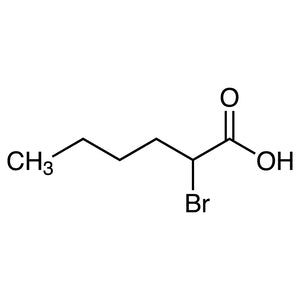
2-BromohexanoicAcid TCI B0601
Regular price From Rp 662.550,00Regular priceRp 478.800,00Sale price From Rp 662.550,00 -
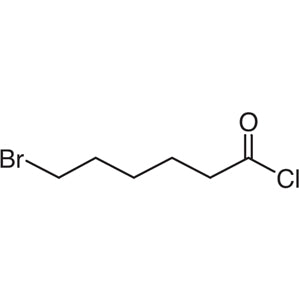
6-BromohexanoylChloride TCI B2049
Regular price Rp 3.524.850,00Regular priceRp 2.480.100,00Sale price Rp 3.524.850,00 -
Ethyl6-Bromohexanoate TCI B1465
Regular price From Rp 2.411.850,00Regular priceRp 1.702.050,00Sale price From Rp 2.411.850,00 -
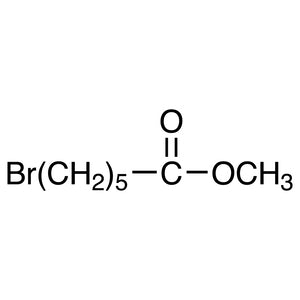
Methyl6-Bromohexanoate TCI M3508
Regular price Rp 1.881.600,00Regular priceRp 1.331.400,00Sale price Rp 1.881.600,00 -
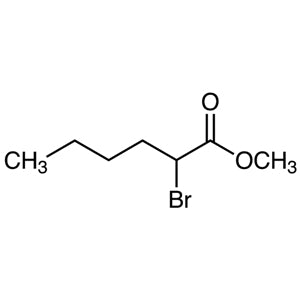
Methyl2-Bromohexanoate TCI M2378
Regular price Rp 662.550,00Regular priceRp 478.800,00Sale price Rp 662.550,00 -
5-OxohexanoicAcid TCI K0014
Regular price From Rp 2.068.500,00Regular priceRp 1.461.600,00Sale price From Rp 2.068.500,00 -
6-ChlorohexanoicAcid TCI C1507
Regular price From Rp 1.643.250,00Regular priceRp 1.164.450,00Sale price From Rp 1.643.250,00 -
16-BromohexadecanoicAcid TCI B6915
Regular price From Rp 1.431.150,00Regular priceRp 1.016.400,00Sale price From Rp 1.431.150,00