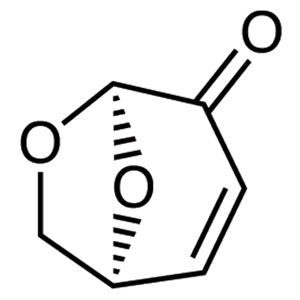
Levoglucosenone (LGVN), with the CAS number 37112-31-5, is an organic compound known for its complex structure and significant role in asymmetric synthesis. As a chiral building block, it is widely used in chemical reactions to produce compounds with specific asymmetric structures. Its importance spans across various fields, including pharmaceutical development, industrial chemistry, and material research. In the laboratory, LGVN serves as a foundational reagent for reactions requiring precise stereochimical control, making it indispensable in advanced chemical synthesis.
The chemical stability and reactivity of LGVN make it a preferred choice for researchers. It exhibits favorable properties that allow for effective substitution and reduction reactions under controlled conditions. Its ability to withstand specific reaction environments minimizes side reactions, ensuring higher yields and purity in the final products. These characteristics make LGVN a reliable and efficient reagent for complex molecular synthesis.
In Indonesian laboratories, LGVN is commonly used in organic chemistry research, particularly in asymmetric synthesis and the development of new compounds. Its application is prevalent in studies requiring high precision in structural control. Researchers rely on LGVN for its consistent performance and adaptability in various synthetic pathways, supporting innovation in both academic and industrial settings.
TCI brochures (PDF)
- Chiral Building Blocks 2025-04-14 · p. 5
Related TCI products
- TCI T2902 97538-67-5 (2R,5S)-2-Trichloromethyl-3-oxa-1-azabicyclo[3.3.0]octan-4-one
- TCI T2312 5022-65-1 L-Tryptophanamide Hydrochloride
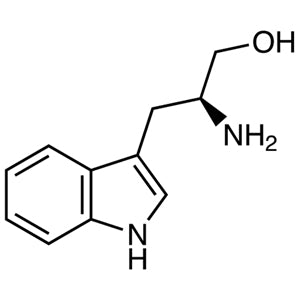
- TCI T1537 2899-29-8 L-(-)-Tryptophanol
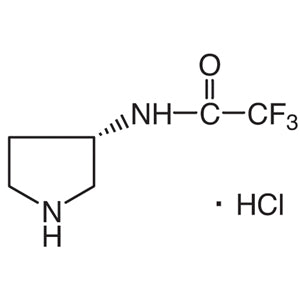
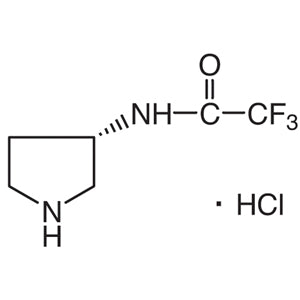
- TCI T1369 141043-16-5 (3R)-(+)-3-(Trifluoroacetamido)pyrrolidine Hydrochloride
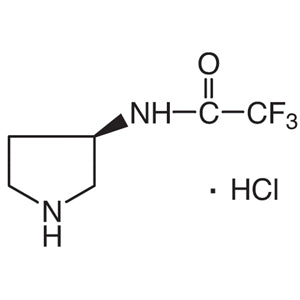
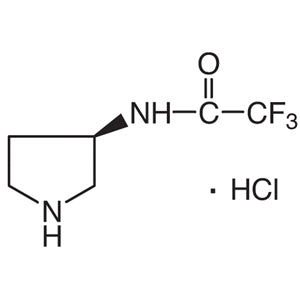
- TCI T1366 132883-43-3 (3S)-(-)-3-(Trifluoroacetamido)pyrrolidine Hydrochloride
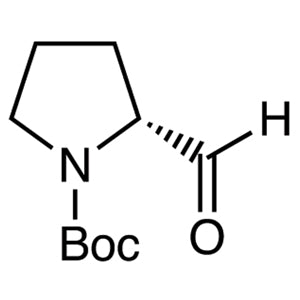
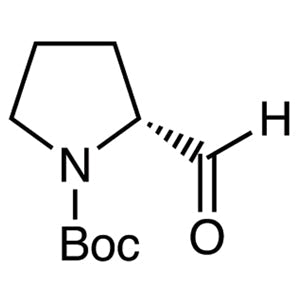
- TCI B5395 73365-02-3 N-(tert-Butoxycarbonyl)-D-prolinal
- Asymmetric synthesis applications benefit from LGVN’s chiral properties, enabling the creation of enantiomerically pure compounds with high efficiency.
- Organic chemistry research utilizes LGVN for its stability and reactivity, supporting the synthesis of complex molecular structures with controlled stereochemistry.
- Pharmaceutical development relies on LGVN to produce chiral intermediates, which are essential for drug molecule design and optimization.
- Industrial chemical processes incorporate LGVN for its versatility in synthetic pathways, contributing to the production of specialty chemicals and materials.
- Material science research uses LGVN as a building block for creating advanced polymers and functional materials with specific stereochemical properties.
| Brand | TCI |
|---|---|
| CAS number | 37112-31-5 |
| Molecular formula | — |
| Purity | — |
| Category | Chemistry > Asymmetric Synthesis > Chiral Building Blocks |
| Pack sizes | Available in various quantities as per standard laboratory supply |
| Physical form | Solid or liquid, depending on the specific product variant |
| Storage | Store in a cool, dry place away from direct sunlight and moisture |
Levoglucosenone should be stored in a cool, dry environment to maintain its chemical stability and prevent degradation. It is recommended to keep it in airtight containers to minimize exposure to moisture and air, which could affect its reactivity. For optimal preservation, it should be stored away from heat sources and direct sunlight to avoid any potential decomposition. In laboratory settings, it is important to handle LGVN with appropriate personal protective equipment, such as gloves and safety goggles, to ensure safe handling. Proper labeling of containers is also essential to prevent accidental misuse. Regular monitoring of storage conditions ensures the integrity of the compound remains intact for use in chemical synthesis processes.
—
Produk Terkait
-
(2R,5S)-2-Trichloromethyl-3-oxa-1-azabicyclo[3.3.0]octan-4-one TCI T2902
Regular price Rp 1.644.300,00Regular price -
L-TryptophanamideHydrochloride TCI T2312
Regular price From Rp 2.016.000,00Regular price -
L-(-)-Tryptophanol TCI T1537
Regular price Rp 2.121.000,00Regular price -
(3R)-(+)-3-(Trifluoroacetamido)pyrrolidineHydrochloride TCI T1369
Regular price From Rp 2.386.650,00Regular price -
(3S)-(-)-3-(Trifluoroacetamido)pyrrolidineHydrochloride TCI T1366
Regular price From Rp 1.298.850,00Regular price -
N-(tert-Butoxycarbonyl)-D-prolinal TCI B5395
Regular price Rp 1.881.600,00Regular price -
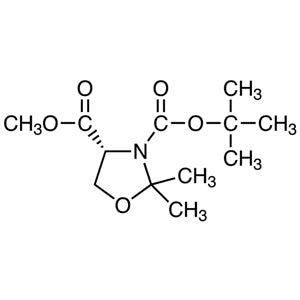
(R)-(+)-3-(tert-Butoxycarbonyl)-4-methoxycarbonyl-2,2-dimethyl-1,3-oxazolidine TCI B5352
Regular price From Rp 1.590.750,00Regular price -
(S)-1-(tert-Butoxycarbonyl)-2-methylpiperazine TCI B4846
Regular price From Rp 1.696.800,00Regular price
![97538-67-5 (2R,5S)-2-Trichloromethyl-3-oxa-1-azabicyclo[3.3.0]octan-4-one - AMI Scientific](http://amiscientific.com/cdn/shop/files/TCI2510T2902.jpg?v=1767143504&width=533)