Lead(II) Phthalocyanine is a chemical compound belonging to the class of metal complexes, widely utilized in the fields of catalysis and inorganic chemistry. It is a synthetic compound known for its unique molecular structure and intense coloration, typically appearing as a deep blue or blue-green hue. In laboratory settings, this compound plays a crucial role as a catalyst in various chemical reactions, particularly in oxidation and reduction processes. Its ability to stabilize and facilitate complex chemical transformations makes it an essential component in both academic and industrial research environments.
One of the key properties that make Lead(II) Phthalocyanine a preferred choice is its exceptional chemical and thermal stability. It exhibits high resistance to degradation when exposed to organic solvents, ensuring consistent performance in prolonged experimental conditions. Additionally, its ability to form stable complexes with various ligands enhances its utility in catalytic systems. The compound's high purity, achieved through sublimation purification, ensures that it meets the stringent quality requirements of advanced scientific research.
In Indonesian laboratories, Lead(II) Phthalocyanine is commonly used in chemical synthesis and material development experiments. Its reliability and performance in catalytic applications make it a favored material for researchers working on inorganic chemistry and advanced chemical processes. Its versatility and high-quality standards support its widespread use in both academic and industrial research settings.
TCI brochures (PDF)
- Chemical Compounds Purified by Sublimation 2025-05-07 · p. 4
Related TCI products
- TCI Z0037 14320-04-8 Zinc Phthalocyanine (purified by sublimation)
- TCI I0783 132-16-1 Iron(II) Phthalocyanine (purified by sublimation)
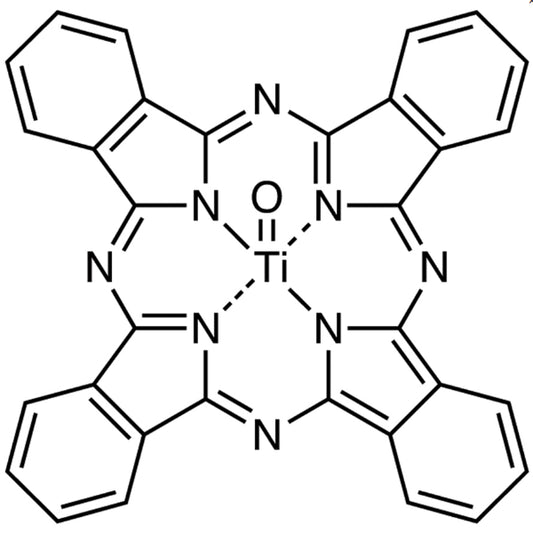
- TCI T2272 26201-32-1 Titanyl Phthalocyanine (purified by sublimation)
- TCI B6296 36530-06-0 Boron Subphthalocyanine Chloride (purified by sublimation)
- TCI T3267 217-59-4 Triphenylene (purified by sublimation)
- TCI T3266 15546-43-7 N,N,N',N'-Tetraphenylbenzidine (purified by sublimation)
- Catalytic Oxidation Reactions: Lead(II) Phthalocyanine is ideal for oxidation processes due to its stability and ability to facilitate electron transfer.
- Reduction Processes in Organic Chemistry: Its unique electronic structure makes it effective in promoting reduction reactions in organic synthesis.
- Material Science Research: The compound is used in the development of new materials due to its structural and optical properties.
- Inorganic Chemistry Experiments: Its role as a metal complex makes it a valuable tool for studying coordination chemistry and metal-ligand interactions.
- Analytical Chemistry Applications: Its intense coloration aids in spectroscopic analysis and qualitative testing in laboratory settings.
| Brand | TCI |
|---|---|
| CAS number | 15187-16-3 |
| Molecular formula | — |
| Purity | — |
| Category | Chemistry > Catalysis and Inorganic Chemistry > Main-group Elements [Catalysis and Inorganic Chemistry] |
| Pack sizes | As per supplier specifications |
| Physical form | Powder |
| Storage | Store in a cool, dry place away from light and moisture |
Lead(II) Phthalocyanine should be stored in a cool, dry environment, away from direct sunlight and moisture. It is recommended to keep the compound in a sealed container to prevent exposure to air and contaminants. Due to its chemical stability, it does not require refrigeration but should be protected from prolonged exposure to humidity. In laboratory settings, it is important to handle the compound with care, using appropriate personal protective equipment such as gloves and safety goggles. While it is not highly toxic, it is advisable to avoid inhalation of dust and ensure proper ventilation during handling. The compound is generally stable under normal storage conditions, making it suitable for long-term use in research applications.
—
Produk Terkait
-
ZincPhthalocyanine(purifiedbysublimation) TCI Z0037
Regular price Rp 4.902.450,00Regular price -
Iron(II)Phthalocyanine(purifiedbysublimation) TCI I0783
Regular price From Rp 2.359.350,00Regular price -
TitanylPhthalocyanine(purifiedbysublimation) TCI T2272
Regular price From Rp 2.650.200,00Regular price -
BoronSubphthalocyanineChloride(purifiedbysublimation) TCI B6296
Regular price Rp 4.056.150,00Regular price -
Triphenylene(purifiedbysublimation) TCI T3267
Regular price From Rp 3.367.350,00Regular price -
N,N,N',N'-Tetraphenylbenzidine(purifiedbysublimation) TCI T3266
Regular price From Rp 2.121.000,00Regular price -
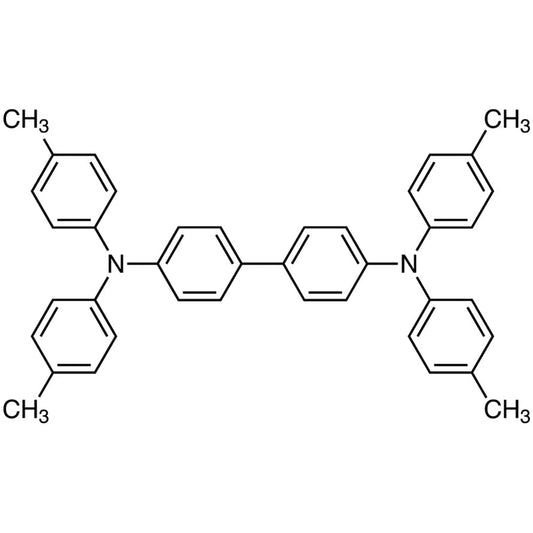
N,N,N',N'-Tetrakis(p-tolyl)benzidine(purifiedbysublimation) TCI T3265
Regular price Rp 2.094.750,00Regular price -
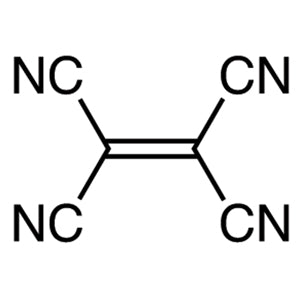
Tetracyanoethylene(purifiedbysublimation) TCI T3264
Regular price From Rp 1.881.600,00Regular price