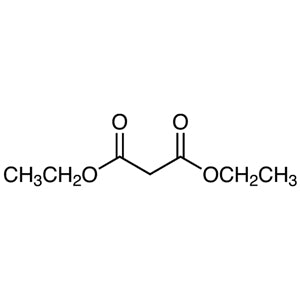
Diethyl malonate (DEMA) is an organic compound widely used in chemical synthesis as a fundamental building block. It serves as a versatile reagent in laboratories, playing a crucial role in the preparation of various organic compounds. Its simple molecular structure allows for easy functionalization, making it an essential component in the synthesis of heterocyclic compounds and carbonyl derivatives. Due to its reactivity, DEMA is frequently employed in alkylation and allylation reactions, where it acts as a key intermediate. Its ability to participate in multiple reaction pathways makes it a valuable tool for chemists seeking to construct complex molecules from simpler precursors.
DEMA is known for its chemical stability under controlled conditions, although it is sensitive to heat and air exposure. It dissolves readily in organic solvents such as ethyl acetate and ethanol, facilitating efficient mixing and reaction processes. Its relatively low boiling point allows for easy evaporation, which is beneficial in reactions requiring distillation or solvent removal. These physical properties contribute to its widespread use in both academic and industrial chemical research settings, where precise control over reaction conditions is essential.
In Indonesian laboratories, DEMA is commonly used in chemical research, particularly in higher education institutions and research organizations. Its availability and competitive pricing make it a preferred choice for researchers working on organic synthesis projects. The compound’s versatility and reactivity ensure its continued relevance in the development of new chemical compounds and pharmaceuticals.
Related TCI products
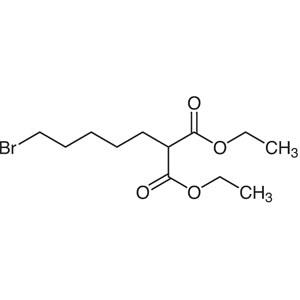
- TCI B2083 1906-95-2 Diethyl (5-Bromopentyl)malonate
- TCI B1492 20605-01-0 Diethyl 2,2-Bis(hydroxymethyl)malonate
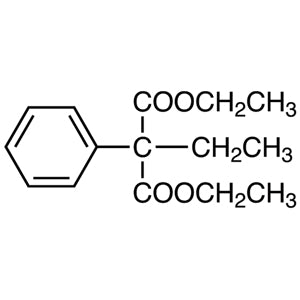
- TCI D3375 76-67-5 Diethyl Ethyl(phenyl)malonate
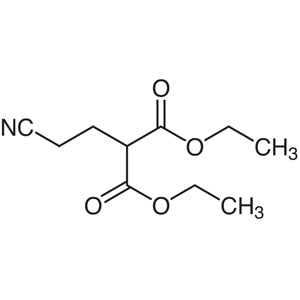
- TCI C1153 17216-62-5 Diethyl (2-Cyanoethyl)malonate
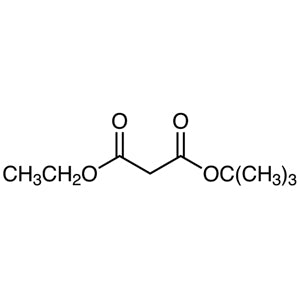
- TCI B3720 32864-38-3 tert-Butyl Ethyl Malonate
- TCI B2747 42726-73-8 tert-Butyl Methyl Malonate
- Organic synthesis: DEMA is ideal for the preparation of carboxylic acids, esters, and aromatic compounds due to its reactivity and ease of functionalization.
- Alkylation reactions: Its ability to undergo alkylation makes it a preferred reagent in the synthesis of substituted organic molecules.
- Allylation processes: DEMA is commonly used in allylation reactions to introduce allyl groups into organic molecules.
- Distillation and solvent removal: Its low boiling point makes it suitable for use in distillation processes where solvent evaporation is required.
- Teaching and research in chemistry: DEMA is frequently used in academic settings to demonstrate fundamental chemical reactions and synthesis techniques.
| Brand | TCI |
|---|---|
| CAS number | 105-53-3 |
| Molecular formula | — |
| Purity | — |
| Category | Chemistry > Building Blocks > Non-Heterocyclic Building Blocks |
| Pack sizes | Available in various quantities as per supplier specifications |
| Physical form | Liquid |
| Storage | Store in a cool, dark place away from heat and air exposure |
DEMA should be stored in a cool, dark place to prevent degradation due to heat and light exposure. It is recommended to use airtight containers to minimize contact with air, which can lead to oxidation or decomposition. Due to its reactivity, it should be handled in a well-ventilated area, preferably under a fume hood, to avoid inhalation of vapors. Proper personal protective equipment, such as gloves and safety goggles, should be worn during handling. The compound is flammable, so it should be kept away from open flames and heat sources. Regular monitoring of storage conditions is essential to ensure the material remains stable and safe for use in laboratory settings.
—
Produk Terkait
-
Diethyl(5-Bromopentyl)malonate TCI B2083
Regular price From Rp 2.254.350,00Regular price -
Diethyl2,2-Bis(hydroxymethyl)malonate TCI B1492
Regular price From Rp 3.021.900,00Regular price -
DiethylEthyl(phenyl)malonate TCI D3375
Regular price From Rp 717.150,00Regular price -
Diethyl(2-Cyanoethyl)malonate TCI C1153
Regular price Rp 1.565.550,00Regular price -
tert-ButylEthylMalonate TCI B3720
Regular price From Rp 928.200,00Regular price -
tert-ButylMethylMalonate TCI B2747
Regular price From Rp 1.670.550,00Regular price -
MonoethylMalonate TCI M2700
Regular price From Rp 1.246.350,00Regular price -
Mono-tert-butylMalonate TCI M2687
Regular price From Rp 1.193.850,00Regular price