Tert-Butyl Ethyl Malonate is a chemical compound widely used as a building block in organic synthesis. It plays a crucial role in laboratories by enabling the formation of carbon-carbon bonds, which is essential for the development of complex organic molecules. This compound is particularly valuable in the synthesis of heterocyclic and aromatic compounds, making it an indispensable tool for researchers in various scientific fields. Its versatility allows it to be applied in both academic and industrial settings, supporting innovation in pharmaceuticals, materials science, and chemical manufacturing.
One of the key reasons for its popularity is its stable molecular structure and moderate reactivity. These properties allow it to participate efficiently in a wide range of chemical reactions under different conditions. The compound’s reliability and consistency make it a preferred choice for laboratories requiring high-quality reagents that can maintain performance across multiple experimental setups. Its availability in various packaging options further enhances its usability, ensuring that it can be easily integrated into both small-scale and large-scale research projects.
In Indonesian laboratories, Tert-Butyl Ethyl Malonate is commonly used in organic chemistry research, especially in higher education institutions and advanced research programs. It supports the development of new compounds and contributes to the advancement of scientific knowledge. Its presence in laboratory supplies underscores its importance in both teaching and research environments, where it is relied upon for its predictable behavior and effectiveness in chemical synthesis.
Related TCI products
- Organic synthesis applications benefit from Tert-Butyl Ethyl Malonate due to its ability to form carbon-carbon bonds efficiently, supporting the creation of complex organic molecules.
- Pharmaceutical research utilizes this compound for the development of new drug compounds, as it contributes to the synthesis of heterocyclic structures essential in medicinal chemistry.
- Material science laboratories rely on this reagent for the production of advanced polymers and functional materials, leveraging its chemical versatility.
- Educational institutions use it in teaching laboratories to demonstrate key principles of organic chemistry and synthetic methodologies to students.
- Industrial chemical processes incorporate this compound for the production of specialty chemicals, benefiting from its stability and reactivity in large-scale reactions.
| Brand | TCI |
|---|---|
| CAS number | 32864-38-3 |
| Molecular formula | — |
| Purity | — |
| Category | Chemistry > Building Blocks > Non-Heterocyclic Building Blocks |
| Pack sizes | Available in various sizes to accommodate different experimental needs |
| Physical form | Liquid |
| Storage | Store in a cool, dry place away from direct sunlight |
Tert-Butyl Ethyl Malonate should be stored in a cool, dry environment, away from direct sunlight and sources of heat. It is recommended to use sealed containers made of glass or high-density polyethylene to prevent contamination and evaporation. Due to its chemical nature, it should be handled in a well-ventilated area, and appropriate personal protective equipment such as gloves and safety goggles should be worn. Avoid contact with incompatible materials, and ensure proper disposal according to local regulations. Regular monitoring of storage conditions is advised to maintain the compound’s integrity and effectiveness in laboratory applications.
—
Produk Terkait
-
tert-ButylMethylMalonate TCI B2747
Regular price From Rp 1.723.050,00Regular priceRp 1.220.100,00Sale price From Rp 1.723.050,00 -
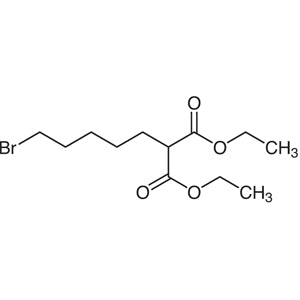
Diethyl(5-Bromopentyl)malonate TCI B2083
Regular price From Rp 2.306.850,00Regular priceRp 1.628.550,00Sale price From Rp 2.306.850,00 -
Diethyl2,2-Bis(hydroxymethyl)malonate TCI B1492
Regular price From Rp 3.074.400,00Regular priceRp 2.165.100,00Sale price From Rp 3.074.400,00 -
MonoethylMalonate TCI M2700
Regular price From Rp 1.298.850,00Regular priceRp 924.000,00Sale price From Rp 1.298.850,00 -
Mono-tert-butylMalonate TCI M2687
Regular price From Rp 1.246.350,00Regular priceRp 887.250,00Sale price From Rp 1.246.350,00 -
MonomethylPotassiumMalonate TCI M2149
Regular price From Rp 1.776.600,00Regular priceRp 1.257.900,00Sale price From Rp 1.776.600,00 -
Di-tert-butylMalonate TCI M1522
Regular price Rp 1.908.900,00Regular priceRp 1.350.300,00Sale price Rp 1.908.900,00 -
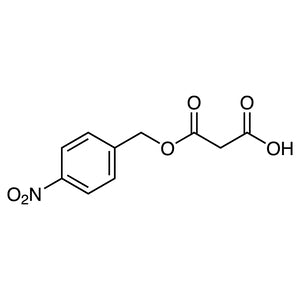
Mono-4-nitrobenzylMalonate TCI M1177
Regular price From Rp 1.483.650,00Regular priceRp 1.053.150,00Sale price From Rp 1.483.650,00