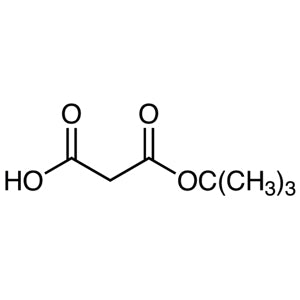
Mono-tert-butyl Malonate (TCI M2687 40052-13-9) is a chemical compound widely used in laboratory settings as a building block for the synthesis of complex molecules. It plays a crucial role in organic chemistry by serving as a versatile reagent in various reactions, particularly in esterification and substitution processes. Its molecular structure allows it to participate in reactions that lead to the formation of heterocyclic compounds or more complex carbon-based structures. This compound is essential in the development of new chemical entities with specific functional properties, making it a valuable tool for researchers and chemists.
The compound is known for its chemical stability under controlled conditions, which makes it reliable for use in laboratory experiments. It exhibits good solubility in organic solvents such as ethyl acetate and acetone, facilitating efficient separation and reaction processes. These properties make it a preferred choice for applications requiring both stability and solubility. Its ability to remain chemically inert in certain environments while still being reactive in others enhances its utility across a range of synthetic pathways.
In Indonesian laboratories, Mono-tert-butyl Malonate is commonly used in organic chemistry research, particularly in academic and research institutions. Its role in the synthesis of complex compounds aligns with the goals of chemical studies in Indonesia, supporting both educational and industrial research initiatives. Its availability and performance make it a standard component in many laboratory workflows, contributing to the advancement of chemical research in the region.
Related TCI products
- Organic synthesis applications benefit from its role in esterification and substitution reactions, enabling the creation of complex molecules with desired functional groups.
- It is widely used in the development of heterocyclic compounds, where its reactivity supports the formation of ring structures essential in pharmaceutical and agrochemical research.
- The compound is ideal for research involving carbon-based structures, as its molecular framework allows for the construction of diverse organic molecules with specific properties.
- In academic laboratories, it supports teaching and experimental work in organic chemistry, providing a reliable reagent for student and researcher use.
- Its solubility in organic solvents makes it suitable for purification and reaction processes, enhancing efficiency in both small-scale and large-scale laboratory operations.
| Brand | TCI |
|---|---|
| CAS number | 40052-13-9 |
| Molecular formula | — |
| Purity | — |
| Category | Chemistry > Building Blocks > Non-Heterocyclic Building Blocks |
| Pack sizes | Available in various quantities as per supplier specifications |
| Physical form | Liquid |
| Storage | Store in a cool, dry place away from light and moisture |
Mono-tert-butyl Malonate should be stored in a cool, dry environment to maintain its chemical stability. It is recommended to keep it in airtight containers to prevent exposure to moisture and air, which can affect its performance. The compound is sensitive to temperature and humidity, so maintaining controlled storage conditions is essential. Suitable containers should be made of materials that do not react with the compound, such as glass or high-density polyethylene. In laboratory settings, it should be handled with appropriate safety measures, including the use of personal protective equipment. Proper labeling and storage away from incompatible substances are also important to ensure safe handling and long-term usability.
—
Produk Terkait
-
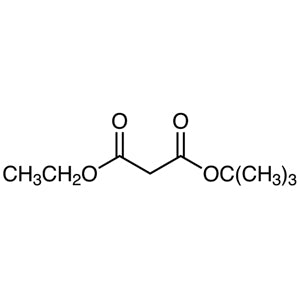
tert-ButylEthylMalonate TCI B3720
Regular price From Rp 928.200,00Regular price -
tert-ButylMethylMalonate TCI B2747
Regular price From Rp 1.670.550,00Regular price -
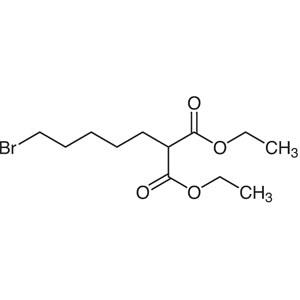
Diethyl(5-Bromopentyl)malonate TCI B2083
Regular price From Rp 2.254.350,00Regular price -
Diethyl2,2-Bis(hydroxymethyl)malonate TCI B1492
Regular price From Rp 3.021.900,00Regular price -
MonoethylMalonate TCI M2700
Regular price From Rp 1.246.350,00Regular price -
MonomethylPotassiumMalonate TCI M2149
Regular price From Rp 1.724.100,00Regular price -
Di-tert-butylMalonate TCI M1522
Regular price Rp 1.856.400,00Regular price -
Mono-4-nitrobenzylMalonate TCI M1177
Regular price From Rp 1.431.150,00Regular price