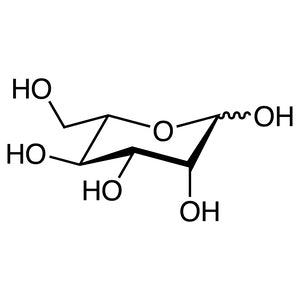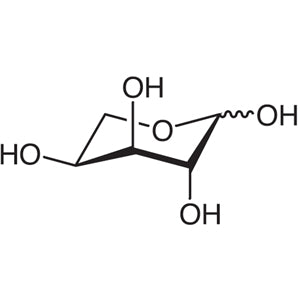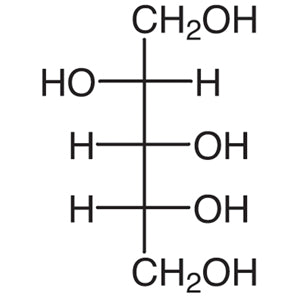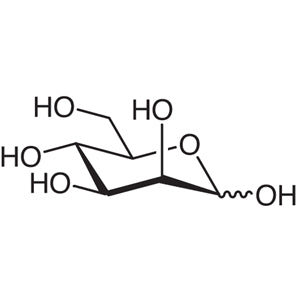
D-(+)-Mannose is a naturally occurring sugar belonging to the group of monosaccharides. It plays a crucial role in chemical and biochemical experiments, particularly in glycoscience research. In the laboratory, D-(+)-Mannose functions as a substrate or donor in glycosylation reactions, such as the synthesis of glycosyl compounds or the study of molecular interactions. Its unique chemical structure enables specific reactivity in controlled laboratory environments, making it an essential component for various scientific investigations.
D-(+)-Mannose is chemically stable and exhibits solubility in water, which simplifies its handling and storage. These properties make it a preferred choice for researchers working in both organic chemistry and biochemistry. Its non-toxic nature and ease of access further contribute to its popularity in scientific experiments. The compound’s stability and predictable behavior ensure reliable results in laboratory settings, supporting accurate and reproducible research outcomes.
In Indonesian laboratories, D-(+)-Mannose is widely used in research related to organic chemistry, biochemistry, and pharmaceutical sciences. It is commonly found in studies that require sugar compounds as building blocks or functional components. Its versatility and reliability make it a valuable resource for scientists conducting experiments on carbohydrate structures, molecular interactions, and biochemical processes.
TCI brochures (PDF)
- Glycosylation Reactions: D-(+)-Mannose is ideal for glycosylation reactions due to its ability to act as a donor molecule in the formation of glycosidic bonds.
- Carbohydrate Structure Studies: Its specific molecular structure makes it suitable for investigating the structural and functional properties of carbohydrates in molecular biology.
- Biochemical Research: It is frequently used in biochemical experiments to study enzyme activity and substrate specificity in glycosyltransferase reactions.
- Pharmaceutical Development: D-(+)-Mannose supports the synthesis of glycosylated compounds, which are important in drug development and bioactive molecule research.
- Molecular Interaction Analysis: Its reactivity allows for the study of molecular interactions, making it useful in understanding carbohydrate-protein interactions and glycoprotein structures.
| Brand | TCI |
|---|---|
| CAS number | 3458-28-4 |
| Molecular formula | — |
| Purity | — |
| Category | Chemistry > Chemical Biology > Glycoscience |
| Pack sizes | Available in various quantities as per standard laboratory supply |
| Physical form | White crystalline powder |
| Storage | Store in a cool, dry place away from moisture and direct sunlight |
D-(+)-Mannose should be stored in a cool, dry environment to maintain its chemical stability and prevent degradation. It is recommended to use airtight containers to protect it from moisture and contaminants. Due to its water solubility, it should be kept in a location where exposure to humidity is minimized. Proper labeling of storage containers is essential for safe handling and easy identification. Laboratory personnel should wear appropriate personal protective equipment when handling the compound to ensure safety. Regular inspection of storage conditions ensures the compound remains in optimal condition for use in experiments.
—
Product Categories
Produk Terkait
-
L-(-)-Mannose TCI M1308
Regular price Rp 3.949.050,00Regular price -
D-Mannitol TCI M0044
Regular price From Rp 452.550,00Regular price -
D-(-)-Arabinose TCI A0513
Regular price From Rp 1.140.300,00Regular price -
L-(+)-Arabinose TCI A0515
Regular price From Rp 1.115.100,00Regular price -
D-(+)-Arabitol TCI A0516
Regular price Rp 717.150,00Regular price -
L-(-)-Arabitol TCI A0518
Regular price From Rp 557.550,00Regular price -
N-Acetyl-D-glucosamine TCI A0092
Regular price From Rp 928.200,00Regular price -
L-(-)-Xylose TCI X0021
Regular price From Rp 1.458.450,00Regular price