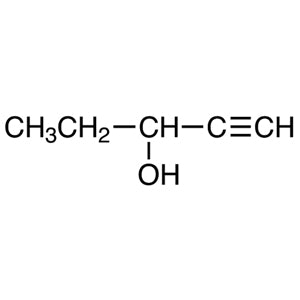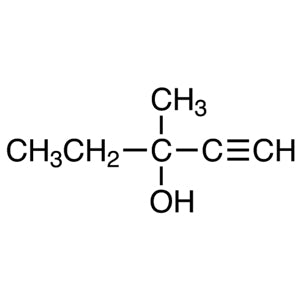
3-Methyl-1-pentyn-3-ol is an organic compound widely utilized in laboratory settings for the synthesis of complex chemical structures. This versatile building block is essential in organic chemistry due to its unique molecular structure, which includes both an alkyne and a hydroxyl group. These functional groups enable it to participate in a variety of chemical reactions, making it a valuable reagent for researchers. Its role in the laboratory extends beyond basic synthesis, as it is often employed in more advanced applications requiring precise molecular manipulation.
The compound’s chemical properties make it a preferred choice for many synthetic pathways. Its stability under controlled conditions allows for reliable use in various reactions, while its reactivity with water and oxidizing agents necessitates careful handling. The presence of both an alkyne and hydroxyl group provides multiple sites for chemical modification, enhancing its utility in the development of new compounds. This combination of reactivity and structural versatility makes it a go-to material for chemists working on complex synthesis projects.
In Indonesian laboratories, 3-Methyl-1-pentyn-3-ol is commonly used in research related to organic chemistry, pharmaceutical development, and material science. Its availability in liquid form and its ability to participate in diverse reactions make it a preferred choice for both academic and industrial research. Institutions and universities in Indonesia rely on this compound to advance their research goals and improve existing synthetic methods. Its role in supporting scientific innovation is significant, particularly in the development of new compounds and processes.
- Organic synthesis is a key application where 3-Methyl-1-pentyn-3-ol is used to build complex molecules through various reaction mechanisms.
- Pharmaceutical research benefits from this compound due to its ability to participate in reactions that lead to the development of new drug compounds.
- Material science applications utilize its unique structure to create new polymers and functional materials with specific properties.
- Analytical chemistry uses this compound as a standard for identifying and quantifying other substances in complex mixtures.
- Environmental studies incorporate it to investigate the behavior of organic compounds in different chemical environments.
| Brand | TCI |
|---|---|
| CAS number | 77-75-8 |
| Molecular formula | — |
| Purity | — |
| Category | Chemistry > Building Blocks > Non-Heterocyclic Building Blocks |
| Pack sizes | Available in various sizes as per standard laboratory supply |
| Physical form | Liquid |
| Storage | Store in a cool, dry place away from moisture and oxidizing agents |
This compound should be stored in a cool, dry environment to maintain its chemical stability. It is recommended to use airtight containers to prevent exposure to moisture and oxidizing agents, which can degrade its properties. Due to its sensitivity, it should be kept away from direct sunlight and heat sources. Laboratory personnel should wear appropriate personal protective equipment when handling this material to ensure safety. Proper ventilation is essential during use to minimize inhalation risks. Regular monitoring of storage conditions is advised to maintain the integrity of the compound throughout its shelf life.
—
Produk Terkait
-
4-Pentyn-2-ol TCI P0818
Regular price Rp 1.140.300,00Regular price -
4-Pentyn-1-ol TCI P0817
Regular price From Rp 1.936.200,00Regular price -
1-Pentyn-3-ol TCI P0069
Regular price Rp 7.154.700,00Regular price -
5-Phenyl-4-pentyn-1-ol TCI P1158
Regular price Rp 6.386.100,00Regular price -
3-Pentyn-1-ol TCI P0816
Regular price Rp 2.411.850,00Regular price -
2-Pentyn-1-ol TCI P0815
Regular price From Rp 2.041.200,00Regular price -
10-Undecyn-1-ol TCI U0055
Regular price Rp 3.446.100,00Regular price -
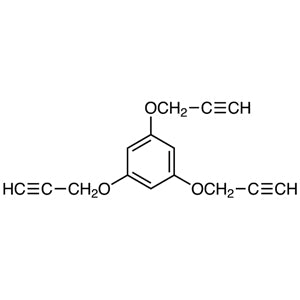
1,3,5-Tris(2-propynyloxy)benzene TCI T3135
Regular price From Rp 4.056.150,00Regular price