5-Methyl-DL-tryptophan is a chemical compound widely used in laboratory experiments across chemistry and biochemistry. It belongs to the class of amino acids and possesses a complex molecular structure that makes it a valuable tool in various scientific investigations. This compound is often utilized as a building block in the synthesis of other compounds, particularly in peptide chemistry and biochemical research. Its versatility allows it to be incorporated into a wide range of experimental protocols, supporting both fundamental and applied research.
The chemical properties of 5-Methyl-DL-tryptophan make it a preferred choice for laboratory use. It exhibits chemical stability and is soluble in certain organic solvents, which facilitates its use in chemical reactions and synthesis processes. Additionally, it demonstrates good thermal stability, enabling it to be stored under specific conditions without degradation. These characteristics ensure reliable performance in experimental settings, making it a trusted material for researchers.
In Indonesian laboratories, 5-Methyl-DL-tryptophan is commonly used in biochemical, pharmacological, and environmental research. It is a key component in experiments involving the synthesis of bioactive compounds and the study of molecular interactions. Many research institutions and universities rely on this compound for their experiments, highlighting its importance in the scientific community. Its availability and consistent quality make it a preferred choice for both academic and industrial research.
TCI brochures (PDF)
- Amino Acids and Peptide Synthesis Reagents 2025-08-14 · p. 5
- Biochemical research utilizes 5-Methyl-DL-tryptophan to study molecular interactions and biological effects due to its amino acid structure and reactivity.
- Peptide chemistry applications benefit from this compound as a building block for synthesizing complex peptides and bioactive molecules.
- Pharmacological studies incorporate this material to investigate its potential role in drug development and biological activity analysis.
- Environmental research employs it to analyze the behavior of organic compounds in different ecological systems.
- Synthetic chemistry experiments rely on its stability and solubility to facilitate the creation of new chemical compounds and derivatives.
| Brand | TCI |
|---|---|
| CAS number | 951-55-3 |
| Molecular formula | — |
| Purity | — |
| Category | Chemistry > Chemical Biology > Peptide Chemistry |
| Pack sizes | Available in various quantities as per standard laboratory requirements |
| Physical form | Powder |
| Storage | Store in a cool, dry place away from light and moisture |
5-Methyl-DL-tryptophan should be stored in a cool, dry environment, away from direct light and moisture to maintain its stability and prevent degradation. It is recommended to use airtight containers to minimize exposure to air and contaminants. As a chemical compound, it should be handled with care, using appropriate personal protective equipment such as gloves and safety goggles. It is important to ensure that the storage area is well-ventilated to avoid any potential hazards associated with its chemical properties. Proper labeling and storage practices help in maintaining the integrity of the compound and ensuring safe laboratory operations.
—
Product Categories
Produk Terkait
-
5-Methyl-L-tryptophan TCI M3682
Regular price Rp 8.560.650,00Regular price -
5-Hydroxy-L-tryptophan TCI H0531
Regular price From Rp 1.035.300,00Regular price -
5-Benzyloxy-DL-tryptophan TCI B0430
Regular price Rp 2.889.600,00Regular price -
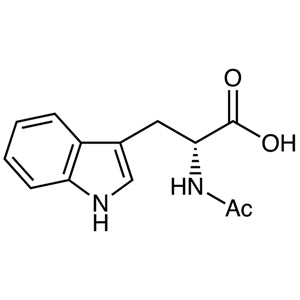
N-Acetyl-D-tryptophan TCI A0119
Regular price From Rp 769.650,00Regular price -
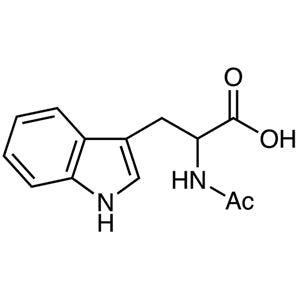
N-Acetyl-DL-tryptophan TCI A0120
Regular price From Rp 637.350,00Regular price -
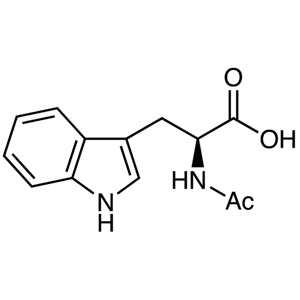
N-Acetyl-L-tryptophan TCI A0121
Regular price From Rp 477.750,00Regular price -
L-TryptophanEthylEsterHydrochloride TCI T2981
Regular price Rp 955.500,00Regular price -
D-TryptophanMethylEsterHydrochloride TCI T2442
Regular price From Rp 610.050,00Regular price