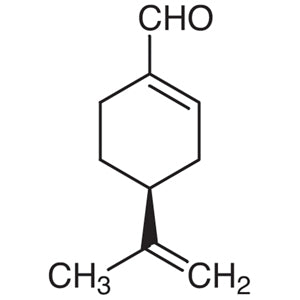
(-)-Menthone is an organic compound widely used in asymmetric synthesis to construct molecular structures with specific biological activities. It plays a crucial role in the development of chiral compounds, which are essential in various scientific fields. In the laboratory, it serves as a key building block for creating enantiomerically pure substances. Its unique stereochemical properties make it a valuable tool for researchers aiming to achieve precise molecular configurations. This compound is commonly found in natural products such as essential oils, particularly from plants like mint and eucalyptus. Its presence in these natural sources highlights its relevance in both synthetic and natural product chemistry.
The chiral nature of (-)-Menthone allows it to form spatially distinct molecular structures, making it an ideal choice for asymmetric synthesis. Its high stability under normal conditions ensures consistent performance in laboratory settings. Additionally, its availability in various packaging formats makes it convenient for use in both research and educational environments. The ability to exist in racemic or enantiomeric forms provides researchers with the flexibility to control the final activity of synthesized compounds. This versatility enhances its utility in both academic and industrial applications.
In Indonesian laboratories, (-)-Menthone is extensively used in organic chemistry research, particularly in asymmetric synthesis and the development of new compounds. It is also commonly employed in higher education institutions to teach students about molecular structure and stereochemistry. Its widespread use in both research and teaching underscores its importance in the scientific community. The compound’s reliability and availability make it a preferred choice for laboratory work in Indonesia.
TCI brochures (PDF)
- Terpenes 2025-09-22 · p. 4
- Asymmetric Synthesis: (-)-Menthone is ideal for creating chiral molecules with specific stereochemistry, essential for pharmaceutical and agrochemical development.
- Natural Product Chemistry: It is frequently used to synthesize compounds similar to those found in essential oils, aiding in the study of natural sources.
- Organic Education: It serves as a teaching tool to demonstrate stereochemistry and chiral synthesis concepts in academic settings.
- Pharmaceutical Research: Its chiral properties make it valuable for developing enantiomerically pure drugs with targeted biological activities.
- Industrial Chemistry: It is used in the production of chiral compounds for use in cosmetics and specialty chemicals.
| Brand | TCI |
|---|---|
| CAS number | 14073-97-3 |
| Molecular formula | — |
| Purity | — |
| Category | Chemistry > Asymmetric Synthesis > Chiral Building Blocks |
| Pack sizes | Available in various sizes suitable for laboratory use |
| Physical form | Crystalline solid |
| Storage | Store in a cool, dry place away from light |
(-)-Menthone should be stored in a cool, dry environment, away from direct light to maintain its stability and purity. It is recommended to use airtight containers to prevent moisture absorption and contamination. Due to its chiral nature, it is important to handle the compound with care to avoid any unintended racemization. In laboratory settings, it should be kept in a secure location, away from incompatible substances. Proper labeling and storage conditions ensure the compound remains viable for research and educational purposes. Always follow standard safety protocols when handling chiral compounds to ensure safe and effective use.
—
Produk Terkait
-
Menthone(mixtureofisomers) TCI M3866
Regular price From Rp 955.500,00Regular price -
(-)-MenthylAcetate TCI A1107
Regular price Rp 823.200,00Regular price -
alpha-Terpineol TCI T0984
Regular price From Rp 637.350,00Regular price -
alpha-Terpineol TCI T0022
Regular price From Rp 505.050,00Regular price -
(+)-Pulegone TCI P2331
Regular price From Rp 530.250,00Regular price -
(-)-Perillaldehyde TCI P0866
Regular price From Rp 610.050,00Regular price -
(+)-Neomenthol TCI N0626
Regular price From Rp 5.169.150,00Regular price -
(+)-MenthylAcetate TCI M2631
Regular price From Rp 2.625.000,00Regular price