

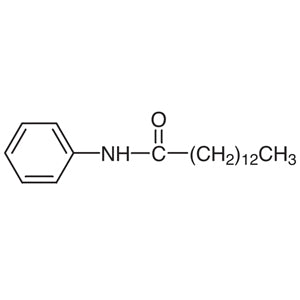
Myristanilide is a chemical compound widely used as a foundational building block in the synthesis of complex organic compounds. It plays a crucial role in laboratory settings where the creation of new chemical entities is required. Its unique molecular structure allows it to act as a precursor in various chemical reactions, making it a versatile tool for chemists. In the context of Indonesian laboratories, this compound is essential for advancing research in organic chemistry, pharmaceutical development, and cosmetic formulation. Its chemical stability and reactivity under specific conditions make it a reliable choice for experimental work.
Myristanilide is preferred due to its chemical stability and solubility in organic solvents, which simplifies processing and isolation in laboratory procedures. Its ability to react under controlled conditions ensures that it can be effectively utilized in a wide range of synthetic pathways. The compound’s compatibility with various reagents and its predictable behavior in chemical reactions enhance its value in laboratory applications. These properties make it a go-to material for researchers aiming to develop compounds with specific functional properties, such as antioxidant activity or distinct aromatic profiles.
In Indonesian laboratories, Myristanilide is commonly used in research projects that require the synthesis of complex molecules with defined structural and functional characteristics. Its availability in the local market supports ongoing scientific investigations in chemistry, pharmaceutical sciences, and the cosmetics industry. Researchers rely on its consistent performance to achieve reliable results in their experiments, making it an integral part of many laboratory workflows.
- Organic synthesis research benefits from Myristanilide’s role as a versatile building block, enabling the creation of complex molecular structures with specific functional groups.
- Pharmaceutical development utilizes Myristanilide to synthesize compounds with potential therapeutic properties, such as antioxidants or bioactive molecules.
- Cosmetic formulation relies on Myristanilide for its ability to contribute to the development of fragrance compounds and skin care ingredients with desired properties.
- Analytical chemistry applications leverage Myristanilide’s chemical stability and reactivity for use in standardization and reference material preparation.
- Environmental studies incorporate Myristanilide to investigate its behavior in chemical reactions relevant to pollution control and degradation processes.
| Brand | TCI |
|---|---|
| CAS number | 622-56-0 |
| Molecular formula | — |
| Purity | — |
| Category | Chemistry > Building Blocks > Non-Heterocyclic Building Blocks |
| Pack sizes | Available in various quantities as per standard laboratory supply options |
| Physical form | Solid or liquid, depending on the specific product variant |
| Storage | Store in a cool, dry place away from direct sunlight and moisture |
Myristanilide should be stored in a cool, dry environment to maintain its chemical stability and prevent degradation. It is recommended to use airtight containers to protect it from moisture and contaminants. When handling, ensure proper ventilation to avoid inhalation of vapors, and use appropriate personal protective equipment such as gloves and safety goggles. The compound is generally non-hazardous under normal laboratory conditions but should be handled with care to avoid skin contact. Proper storage and handling practices ensure the compound remains effective and safe for use in various experimental applications.
—
Produk Terkait
-
4'-Iodoacetanilide TCI I0846
Regular price From Rp 795.900,00Regular price -
4'-Acetoxyacetanilide TCI A0067
Regular price From Rp 1.115.100,00Regular price -
Acetoacetanilide TCI A0046
Regular price From Rp 505.050,00Regular price -
4'-Bromo-3'-methylacetanilide TCI B3142
Regular price From Rp 477.750,00Regular price -
4'-Bromo-3'-chloroacetanilide TCI B3141
Regular price From Rp 769.650,00Regular price -
4'-Bromo-2'-chloroacetanilide TCI B2413
Regular price From Rp 823.200,00Regular price -
4'-Bromo-2'-methylacetanilide TCI B1556
Regular price Rp 1.961.400,00Regular price -
2-Benzoylacetanilide TCI B0904
Regular price From Rp 743.400,00Regular price


