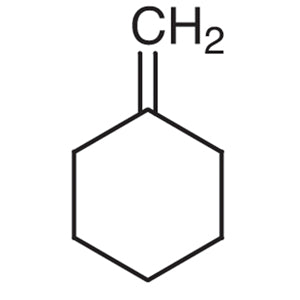
Methylenecyclohexane is a chemical compound widely used as a building block in various chemical reactions. It serves as a fundamental component in the synthesis of complex organic molecules, particularly those requiring cyclic structures with methylene substitution. Its role in laboratory settings is crucial for the development of new compounds, especially in the field of organic chemistry. This compound is valued for its ability to participate in multiple reaction types, making it a versatile tool for researchers. Its chemical stability and reactivity allow it to be used in a range of synthetic pathways, supporting both academic and industrial research efforts.
Methylenecyclohexane is preferred due to its chemical stability and reactivity, which enable it to participate in various types of reactions such as substitution, addition, and radical reactions. Its cyclic structure provides inherent stability, making it suitable for use in reactive environments. The compound’s predictable behavior under different reaction conditions makes it a reliable choice for chemists seeking to control the outcome of their experiments. Its ability to form complex molecular structures also makes it a valuable asset in the synthesis of heterocyclic compounds and side-chain molecules, which are essential in pharmaceutical and materials science research.
In Indonesian laboratories, Methylenecyclohexane is commonly used in organic chemistry research, particularly in academic institutions and research centers. It plays a key role in the synthesis of new compounds, drug development, and the study of molecular structures. Its availability and reliability make it a preferred choice for researchers aiming to advance their work in chemical synthesis and related fields.
Related TCI products
- Organic synthesis projects benefit from Methylenecyclohexane due to its role in forming complex cyclic structures and enabling diverse reaction pathways.
- Drug development research utilizes this compound as a building block for synthesizing pharmaceutical compounds with specific molecular frameworks.
- Heterocyclic compound synthesis relies on Methylenecyclohexane for its ability to participate in reactions that create stable ring structures.
- Side-chain molecule development uses Methylenecyclohexane to construct molecular frameworks with controlled reactivity and stability.
- Materials science research incorporates this compound to explore new chemical structures with potential applications in advanced materials.
| Brand | TCI |
|---|---|
| CAS number | 1192-37-6 |
| Molecular formula | — |
| Purity | — |
| Category | Chemistry > Building Blocks > Non-Heterocyclic Building Blocks |
| Pack sizes | Available in various quantities as per supplier specifications |
| Physical form | Liquid |
| Storage | Store in a cool, dry place away from light and incompatible substances |
Methylenecyclohexane should be stored in a cool, dry place away from direct sunlight and incompatible materials such as strong oxidizers. It is recommended to use sealed containers made of materials compatible with organic solvents, such as glass or high-density polyethylene. In laboratory settings, proper ventilation is essential to minimize exposure to vapors. Personal protective equipment, including gloves, safety goggles, and a lab coat, should be worn when handling this compound. It is important to keep the compound away from heat sources and ensure that spill containment measures are in place to prevent accidental exposure or contamination.
—
Produk Terkait
-
Methylenecyclopentane TCI M0914
Regular price From Rp 2.016.000,00Regular price -
3-Methylenecyclobutane-1-carbonitrile TCI M3911
Regular price Rp 2.650.200,00Regular price -
9-Vinylanthracene TCI V0130
Regular price From Rp 2.545.200,00Regular price -
5-Vinylbicyclo[221]hept-2-ene(stabilizedwithBHT) TCI V0062
Regular price From Rp 769.650,00Regular price -
1,3,5-Undecatriene(mixtureofisomers) TCI U0062
Regular price From Rp 3.155.250,00Regular price -
1-Undecene TCI U0052
Regular price From Rp 2.068.500,00Regular price -
1-Undecene TCI U0025
Regular price Rp 1.060.500,00Regular price -
1,10-Undecadiene TCI U0024
Regular price From Rp 2.491.650,00Regular price


![3048-64-4 5-Vinylbicyclo[2.2.1]hept-2-ene (stabilized with BHT) - AMI Scientific](http://amiscientific.com/cdn/shop/files/TCI2510V0062.jpg?v=1767145572&width=533)